
Meditation is one of those things that sounds delightfully simple right up until you actually sit down to do it. The basic instructions couldn’t be more straightforward – find somewhere reasonably quiet, pick something to focus on, notice when your attention drifts off, and gently bring it back. That’s the whole core of how to meditate properly, and yet somehow, within about ninety seconds, most of us start wondering if we’re somehow messing the whole thing up.
I spent years falling into that exact trap. I’d sit there worrying about whether my mind was too scattered, whether I was fidgeting too much, whether I was supposed to feel an immediate wave of inner peace, whether ten minutes was long enough, and probably a dozen other tiny details that felt monumental at the time.
Now to be fair, a few of those were important questions, but most were just completely normal parts of the meditation process that I’d mistakenly labelled as some sort of personal failure.
That’s really what I want to untangle here, because I think the word mistake gets thrown around way too loosely in the meditation space.
In all honesty, there are definitely habits that can make your practice feel like uphill work – things like trying to aggressively force thoughts out of your head, grading every single session like an exam, or turning meditation into another high-pressure productivity goal to conquer. But there are also plenty of entirely normal, healthy experiences that get incorrectly branded as “mistakes” simply because they don’t match the serene, candle-lit version of meditation we’ve been sold over the years.
Feeling restless doesn’t mean you’re doing it wrong, and neither does becoming distracted, feeling a bit uncomfortable, getting bored, or finishing a session without some profound sense of calm. Most of the time, those things are just what happens when you stop running away from your own mind for ten minutes and actually pay attention to what’s going on under the hood.
This is where understanding what meditation actually is becomes so much more helpful than trying to memorise a rigid set of rules. The goal isn’t to manufacture some flawless, perfectly tranquil internal state; it’s simply about noticing your experience more clearly and changing how you react to it.
So, we’re going to walk through nine common meditation mistakes I’ve either made myself or worried about at some point, separating the habits that genuinely deserve a tweak from the non-issues you can safely stop stressing about. Along the way, we’ll also tackle a question that used to bug me endlessly when I first started: how do you actually know if meditation is working?
Because the answer isn’t always obvious, especially when a session feels scattered, restless, or completely unremarkable.
Contents
- 1. Thinking You’re Bad at Meditation Because Your Mind Won’t Settle
- 2. Treating Meditation Like Something You Need to Do Properly
- 3. Expecting Meditation to Instantly Make You Calm or Relaxed
- 4. Trying to Control Thoughts Instead of Noticing Them
- 5. Getting Frustrated When the Mind Keeps Wandering
- 6. Comparing Your Experience to What You Think Everyone Else Is Experiencing
- 7. Believing Meditation Only Counts If You Do It Consistently or “Properly”
- 8. Using Meditation as a Way to Escape What You’re Feeling
- 9. Expecting Meditation to Eventually “Fix You”
- Frequently Asked Questions
- Conclusion: What I Wish I’d Known When I Started Meditating
1. Thinking You’re Bad at Meditation Because Your Mind Won’t Settle
Key Takeaway: A noisy, busy mind on the cushion doesn’t mean you’re ‘bad’ at meditation. In most cases, you’re simply turning up the volume on thoughts that were already passing through the background unnoticed.
One of the first things I noticed when I started meditating was how my brain seemed to go into overdrive the second I sat down and closed my eyes. I could spend the entire day working, tapping away on my phone, half-watching TV, or just running errands without giving my inner monologue any thought. But the very second I tried to sit quietly for ten minutes, it suddenly felt like a million thoughts were running through my mind.
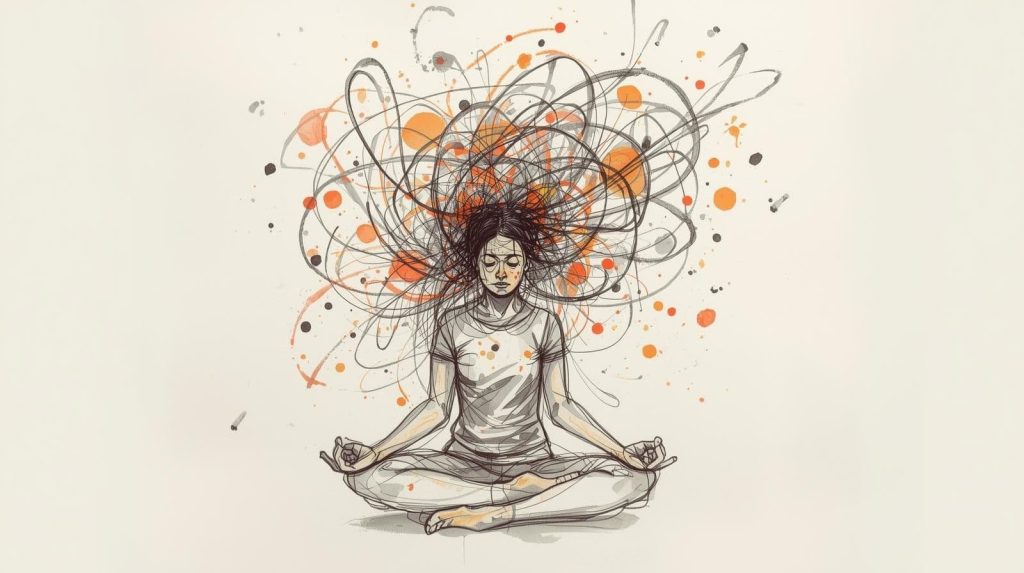
For a long time, I assumed meditation was somehow making my mind more frantic, and I remember worrying about that quite a bit during those first few months. Eventually, I realised meditation wasn’t doing that at all. It was simply that all the usual distractions had been stripped away, and without so much going on around me, I was noticing all the mental chatter that had been there in the background all along.
Think about how much of an ordinary day is spent with your attention pulled in six different directions at once. You’re replying to a text while mentally reviewing a work email, driving while listening to a podcast, or scrolling through social media with the TV on in the background. Stray thoughts come and go constantly, but unless one of them packs a massive emotional punch, you barely register them.
Meditation flips that script. When the room goes quiet and you stop moving, your inner dialogue becomes hard to ignore, which can feel surprisingly unnerving at first. You sit down expecting a serene wave of calm, only to be confronted by just how much noise your mind generates on default.
That doesn’t mean the session was a waste of time, and in fact, learning to witness that chatter without immediately hopping on board every single thought train is the entire heart of mindfulness.
What took me even longer to grasp was that getting distracted wasn’t a mistake. My mind might drift off for thirty seconds or three minutes, but eventually, a little lightbulb would go off. I’d realise I’d drifted, gently catch myself, and herd my focus back to the breath. Then, sooner or later, off it would go again.
Researchers have actually mapped out that exact wandering-noticing-returning loop, and we dive deeper into what’s happening in the brain over in our guide to the science of mindfulness. But honestly, you don’t need a degree in neuroscience to spot the pattern once you start paying attention to your own mind.
And to be clear, my mind still wanders all the time, and some days my sessions are noticeably more scattered than others. The difference now is that I’ve stopped using the amount of mental chatter as a report card for whether a meditation was “good” or “bad.”
If anything, waking up to the fact that I’ve drifted off into a daydream gives me another invaluable rep at bringing my attention back. That’s why meditation is so effective for building real-world focus – it doesn’t require you to magically erase all distractions, just to practice waking up from them.
So if your first few sessions leave you opening your eyes and thinking, “Bloody hell, is my mind always this chaotic?” there’s a very good chance the answer is yes. You’re just finally noticing it clearly for the first time, and that’s a world away from meditation making things worse.
2. Treating Meditation Like Something You Need to Do Properly
Key Takeaway: There is no gold-standard posture, pristine setting, or rigid ritual that makes a meditation session more ‘legitimate’. What actually matters is finding a setup where you can stay reasonably comfortable, alert, and able to pay attention.
This was another trap I got massively hung up on when I first started out. I had a very specific picture in my head of what meditation was supposed to look like. Sitting cross-legged on the floor, spine laser-straight, eyes closed, hands resting neatly on my knees, and ideally remaining as motionless as a statue until the timer went off.

Anything that deviated from that picture felt like I was taking a cheap shortcut. Sitting in a comfortable chair felt like cheating, using extra cushions felt like taking the easy way out, and if my legs went completely numb ten minutes in, I’d sit there engaged in a frantic internal debate about whether I should suffer through the agony or risk ‘ruining’ the session by shifting position.
You’ll be pleased to hear I’m considerably less precious about all of that now. These days, I’ll gladly sit in a chair if my back feels tight, pile up cushions if my hips need support, and adjust my position if something starts genuinely hurting. The meditation police aren’t going to revoke your licence because you shifted your leg halfway through the practice.
Part of the problem is the relentless visual marketing attached to mindfulness. We’re constantly shown photos of people sitting motionless in sunlit, minimalist rooms, looking infinitely more serene than most of us have ever managed to look. But that’s just one aesthetic version of practice, and there are endless ways to meditate that don’t involve sitting cross-legged on the floor at all (walking meditation, for example).
The same goes for your surroundings. A quiet room or personal meditation space is definitely nice to have (especially when you’re just getting your bearings) but I wouldn’t put off practicing just because the conditions aren’t perfect. Traffic outside, housemates moving around in the kitchen, dogs barking, phone notifications – learning to sit through the ambient noise of life is far more useful in the long run than becoming dependent on total, library-grade silence before you can even begin.
My baseline rule now is pretty simple: I want to be comfortable enough that physical pain isn’t hijacking my entire focus, but alert enough that I’m not immediately drifting off to sleep. That sweet spot looks different for everyone, and it shifts day to day.
If you do find yourself regularly nodding off the second you close your eyes, there are plenty of easy tweaks you can make to meditate without falling asleep, but there’s no special award for choosing the most punishing, uncomfortable posture you can tolerate just because it looks more ‘authentic’.
Constantly grading your form can quickly become a bigger distraction than whatever you were originally trying to focus on. You sit there wondering if your spine is upright enough, if your breathing is too shallow, if you’re fidgeting too much, or if you should be feeling some deep spiritual shift by now – and before you know it, you’ve spent the entire ten minutes writing an internal performance review.
Basic posture guidelines can certainly be helpful when you’re starting out, but they’re meant to support your practice, not serve as a set of rigid rules to stress over. If you can sit in a way that feels reasonably comfortable, stay awake, and bring your focus back when it drifts, you’re already doing everything that actually matters.
3. Expecting Meditation to Instantly Make You Calm or Relaxed
Key Takeaway: Meditation can absolutely leave you feeling calmer, but that doesn’t mean every single session will feel like a trip to the spa. Sometimes, sitting quietly gives you the first real chance you’ve had all day to notice how stressed, restless or tense you already were.
This is probably one of the easiest expectations to fall for, mostly because meditation and calm are practically glued together in popular culture. Search for meditation online and you’re instantly met with an endless stream of candles, glowing sunsets, pristine living rooms, and people looking so blissed out you’d swear they haven’t had an irritating thought since 2012.

So it’s completely natural to assume that instant relaxation is the main point of the exercise.
Again, this is another ‘mistake’ I made in the early days of my meditation journey. If I sat down feeling wound up or overwhelmed, I wanted to feel noticeably lighter by the time the timer rang. When that happened, I’d pat myself on the back for having a ‘good’ session, but the confusing part was figuring out what to make of the sessions where I didn’t feel calmer at all.
Over time, though, I realised those less peaceful sessions were often just as valuable.
Sometimes, the very first thing that happens when you pause for ten minutes is that you finally notice how much tension you’ve been dragging around all day. You suddenly realise your shoulders have been practically glued to your ears since lunch, your jaw is clamped shut, your stomach’s in a knot, or your thoughts are sprinting in circles.
Meditation didn’t create any of that chaotic energy; you just finally stopped distracting yourself for long enough to actually feel it.
That’s precisely why practices like a body scan meditation are so effective. Instead of desperately trying to force every muscle to relax on command, you just spend a few minutes tuning into what’s actually there. Sometimes that awareness does help the tension melt away – but the simple act of noticing always comes first.
Shifting that perspective completely changes how you grade a session. Instead of expecting meditation to miraculously transform you from a stressed mess into a zen master in fifteen minutes, the win becomes simply spending that time paying attention. You might finish feeling wonderfully refreshed, or you might walk away with a much clearer realisation that you’re running on fumes and desperately need a break.
That distinction is huge if you’re using meditation for stress relief. The goal isn’t to expect every ten-minute session to wipe the slate clean. A big part of the magic is simply training yourself to spot stress earlier – learning how it physically shows up in your body, and catching the mental spirals that usually follow.
The same thing applies if you’re practicing to help with anxiety. I’ve had plenty of sessions when turning my focus inward made me far more aware of my internal jitteriness rather than instantly soothing it, which can feel a bit jarring if you were expecting an immediate wave of peace. Our guide to meditation for anxiety dives deeper into that dynamic, including why the goal should never be forcing yourself into a calm state.
Now having said all that, none of this means you shouldn’t savour the sessions where you do feel deeply relaxed. Those sessions are fantastic, and sometimes meditation really does flip a switch and leave you feeling completely transformed. I just wouldn’t use that fleeting feeling as the ultimate test of whether your time on the cushion was wasted.
Some days, meditation feels wonderfully peaceful, and other days, it simply hands you an honest mirror showing you what was already going on. And over the years, I’ve learned there is immense value in both.
4. Trying to Control Thoughts Instead of Noticing Them
Key Takeaway: You don’t need to completely resolve or banish a thought before returning to your breath. The practice is simply noticing that your attention has drifted and coming back, even if that thought is still hovering in the background.
Once I’d finally accepted that thoughts were going to keep crashing my meditation sessions regardless of what I did, I ran headfirst into a slightly different trap: I felt like I had to do something with those thoughts before I was allowed to get back to business.

If I caught myself obsessing over a work email, drafting a mental to-do list, or replaying an argument from three Tuesdays ago, I’d try to neatly wrap the thought up first. Other times I’d swing to the opposite extreme and try to aggressively push it away (which, as you can probably guess, just meant I was now stressed out about the fact that I couldn’t stop thinking about it).
What finally clicked was realising that neither approach was necessary.
If I catch myself halfway through mentally assembling tomorrow night’s dinner, I don’t need to finalise the recipe, nor do I need to scold myself for having the thought in the first place. I just acknowledge the thought itself, “Ah, yep, I’m planning dinner”, and gently guide my focus back to the sensation of breathing – even if the smell of garlic is still lingering in the back of my mind…
It sounds like a tiny shift in perspective, but it completely changes the practice. Instead of treating every stray thought like an urgent pop-up notification that has to be dealt with before you can resume your session, you just leave it hanging. If it pops back up thirty seconds later, you just notice it again and return again. No fuss, and no internal performance review.
To me, that’s a far more practical way to understand what mindfulness actually is. You aren’t trying to scrub your brain squeaky clean or act as a bouncer deciding which thoughts are allowed to enter your mind. You’re simply learning to witness the mental traffic without jumping into the passenger seat of every car that drives by.
Of course, there are moments when a thought does warrant real attention. If you suddenly remember you left the stove on, realise you missed a critical deadline, or hit on an emotional issue you’ve been burying, ignoring it out of some rigid allegiance to your timer isn’t doing you any favours.
That’s why I like pairing mindfulness with a journaling practice, because sometimes the best move is to let the thought be for now, and come back to unpack it properly on paper once the session is over.
5. Getting Frustrated When the Mind Keeps Wandering
Key Takeaway: Knowing that mind-wandering is normal doesn’t magically make it stop being annoying. For me, the real breakthrough wasn’t eliminating distractions; it was learning not to make such a massive deal out of them when they happen.
Even after I’d finally accepted that a wandering mind is just part of being human, I had another hurdle to clear. I knew my focus was bound to drift, but I’d still get angry or frustrated with myself every time I caught it happening. Especially if I’d been feeling pleasantly focused up until that moment.

I still catch myself slipping into this trap occasionally, even after years of practice. I’ll be sitting there, following the breath, feeling like a seasoned monk, only to suddenly wake up and realise I’ve spent the last three minutes drafting a passive-aggressive reply to an email or rehearsing an argument that hasn’t even happened yet.
My immediate knee-jerk reaction is still a tiny flicker of annoyance – mostly because, right up until that moment of realisation, I thought the session was going well.
That knee-jerk irritation reveals a lot about what we secretly expect from the meditation practice. Even when we logically accept that minds drift, it’s easy to cling to the fantasy that getting ‘better’ at meditation means the drifting happens less and less, until we’re eventually able to sit motionless for twenty minutes in flawless, uninterrupted bliss.
As I mentioned previously, my mind still wanders all the time. The only real difference now is that I’ve stopped turning it into a drama when it does. I notice I’ve drifted away from the breath, gently shift my focus back, and keep going. Sometimes I catch it within five seconds; other times it takes far longer.
That might sound like a subtle shift, but it makes meditation infinitely less exhausting. If every single moment of distraction is instantly followed by self-criticism and a desperate attempt to concentrate harder, you end up burning more energy reacting to the distraction than you did wandering off in the first place.
It also completely redefined how I measure progress. I used to assume that experience would grant me fewer distracted sessions. In reality, the true signs of progress are subtle, like noticing a bit faster, returning without the heavy sigh of disappointment, or simply catching a thought before it drags you down a ten-minute rabbit hole.
And if you ever find that anchoring to the breath feels like pushing water uphill, remember that it’s not your only option. Plenty of people find guided meditations far easier to stick with because a calm, steady voice gives their brain an external anchor to keep returning to, which is especially helpful when you’re still building a daily meditation habit.
If you’d rather try that for yourself, I’ve included one of our guided meditations below. There’s nothing complicated to do here. Just press play, get comfortable, and let the guidance do some of the work for you.
For me, the goal was never learning how to make my mind completely silent. It was realising I didn’t need to get frustrated, or feel defeated every time I couldn’t achieve the silence I’d hoped for.
6. Comparing Your Experience to What You Think Everyone Else Is Experiencing
Key Takeaway: There is no single, perfect meditation experience everyone is secretly building toward. What you notice will fluctuate wildly from one session to the next – never mind from one person to another.
Comparison is a sneaky trap, and it becomes almost unavoidable once you start reading about other people’s meditation journey. Someone online talks about experiencing profound cosmic clarity, someone else describes feeling weightless and blissful, and a third person casually mentions sitting for forty minutes without a single stray thought. If your own session felt noisy, restless, or thoroughly mundane, it’s almost impossible not to wonder, “What am I missing here?”
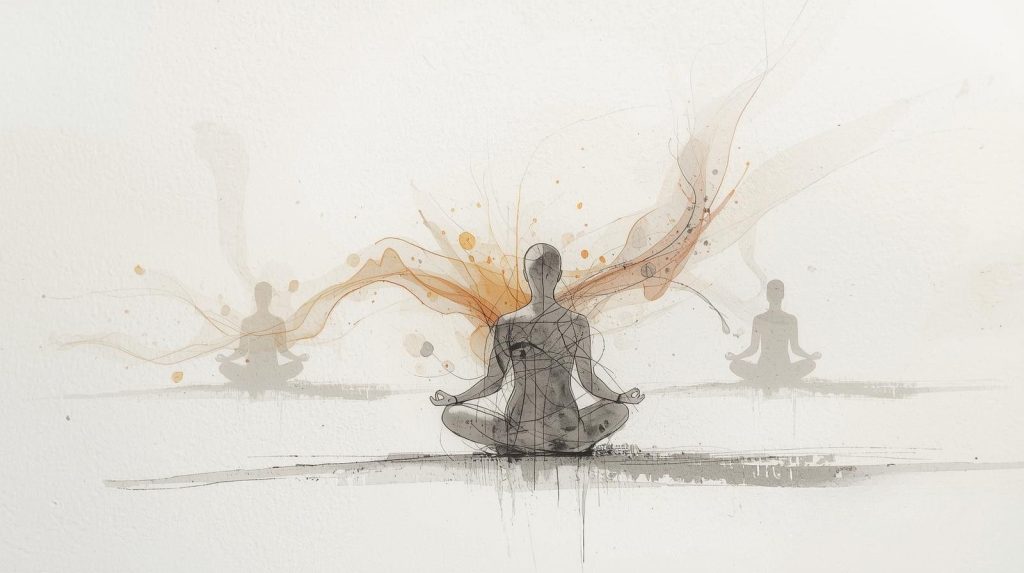
I’ve fallen into that exact rabbit hole more times than I care to admit. Over the years, though, I’ve learned to take those glowing, dramatic descriptions with a hefty pinch of salt. When someone shares their meditation experience, you’re only ever seeing the highlight reel. You don’t see the ten boring, restless sessions that came before it, the days their focus was complete garbage, or the session they cut short after six minutes because they couldn’t get into it.
The reality is that meditation experiences vary wildly. We’ve had readers reach out to us because they felt like they were floating during meditation, others because their limbs suddenly felt massive or tiny, and some because they felt an odd spinning sensation the second they closed their eyes.
None of those experiences are mandatory benchmarks, and having them doesn’t mean someone is further along than the person who sits quietly, watches their breath, and feels entirely ordinary the whole time.
That’s why I’m wary of treating intense or unusual sensations as spiritual milestones. If you sit down hunting for something dramatic to happen, you spend the entire ten minutes checking whether anything unusual is happening, instead of just paying attention to what’s actually there. And when nothing incredible happens, a perfectly solid, honest session ends up feeling like a letdown for zero reason.
Focus is another good example. Someone bragging about a flawless, razor-sharp twenty-minute session tells you precisely nothing about what their practice looks like the rest of the week, and it certainly doesn’t dictate what yours should look like. Some of my own sessions feel wonderfully focused, and others feel as though my attention is bouncing all over the place. I’ve completely abandoned the myth that progress is a neat, upward line where every month is magically smoother than the last.
If you’re going to measure progress at all, compare yourself to your own baseline over time:
- Are you catching distractions a few seconds earlier?
- Are you dropping the self-criticism when your mind wanders?
- Are you spotting physical stress or tension earlier in your workday?
- Are you occasionally catching yourself before reacting on pure autopilot?
Those subtle, real-world shifts are infinitely more meaningful than whether someone on the internet had a deeper, calmer session than you did this morning.
Even the physical quirks of meditation bounce around day to day. One sit might be totally uneventful, while the next brings strange eye twitching or a sudden feeling of spatial distortion. Most of the time, those odd physical sensations are just your body settling down and your brain tuning into subtle feedback – it’s not a sign of being an ‘advanced’ meditator.
So if someone else’s practice sounds deeper, calmer, or more spiritual than yours, don’t sweat it. You’re comparing your raw, unfiltered, messy internal reality to a highly curated snapshot of theirs.
7. Believing Meditation Only Counts If You Do It Consistently or ‘Properly’
Key Takeaway: Consistency helps build a habit, but missing a few days doesn’t wipe out your progress. A flexible practice that bends around real life is much easier to sustain than a rigid streak that shatters the moment life gets chaotic.
There’s always a slightly awkward balancing act when it comes to routine, because staying consistent does genuinely help. When meditation becomes an automatic part of your day, you don’t have to waste mental energy debating whether you’re going to sit or not – and that momentum is a huge part of making the practice stick.

The trouble begins when consistency morphs from a helpful framework into a punitive rule.
You decide you’re going to sit for twenty minutes every single morning. Things go smoothly for a couple of weeks, and then real life crashes the party. You oversleep on Tuesday, hit a wall of deadlines on Wednesday, and before you know it, five days have slipped past without a single session. At that point, an insidious little thought creeps in: “Well, I’ve broken my streak. I guess I have to reset to zero”.
I’ve spent plenty of time stressing over whether I was practicing often enough or meditating for long enough. But the truth is, missing a few days never sends you back to square one. You don’t suddenly forget how to be mindful after a busy week, any more than you forget how to ride a bike just because you haven’t been on one in a month.
That’s why I’m a huge advocate for building flexibility into your routine right from day one. If you have twenty minutes free, fantastic. If you only have ten, do ten. And if your schedule is completely off the rails, even a quick 60-second mindfulness check-in is a great way to pause and ground yourself, which is far better than writing the whole day off because you can’t fit in a ‘proper’ session.
Timing can become another rigid ‘rule’ if you’re not careful. Having a dedicated slot can certainly help anchor the habit, but don’t treat that window as if it’s etched in stone. People always ask about the best time of day to meditate, but the reality is that the best time is simply whichever time you can reliably pull off without tearing your hair out.
Session length is another trap where people get overly rigid. It’s easy to decide that fifteen minutes is a ‘real’ session, but five minutes is somehow a waste of time. Or that because you usually do twenty minutes, a quick seven-minute session isn’t worth bothering with.
Personally, I think any time spent meditating (especially if it’s fairly consistent) is enough to reap the benefits, and there’s no magical threshold where meditation suddenly ‘counts’.
To me, the most sustainable way to view consistency is simply making it effortless to return. Some weeks will be smooth and regular, while other weeks will be fragmented, short, or completely derailed by life.
When you hit a chaotic stretch, you don’t need to do double sessions to make up for missed time, nor do you need to wait for next Monday to start fresh with a clean slate. You simply sit down and do the next session, and keep coming back as often as you can.
8. Using Meditation as a Way to Escape What You’re Feeling
Key Takeaway: Turning to meditation when you’re stressed, anxious, or overwhelmed is completely natural. The trouble starts when it becomes a tool for emotional avoidance, or a way to bypass feelings or real-world situations that actually demand your attention.
This mistake is a bit different from the others we’ve covered, mostly because wanting meditation to bring relief is a completely understandable goal. I’ve certainly sat down on plenty of days feeling frayed, wound up, or mentally exhausted, hoping for a reset – and to be honest, more often than not, it delivered.

The issue isn’t seeking a bit of breathing room. The trap is making yourself feel good the sole metric for success, to the point where any uncomfortable emotion that surfaces during a session gets treated like an intruder that needs to be evicted.
If you’re carrying anxiety, sitting still might bring a tight chest or a knot in your stomach into sharp focus. If you’re meditating for grief, slowing down might cause those raw emotions to bubble to the surface rather than vanish. And if there’s a problem you’ve been desperately trying not to think about, ten quiet minutes can make it nearly impossible to avoid it.
That can be uncomfortable, but it doesn’t automatically mean the meditation is making things worse. Sometimes you’re simply noticing something that was already there, which is one of the ideas we explore in more detail in our guide to meditation for difficult emotions.
Where meditation becomes counterproductive is when we use it as a substitute for action. If there’s an awkward conversation you need to have, a work crisis you need to tackle, or a boundary you need to set, repeatedly sitting on a cushion trying to breathe yourself into a state of zen isn’t going to make the issue evaporate.
Sometimes the most valuable thing meditation gives you isn’t instant calm – it’s the clarity to admit, “Okay, this is still deeply bothering me, and I actually need to deal with it”.
Again, this is another reason I find it helpful to pair mindfulness with a journaling practice. You can use your time on the cushion to acknowledge what’s bubbling up without getting instantly sucked into a spiral, and then use a notebook afterward to properly process it, instead of spending your entire session caught in a tug-of-war between trying to solve the problem and trying to pretend it isn’t there.
The very same mindset applies to anxiety. Meditation can be a fantastic support when you’re feeling anxious, but grading your session on whether the jitteriness magically vanished by the time the bell rings is a recipe for disappointment. Often, a ‘successful’ session simply looks like mapping out where the tension is hiding in your body, spotting the mental narrative feeding it, or realising just how burnt out you actually are.
There is, however, a crucial line to draw here.
I don’t subscribe to the dangerous idea that every agonising mental state should be endured on the cushion. If meditation is repeatedly triggering intense panic, dissociation, flashback spikes, or overwhelming distress, that’s a world away from a simple case of restlessness. In those moments, the smartest, healthiest move is to stop, adjust your practice, or reach out to a professional – not to blindly push through.
That’s not just us being overly cautious, either. The US National Center for Complementary and Integrative Health (NCCIH) emphasises that while meditation is generally low-risk, adverse reactions (including spikes in anxiety) are real.
For me, the rule of thumb is pretty simple… meditation helps you create a little breathing room around a difficult emotion, but it isn’t a magic eraser. It doesn’t mean every uncomfortable feeling has to disappear, and it certainly doesn’t replace taking practical steps in your actual life.
Sometimes, the very thing that interrupts your meditation is the exact thing you need to go and handle once you step off the cushion.
9. Expecting Meditation to Eventually “Fix You”
Key Takeaway: Meditation can radically shift how you relate to your thoughts, stress, and emotions, but it won’t strip away the messy reality of being human. You can practice consistently for decades and still get irritated, distracted, anxious, or caught up in your own head.
I think this was the single biggest assumption I held onto for the longest time. Somewhere along the way, I’d swallowed the myth that if I just meditated consistently enough, I’d gradually transform into a permanently tranquil, unflappable human being. I assumed I’d stop overreacting, stop feeling stressed, and eventually reach a clear finish line where I could look back and think, “Finally, meditation has fixed me”.

But that’s not how it works at all.
I still get stressed. I still overthink things, lose my patience, have off days, and occasionally say something foolish before my brain catches up with my mouth. Meditation hasn’t erased any of that, and frankly, I don’t think meditation can turn you into a permanently serene, enlightened being with zero human flaws.
The real changes have been far more subtle, and a lot more practical.
These days, I’m usually quicker to notice when my mood is souring. I’m more likely to catch myself halfway through a toxic spiral, and a little better at spotting that familiar impulse to react on autopilot. Sometimes that awareness gives me enough space to choose a better path; other times, I see the train wreck coming and still react badly anyway.
To me, that feels a whole lot closer to what real mindfulness actually offers, compared to the fairytale idea that practice magically vaporises difficult thoughts or uncomfortable feelings. The chaotic thoughts still show up, stress still happens, and life will never run out of opportunities to test your nerves. You just start waking up to what’s happening a few seconds sooner.
I’ve also realised that the true payoff of meditation rarely happens on the cushion… It’s catching yourself getting defensive in the middle of an argument and pausing before taking the bait. It’s noticing your physical tension spiking during a brutal workday before you reach total burnout. That’s where concepts like mindful communication and mindfulness in the workplace actually come alive, because the practice stops being an isolated ten-minute exercise and starts leaking into real life.
Even then, progress isn’t a neat upward line where you get 10% calmer every month. I’ve had seasons where my practice felt immensely grounding, and long stretches where I barely felt a difference. Sometimes the shifts are obvious; other times, you only realise you’ve changed months down the road when you notice you handled a difficult situation with a little less drama than you would have five years ago.
That’s why I’ve completely abandoned the idea of meditation ‘fixing’ me. There was never a flawless, friction-free version of myself waiting at the end of ten thousand hours of practice anyway.
I still have the exact same mind, with many of the same quirky habits and flawed tendencies (and trust me, I have plenty). I just understand myself a bit better now, and most days, that turns out to be more than enough.
Frequently Asked Questions
Is it normal to feel worse when you first start meditating?
It can definitely happen, especially if sitting quietly makes you hyper-aware of stress, tension, or racing thoughts that were already humming along in the background. That doesn’t mean meditation is causing harm though – it often just feels that way because you’re finally dropping the daily distractions that normally mask those feelings.
However, if sitting repeatedly triggers intense panic, overwhelming anxiety, or dissociation, that goes beyond ordinary discomfort. In those cases, it makes sense to pause, modify your approach, or speak with a qualified professional rather than forcing yourself to sit through it.
How do I know if I’m meditating properly?
Focus far less on whether the session felt peaceful or hyper-focused, and pay attention to what you were actually doing. Did you catch your mind wandering and gently bring your attention back? Did you notice yourself getting restless, fidgety, or bored? Did you become aware of physical tension or a subtle shift in your mood?
If you did any of those things, you were meditating properly. The practice isn’t about maintaining unbroken focus; it’s about cultivating awareness when focus drifts.
How long should I meditate for?
There’s no single perfect time you need to build toward. A simple ten-minute session that reliably fits into your daily routine will always beat an ambitious thirty-minute plan that feels so daunting you end up skipping it altogether.
Whether it’s twenty minutes, ten minutes, or a quick one-minute breathing reset during a chaotic workday, the right duration is simply the one you can show up for consistently without adding unnecessary stress to your schedule.
What if my mind never gets quieter?
It might settle down on some days, but making a completely silent mind your ultimate goal is a fast track to frustration. Even after years of consistent practice, your mind will still wander, overthink, and occasionally fixate on complete nonsense instead of your breath.
The real shift isn’t that the chatter stops completely; it’s that you catch the distraction much faster and stop beating yourself up when it happens.
Which type of meditation should I try?
The short answer is whichever style you feel comfortable returning to.
While breath-focused mindfulness is the most common starting point, it’s far from your only choice. If watching the breath feels frustrating or ineffective, you might prefer:
Guided Audio – Following spoken guidance to keep your attention on track.
Body Scans – Systematically grounding attention in physical sensations.
Walking Meditation – Bringing awareness into walking, either outdoors or around a room.
Loving-Kindness (Metta) – Cultivating self-compassion and goodwill toward others.
Mantra Meditation – Using a repeated phrase or word to anchor focus.
Can meditation actually help with stress?
Yes, though it’s helpful to adjust your expectations. Instead of treating meditation like an instant off-switch for stress, look for the subtle, practical shifts: spotting racing thoughts, noticing physical tightness in your shoulders, or catching irritability before you lose your temper.
Recognising stress while it’s building gives you the choice to respond differently, which is far more powerful in the long run than simply using a session as a temporary escape valve.
Conclusion: What I Wish I’d Known When I Started Meditating
Looking back, I made meditation infinitely harder for myself than it needed to be. I spent way too much mental energy stressing over whether my mind was quiet enough, whether my posture was correct, whether I was sitting for long enough, and whether each ten-minute block was producing the magical calm I assumed was guaranteed.
If I could hop in a time machine and give my beginner self one piece of advice, it would be this… stop obsessing over the experience itself.
Some sessions will feel calm and focused. Others will feel scattered, physically uncomfortable, or completely unremarkable. Years into my own practice, that’s still 100% true, and I’ve completely stopped trying to sort my sessions into ‘good’ and ‘bad’ experiences.
That doesn’t mean every habit on the cushion is equally helpful. As we’ve covered, trying to force your thoughts away, constantly judging your performance, or using meditation as an escape hatch to dodge real-world problems will only make the practice feel like an uphill battle. But having a busy mind, needing to shift your legs, missing a few days, or standing up without feeling deeply relaxed aren’t failures at all; they’re just normal human life happening on the cushion.
For me, the most meaningful shift has been caring less about the mechanics of the session and becoming more curious about what the practice reveals outside of it. I catch stress a little earlier in the day, or spot my mind running away with familiar loops, and occasionally catch myself right before I react on pure autopilot.
I don’t always handle those moments perfectly, but I notice them far more than I used to, and that feels far more valuable than being able to sit motionless with a blank mind.
So if your own meditation feels a bit messy right now, don’t be in a rush to tidy it up. Pay attention to what’s happening, keep the practical habits that actually help, drop the rigid rules that don’t, and give yourself the grace to figure out what a real, sustainable practice looks like for you.
