Meditation is a bit like exercise. Everyone agrees it’s good for you, everyone insists you should practice regularly, and yet nobody seems to fully agree on what counts as meditation, or which type you’re meant to start with, or how you’re supposed to know if you’re doing it properly. And if you’ve ever Googled the different styles of meditation, you’ll know how quickly you can end up drowning in a soup of spiritual traditions, fancy terminology, and competing explanations that make everything sound more complicated than it needs to be.
But the reality is, there isn’t one ‘correct’ way to meditate. There isn’t one practice you’re supposed to master, or one method that magically suits everyone. What you actually need is a style that fits your mind, your personality, and the way you naturally pay attention. Some people love a quiet, still practice, while some need structure, or even movement. And some need a voice guiding them. There’s no one-size-fits-all here, just different doorways into the same room.
So instead of dumping you into a giant list of traditions and pretending there’s one official way of dividing meditation into neat little categories, this guide is going to focus on nine of the meditation styles you’re most likely to come across. Some overlap with each other, while some are just different versions of the same broader idea, and depending on who you ask, they might even be given slightly different names.
Meditation is a broad umbrella rather than one neatly defined technique, and the useful question isn’t really “Which list is technically correct?” It’s “What am I actually being asked to do, and does this way of paying attention make sense to me?”
So we’ll look at what each practice actually involves, what it feels like to try, and the situations where you might find one approach easier to work with than another. By the end, you should have a much clearer idea of which few are worth experimenting with rather than feeling as though you somehow need to learn all nine.
Contents
- 1. Breath-Focused Meditation
- 2. Body Scan Meditation
- 3. Loving-Kindness Meditation (Metta)
- 4. Mantra Meditation
- 5. Visualisation Meditation
- 6. Movement-Based Meditation (Including Walking)
- 7. Noting Meditation
- 8. Open Awareness Meditation
- 9. Focused-Attention Meditation (Using an Object)
- Other Meditation Styles, Traditions and Formats You’ll Come Across
- FAQs
- A Few Final Thoughts
1. Breath-Focused Meditation
Breath-focused meditation is probably one of the easiest places to start, mostly because you already have everything you need. There’s no mantra to remember, no particular image to hold in your head and no complicated breathing pattern to learn. You’re not even trying to breathe differently; you’re just paying attention to the breath that’s already happening.
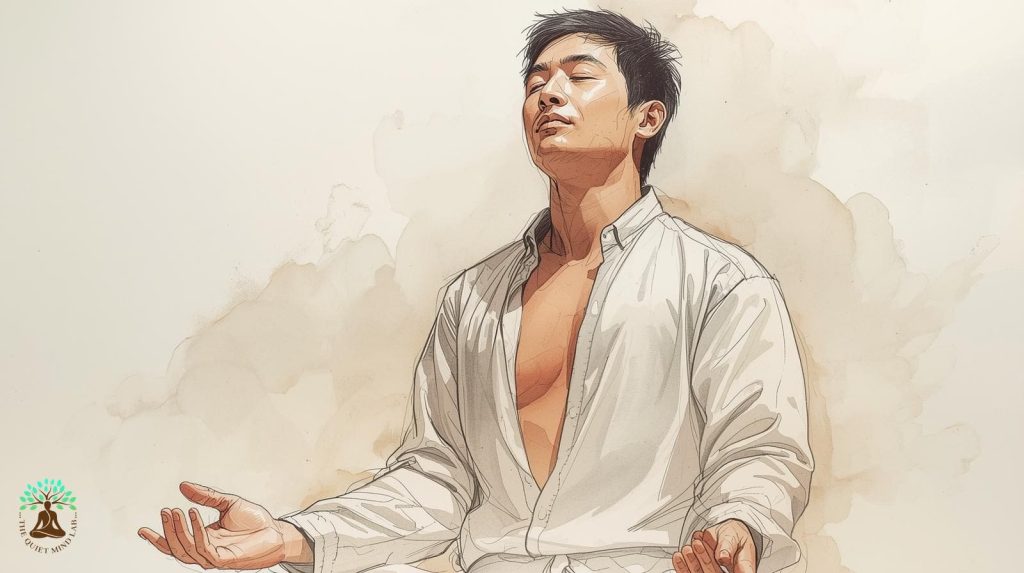
That might mean noticing the cooler air as you breathe in through your nose, the movement of your chest or stomach, or simply the vague sensation of breathing somewhere in the body. You essentially just choose whatever feels easiest for you to notice and stay with it for a while. Inevitably your attention wanders off into a thought, a plan, an imaginary conversation or something you suddenly remember you were supposed to do three days ago, and at some point you realise your attention has drifted, and gently return to the breath.
That wandering and returning is worth explaining properly here because we’re going to come across the same basic idea in several of the practices later on. Technically, breath meditation sits within a broader family usually called focused-attention meditation, where you deliberately choose one thing as an anchor and practice returning to it whenever your attention moves elsewhere. The breath in this instance is just a convenient anchor because it happens to follow you everywhere.
This was actually the first kind of meditation I started with, and after exploring plenty of other approaches over the years, it’s still the one I come back to most often. If my mind feels particularly chaotic, or I’ve fallen out of the habit for a while and meditation suddenly feels difficult again, going back to the breath gives me something familiar to settle into. There’s very little to think about beyond noticing the breath, realising when my attention has wandered off somewhere else, and bringing it back again.
I also love the fact that breath meditation doesn’t really ask much of you before you begin. You can sit for a couple of minutes or stay there for much longer, and you don’t need complete silence, the perfect room, or half an hour set aside before it’s worth doing. If you’re wondering how long a session should actually be when you’re starting out, we’ve gone into that separately in our guide to how long you should meditate, but there isn’t some magic number you have to reach before it suddenly starts to count.
It also won’t necessarily make your mind instantly quiet or peaceful, and to be honest I don’t think that’s a particularly useful way to judge whether a session went well anyway. Some days you’ll stay with the breath quite easily, and other days you’ll realise you’ve spent most of the time thinking about dinner, work, or something completely unrelated. The breath is just there to come back to when you notice you’ve disappeared into thought again, however many times that happens.
2. Body Scan Meditation
A body scan meditation is exactly what it sounds like. Instead of keeping your attention on one thing, like the breath, you slowly move through different parts of the body and notice whatever happens to be there. You might start at your feet and work upwards, or begin at the top of your head and go the other way – there’s no right or wrong way to practice.
As you move your attention through the body, you might notice warmth, pressure, tingling, tightness, an ache you hadn’t really registered before, or absolutely nothing interesting at all. And that last one is worth mentioning because a body scan can sound as though you’re supposed to uncover some fascinating hidden world of sensation, when sometimes your left shin just feels like… a left shin. You’re not hunting for anything specific, you’re just paying attention to what’s already there.
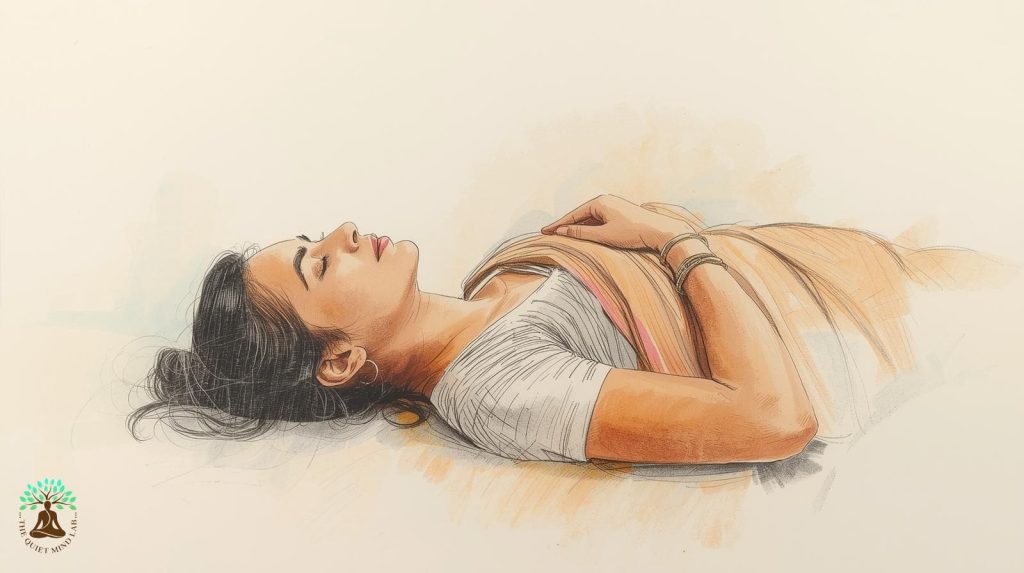
That makes it quite different from breath-focused meditation because the thing you’re paying attention to keeps changing. You might spend a few seconds noticing your feet, then your legs, stomach, chest, hands, shoulders and so on, so there’s a sense of moving through the practice rather than repeatedly returning to one fixed point. If you find yourself getting bored, or easily distracted watching the breath, that alone can make a body scan worth trying.
Your attention will still wander off, obviously, but we’ve already established that’s going to happen in pretty much every type of meditation we cover here. When you realise you’ve disappeared into thought, you just pick things up from roughly where you left off and carry on through the body.
One thing people sometimes misunderstand is that the aim of a body scan isn’t necessarily to relax. You might feel more relaxed by the end, but you might also become aware of tension, discomfort or restlessness that you hadn’t noticed five minutes earlier. The practice is really just about spending a little more time noticing physical experience rather than being completely occupied by whatever’s going on in your head.
If this style sounds like something you’d get on with, we’ve got a full guide to body scan meditation that goes through the practice in much more detail and gives you a straightforward way to try it for yourself.
3. Loving-Kindness Meditation (Metta)
Loving-kindness meditation, often called “Metta”, is one of those practices that can sound a bit like voodoo when you first hear about it, especially if your idea of meditation is mostly sitting quietly and paying close attention to the breath. Instead, you deliberately bring someone to mind and repeat (either out loud, or silently to yourself) a few simple phrases of goodwill towards them, which I’ll be the first to admit, can feel incredibly strange the first time you try it.
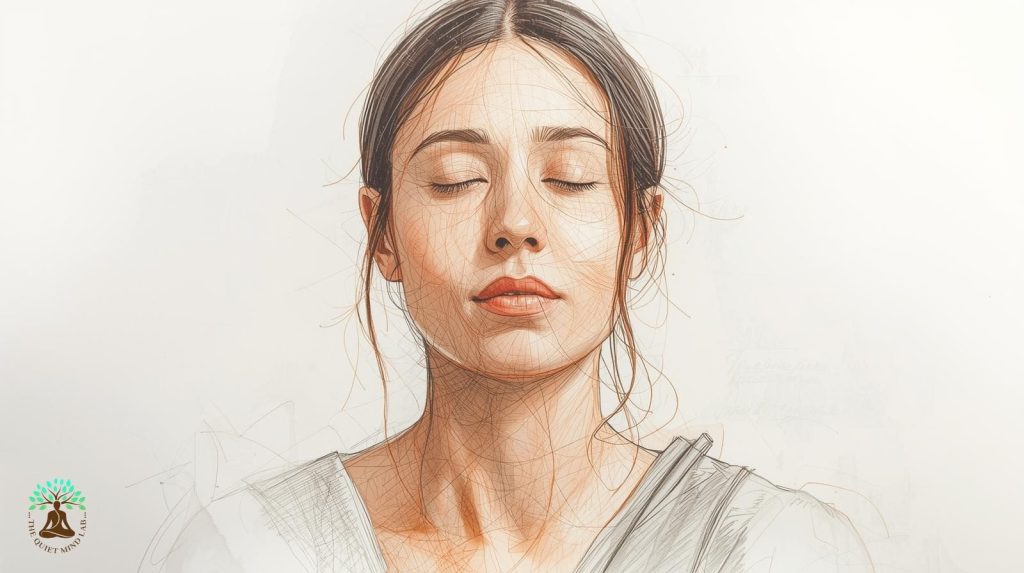
A common way to practice is to actually begin with yourself, using phrases such as “May I be safe. May I be well. May I live with ease,” before gradually directing the same kind of intention towards other people. You might move on to someone you care about, or somebody you don’t know particularly well, and eventually, if you want to, even somebody you find difficult.
And this is probably where loving-kindness differs most from the practices we’ve looked at so far, because there isn’t really anything physical to keep returning to. With the breath or a body scan, you’ve got something fairly concrete to notice, whereas here you’re deliberately sitting with the idea of goodwill towards yourself or somebody else. Sometimes that feels natural, and sometimes it really doesn’t.
Personally, I find the difficult-person part especially hard. I can understand the practice perfectly well when the phrases are directed towards someone I care about, but once I’m asked to offer that same goodwill towards somebody I’m angry with, irritated by, or simply don’t particularly like, it becomes a very different exercise. Repeating “May you be well” doesn’t suddenly make me feel warm or forgiving towards them, and sometimes it can feel completely unnatural.
But I think that resistance is part of what makes the practice interesting. You don’t have to pretend the relationship is fine, excuse somebody’s behaviour, or force yourself to feel differently about what happened. You’re just noticing what comes up when, for a few minutes, you stop feeding the usual argument or grievance and try relating to that person in a different way. Sometimes that feels surprisingly easy, and sometimes every part of you seems to object to the idea.
That’s also why I wouldn’t judge loving-kindness too quickly if it feels awkward the first few times. It’s a very different experience from following the breath or noticing sensations in the body, and for some people it probably takes a while before the whole thing stops feeling forced. If you want to explore it properly, we’ve got a full loving-kindness meditation guide that goes through the practice in much more detail.
4. Mantra Meditation
Mantra meditation is based around repeating a word, phrase or sound, either silently in your head or out loud, and using that repetition as the main focus of the practice. So although it can look quite different from watching the breath, underneath it there’s something fairly familiar going on: you’ve chosen one thing to stay with for a while, and when your mind wanders off, you come back to it.

The word mantra can make the whole thing sound more mysterious than it needs to be. Mantras have a long history in religious and spiritual traditions, and in some practices the particular words or sounds being used do have their own meaning and importance. But you’ll also come across more secular versions where somebody repeats a short word or phrase simply as part of the meditation. There isn’t one universal mantra that everybody is supposed to use, thankfully!
What makes this style feel different is the repetition. With the breath you’re watching something that changes naturally from moment to moment, whereas a mantra gives you a word or sound that you actively repeat, often with a rhythm that develops as you go along. Some people find having something more active to do with their attention easier than sitting quietly with the breath, while other people find repeating the same thing over and over slightly maddening. Both are perfectly reasonable reactions, and personally it’s not my favourite type of meditation.
Your mind is still going to wander, of course, but we probably don’t need to spend another three paragraphs pretending to be surprised by that. When you notice you’ve drifted off into something else, you return to the mantra and carry on. You might say it silently, whisper it, or repeat it aloud depending on the particular practice you’re following.
I think mantra meditation is probably worth experimenting with if you like the idea of having a little more structure during meditation, particularly if simply watching the breath leaves too much empty space for your mind to disappear into. That doesn’t mean a mantra will somehow block thoughts or stop you overthinking, it just gives you something different to work with and, like most of the styles in this guide, you won’t really know whether you get on with it until you try it.
If you want to explore the practice properly, we’ve got a full guide to mantra meditation that looks at how it works, different ways of practicing it, and how to get started without making the whole thing more complicated than it needs to be.
5. Visualisation Meditation
Visualisation meditation takes things in another direction again. Instead of following the breath, repeating a mantra or moving your attention through the body, you use some form of mental imagery as part of the practice. That might mean imagining yourself somewhere peaceful, picturing a particular object or colour, or following a guided scene as somebody talks you through it.
And despite the name, you don’t necessarily need to be brilliant at forming crystal-clear pictures in your head. Some people can imagine a beach and practically see the individual grains of sand, while for others (myself included) it’s much more vague, almost like having a sense of the place rather than actually seeing it. You’re not trying to produce a perfect mental film, so if the image comes and goes or never becomes particularly vivid, that doesn’t automatically mean this style isn’t for you.

What I think makes visualisation interesting is that there’s usually a bit more going on than simply sitting and observing. You might imagine walking through a forest, sitting beside the sea, watching clouds move across a sky, or picture tension leaving the body in some symbolic way. A guided visualisation can add even more structure because instead of having to invent the whole thing yourself, you can just follow the scene as it develops.
That can make this style worth trying if you find the more stripped-back practices a little difficult to stay with. Watching the breath can leave quite a lot of empty space for the mind to wander off into, whereas visualisation gives you a scene, a sequence or an idea to follow. Whether that feels absorbing or slightly distracting will probably depend on how naturally imagery works for you.
We actually use visualisation in some of our own guided meditations for exactly that reason. The anxiety meditation below is one example, where the practice gives you a visualisation template to follow rather than asking you to sit there and somehow stop thinking.
Try a Guided Visualisation for Anxiety
If you want to get a feel for what this type of meditation is actually like, you can try our guided visualisation for anxiety below. You don’t need to force yourself to picture every detail exactly as it’s described. Just follow along, let whatever images appear be as clear or vague as they happen to be, and see whether this style of practice feels natural to you.
And I think that’s probably the best way to judge visualisation meditation. You can read endless descriptions of what you’re supposed to imagine, but until you actually spend ten or fifteen minutes following one, it’s difficult to know whether your mind enjoys having that image to follow, or whether you’d be better suited to using the breath as your anchor..
6. Movement-Based Meditation (Including Walking)
Meditation doesn’t have to mean sitting still with your eyes closed, and if that’s the bit you’ve always struggled with, movement-based meditation might make a lot more sense. Walking is probably the easiest example, because you’re not really doing anything unusual, you’re just paying much closer attention to something you normally do without thinking about it.
And no, walking meditation doesn’t mean drifting through a forest in slow motion while trying to look enlightened. You can do it on a quiet path, around the garden, or even up and down a room if that’s what you’ve got. Instead of letting your legs get on with the walking while your mind disappears into tomorrow’s plans, an old conversation or whatever else it fancies, you bring some of your attention back to what’s actually happening as you move. The feeling of your foot leaving the ground, the next one landing, your weight shifting, your legs moving underneath you, the pace you’ve naturally fallen into, and so on.

There’s a bit more happening, and for some people that gives the mind just enough to stay interested without feeling like you’re trying incredibly hard to concentrate on one tiny sensation for ten minutes. You’re still going to wander off into thought, obviously, because walking doesn’t suddenly stop your brain being a brain, but eventually you realise you haven’t noticed a single step for the last thirty seconds and you just start paying attention to the walking again.
And to be fair, it doesn’t even have to be walking either. Yoga, stretching and other slow movements can all be approached in a similar way, and you can even play around with it during completely mundane things like washing up or sweeping the floor. I wouldn’t go as far as saying that doing the dishes automatically counts as meditation, because by that logic I’ve apparently been deep in meditation every time I’ve cleaned the kitchen, but if you deliberately start noticing the movement, the sensations, the sounds and what your attention is doing while you’re there, any task can become part of the practice.
So if sitting meditation has always felt awkward, restless or just a bit unnatural, I wouldn’t write meditation off on that basis alone. You might simply get on better with a style where your body has something to do at the same time, and walking is an easy place to test that without needing to learn anything particularly complicated.
If you fancy giving it a proper try, we’ve got a full guide to walking meditation that goes into it in more detail, and thankfully there’s no requirement to own a meditation cushion, find a mountain trail or develop the ability to walk anywhere looking remotely spiritual.
7. Noting Meditation
Stay with me here, because this style sounds more complicated than it is, and it’s one of those practices that made a lot more sense to me once I actually tried it. The basic principle is this: instead of fixing your attention on one thing (like the breath) and repeatedly coming back to it, you notice whatever happens to be there and give it a quick mental label before letting it move on.
So for example, if you become aware that you’re thinking, you might quietly note “thinking”. If you hear a car outside, “hearing”. If there’s tightness somewhere in the body, “sensation”. You might notice planning, worrying, remembering, impatience, or the fact that you’ve completely wandered off for the last minute. The labels don’t need to be clever or perfectly accurate, they’re really just a quick acknowledgement of what’s happening before you carry on.
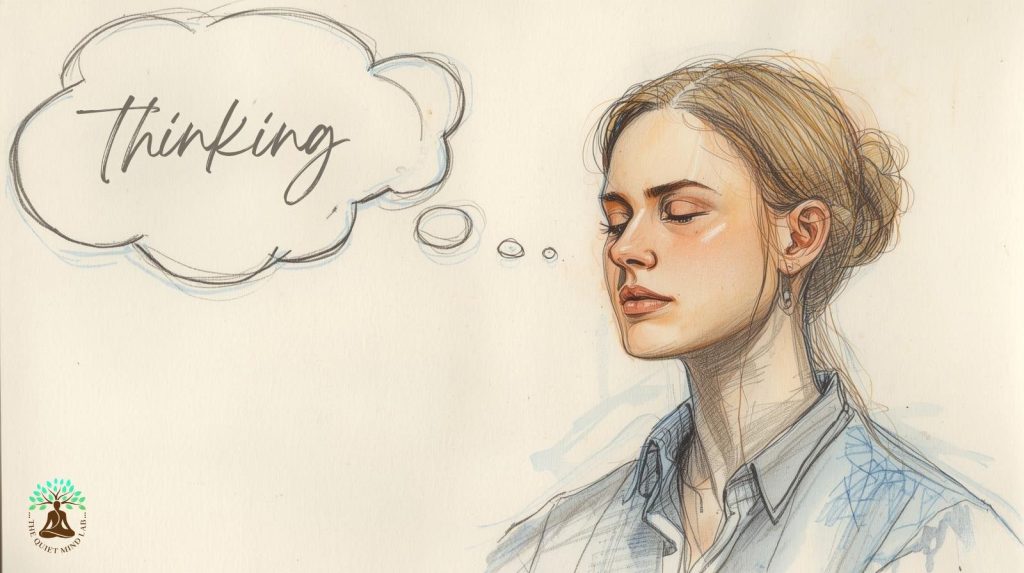
I really like the fact that noting gives you something to do with all the stuff that normally feels like a distraction. In breath meditation, a thought appears and you eventually come back to the breath. With noting, the thought itself can briefly become part of the practice. You notice “planning” or “worrying”, acknowledge that it’s there, and then see what comes next rather than having to treat every thought as something that interrupted the meditation.
That doesn’t mean you’re trying to label absolutely everything that passes through your mind, because you’d probably drive yourself insane within the first minute. But you’re just adding a small moment of recognition when something stands out, which can make it easier to notice how quickly the mind jumps from one thing to another without turning the session into a running commentary.
This is also where the different types of meditation start overlapping quite a bit. Noting is often used within broader mindfulness and insight practices, so if you’ve ever wondered why “mindfulness meditation” isn’t sitting here as a completely separate tenth category, this is part of the reason. Mindfulness can show up in several of the practices in this guide rather than belonging to one single technique, something we go into properly in our guide to what mindfulness actually is.
If you tend to get swept up in thoughts during meditation, noting might be worth experimenting with simply because it gives you another way of responding when they appear. You’re not trying to stop thinking, and you’re not trying to analyse every thought either. You just notice what’s there, give it a quick label if that helps, and move on.
8. Open Awareness Meditation
Open awareness meditation takes away quite a lot of the structure we’ve been using up to this point. There’s no breath you have to keep returning to, no mantra to repeat and no particular part of the body you’re working your way through. Instead, you just sit and notice whatever happens to turn up…
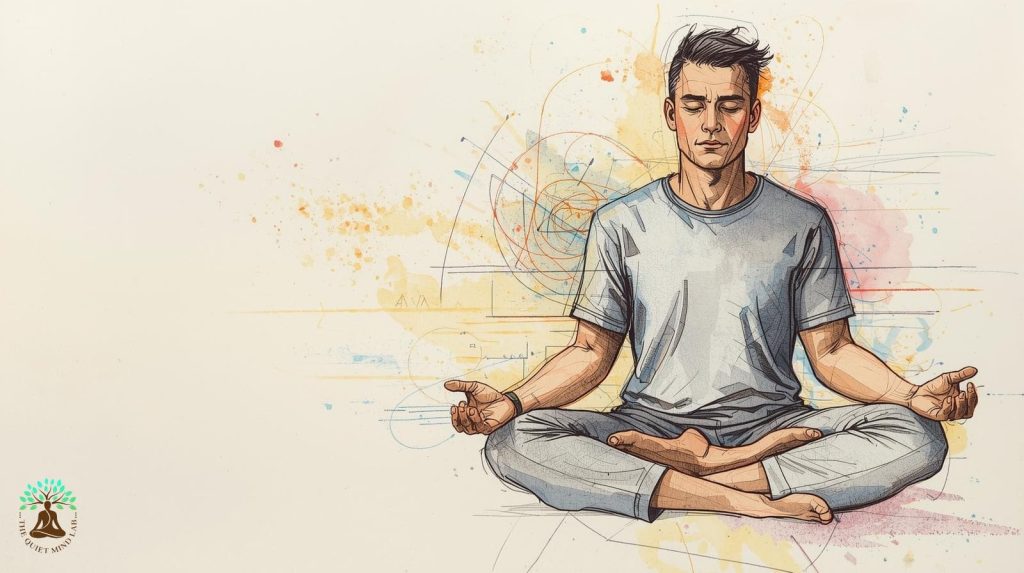
That could be the sound of something outside, an itch on your arm, your breathing, a thought that appears out of nowhere, or the fact that you’ve suddenly started thinking about what you need from Tesco later. Nothing has to become the main focus for very long – you just notice it while it’s there, and when something else catches your attention, you notice that instead.
It’s quite close to the noting practice we’ve just looked at, but there’s an important difference. With noting, you might recognise a thought and internally label it “thinking”, or hear a sound and note “hearing”, but with open awareness you can leave the labels out altogether and simply notice the experience as it changes.
That lack of structure can feel a bit strange at first, and without a clear anchor, it’s easy to wonder whether you’re actually meditating or just sitting there thinking about random things, and I think that distinction only really starts to make sense once you’ve tried it. The idea isn’t to deliberately follow every thought wherever it wants to go, but to notice thoughts, sounds, sensations and everything else without choosing one of them as the thing you have to stay with.
Some moments might feel fairly quiet, while others can seem ridiculously chaotic once you start noticing how much is actually going on. A noise outside, your leg feels uncomfortable, a memory appears, you notice the breath for a second, then another thought arrives. Open awareness lets all of that be part of the meditation rather than treating most of it as something that got in the way.
If you’ve tried more focus-based styles and found yourself constantly fighting to keep your attention on one thing, this might be an interesting one to experiment with. Equally, you might find the lack of structure makes your mind wander all over the place and decide you’d much rather have the breath or a mantra to come back to. At this point, I think we can safely say that’s exactly why trying a few different styles is more useful than deciding there must be one ‘proper’ way to meditate.
9. Focused-Attention Meditation (Using an Object)
We’ve actually already talked about focused-attention meditation earlier in the guide, because breath meditation belongs to the same broad family. The only real difference here is what you choose to focus on. Instead of following the breath, you might use something you can see, hear or feel, like a candle flame, a small object in front of you, or a particular sound.

A candle is probably the classic example. You sit somewhere comfortable, look at the flame without staring yourself half blind, and let that become the main thing you’re paying attention to. You might notice the movement, the shape, the way the light changes, and then at some point realise your mind has wandered off into something completely unrelated. When that happens, you just come back to the flame.
So underneath it all, it’s very similar to what we were doing with the breath right back at the beginning. You choose an anchor, stay with it as best you can, lose it, realise you’ve lost it, and come back. Some people might find an actual object easier to work with because there’s something right there in front of them, while others will find keeping their eyes open more distracting than helpful.
And it doesn’t necessarily have to be something visual. You could sit with the sound of rain, the ticking of a clock, or another fairly consistent sound and use that in much the same way. The important bit isn’t really the object itself, it’s that you’ve chosen one thing to keep returning to rather than letting every thought, sound and sensation compete equally for your attention.
I think this is also a good example of why the different types in this guide aren’t as neatly separated as they sometimes appear online. Breath meditation and focus-object meditation might be given different names, but they’re built around much the same idea, which is why I’d think of this less as learning a completely new technique and more as trying a different anchor to see whether it suits you better.
If watching the breath has always felt a bit too subtle, using something more obvious like a candle or a sound might be worth experimenting with. Or you might try it once, spend ten minutes wondering why you’re staring at a pebble, and happily go back to breathing. At least by this point you’ve got enough options to know there’s no reason to force yourself to stick with the one that annoys you most.
Other Meditation Styles, Traditions and Formats You’ll Come Across
By this point, you can probably see why a list of meditation types can get messy so quickly. The nine we’ve covered aren’t nine sealed-off boxes, and once you start reading around the subject you’ll come across names that sometimes describe a particular technique, sometimes a whole tradition, and sometimes simply the way a meditation is being delivered.
Even the National Center for Complementary and Integrative Health (NCCIH) describes meditation as a variety of practices rather than one single method, including approaches that use the breath, sounds, visual images or mantras, alongside mindfulness-based practices. That probably tells you more than any attempt to come up with the definitive list of nine, twelve or twenty-seven types of meditation ever could.
Zen is a good example of where the labels start getting blurry. It’s a much broader Buddhist tradition rather than simply another technique to add underneath body scans and mantra meditation, with seated practices such as zazen forming part of that tradition. Transcendental Meditation is different again, because it’s a specific system taught through its own method and instruction. You’ll also come across things like Yoga Nidra, chakra meditation, sound-based practices and plenty of others, some of which overlap with things we’ve already covered and some of which come with a much bigger tradition or philosophy behind them.
Then there are guided meditations, which I wouldn’t really call a separate type at all. You can have a guided body scan, a guided visualisation, guided loving-kindness or somebody simply talking you through the breath. “Guided” tells you more about how you’re doing the meditation than what kind of meditation it actually is. If you’re not sure which approach works better for you, we’ve gone into that properly in our guide to guided vs unguided meditation.
Breathwork gets bundled in with meditation quite a lot as well, although I think it’s useful to keep some distinction between the two. Sitting and noticing your natural breathing is one thing, while deliberately changing the way you breathe through a particular pattern or technique is another. They can overlap, but they’re not automatically the same practice, which is something we look at more closely in our guide to breathwork vs meditation.
When I first got into meditation, I wasn’t particularly interested in learning the names of every tradition or working out which category everything belonged in. I’d come to it because I was dealing with grief, along with periods of anxiety and stress, so my questions were much more basic: what does this actually involve, does it feel useful to me, and is it something I can realistically keep doing?
And after trying different approaches over the years, I still think that’s a pretty sensible way to look at all of this. It’s worth understanding what you’re practicing and where it comes from, especially when there’s a religious or cultural tradition behind it, but you don’t need to memorise an entire family tree of meditation styles before you’re allowed to sit down and try something. Learn enough to know what the practice is asking you to do, give it a fair go, and see how you get on with it.
Frequently Asked Questions
Which type of meditation should I start with?
If somebody asked me to pick one place to begin without knowing anything else about them, I’d probably still suggest breath meditation. There’s almost nothing to set up, you don’t need to learn a script or remember a technique, and it gives you a fairly clear idea of what meditation actually feels like.
But I wouldn’t stick with it just because somebody told you it’s the ‘beginner’ option. If sitting and watching the breath leaves you crawling out of your skin, try walking meditation. If you naturally think in pictures, visualisation might make more sense. If you like having something clear to follow, a mantra or guided meditation could be easier to get into, while a body scan gives you something physical to move through rather than asking you to stay with one tiny point of attention.
I think the main thing is to give one style a fair try without turning it into a test you have to pass. If it never really clicks, try another. The whole point of learning about the different types is that you’ve got options.
How long should I meditate for?
There isn’t really a magic number. If you’re new to meditation, even a few minutes is enough to get a feel for the practice without turning it into something you have to psych yourself up for.
I’d much rather see someone sit for five minutes and actually keep coming back to it than decide they need to meditate for half an hour, hate every second, and abandon the whole idea three days later. You can always stay longer once it starts feeling more familiar.
And different styles lend themselves to different lengths anyway. A quick breath practice might only take a couple of minutes, while a body scan or guided visualisation can naturally run longer.
What if I can’t sit still?
Then I wouldn’t force it. Sitting completely still isn’t some requirement you have to pass before meditation starts counting.
If you keep finding yourself fidgeting, getting restless or just wanting to get up, try walking meditation instead and see whether having your body involved makes the whole thing easier to get into. You can still practice paying attention, noticing when your mind wanders and coming back, you’re just doing it while moving rather than sitting in one place.
And if walking feels more natural, that’s perfectly fine. You’re not doing a lesser version of meditation just because you’re not sitting cross-legged with your eyes closed.
What if my mind won’t stop thinking?
That’s probably one of the most common things people worry about when they start meditating, but you don’t need your mind to go quiet before the practice is somehow working.
Thoughts are going to turn up. Sometimes you’ll notice them almost straight away, and other times you’ll realise you’ve been completely lost in one for the last couple of minutes. When that happens, you just come back to whatever you were doing, whether that’s following the breath, repeating a mantra, noticing the body or something else.
I think it helps to stop treating every thought as proof that the session isn’t working. The noticing and coming back are part of what you’re practicing in the first place, so a busy mind doesn’t automatically mean you’re bad at meditating.
If this is the bit you tend to get stuck on, our guide to common meditation mistakes goes into this and a few other things that can make meditation feel harder than it needs to.
Which type of meditation is best for anxiety?
I don’t think there’s one type I’d confidently call the best for anxiety, because people can react quite differently to the same practice. Breath meditation works really well for some people, while others find that paying close attention to their breathing actually makes them more aware of the sensations they’re already worrying about.
A body scan, walking meditation, visualisation or guided practice might feel easier, but I’d treat that as something to experiment with rather than a prescription. If anxiety is the main reason you’re interested in meditation, we’ve got a separate meditation for anxiety guide where we can go into the different options properly rather than trying to squeeze them into a paragraph here.
And if a particular meditation consistently leaves you feeling worse, you don’t need to keep pushing through it just because somebody told you meditation is supposed to help. Try something different, shorten the session, or leave it alone for the time being.
For a broader, research-based look at how mindfulness affects mental health and anxiety over time, the Mindfulness Center at Brown University offers excellent resources and up-to-date findings.
Is meditation supposed to feel relaxing?
Sometimes it is, but I definitely wouldn’t use relaxation as the test of whether you’ve had a good meditation session.
There will be times when you might finish feeling noticeably calmer, and others where you spend ten minutes noticing how restless, distracted or irritated you actually are. Meditation can make you more aware of what’s already going on, and that isn’t always going to feel particularly peaceful.
So if you sit down expecting every session to leave you floating around in a state of bliss, meditation is probably going to disappoint you fairly quickly. Relaxation can happen, but it doesn’t have to be the thing you’re chasing.
What if meditation makes me emotional?
That can happen. Sitting quietly and paying closer attention can sometimes make feelings more noticeable than they were when you were busy doing something else, but I wouldn’t automatically assume that every strong emotion is something you need to sit through or that it’s somehow an important part of the process.
If something comes up and it feels manageable, you can notice it without immediately trying to explain it, fix it or push it away. But if a meditation starts feeling overwhelming, there’s absolutely nothing wrong with stopping, opening your eyes, getting up or switching to something that feels easier to work with.
We’ve gone into this in more detail in our guide to meditation for difficult emotions, and we also have a separate look at whether meditation is safe for everyone if you’ve ever had an experience during meditation that’s made you unsure about continuing.
Can I switch between different types?
Absolutely. I do it myself, and I think it would be slightly odd to spend an entire article showing you nine different approaches and then insist that you choose one for the rest of your life.
You might prefer the breath most of the time but occasionally fancy a body scan, walking meditation or guided visualisation instead. You might also find that something you disliked the first time makes much more sense a few months later.
The only thing I’d avoid is switching every thirty seconds because a practice feels difficult. Give yourself enough time to actually understand what you’re trying before deciding it isn’t for you, but beyond that there’s no rule saying you have to stick faithfully to one style.
Do I need an app, a teacher, or special equipment?
For most of the practices in this guide, no. You can sit on a chair, lie down, go for a walk, follow your breathing or pay attention to a sound without buying anything at all.
Apps and guided meditations can be useful if you like having somebody lead you through a session, and a good teacher can obviously take you much further if you want to explore a particular tradition or practice in depth. Some specific systems are traditionally taught with formal instruction as well, so I wouldn’t say teachers are never necessary.
But you certainly don’t need a meditation cushion, incense, complete silence or a spare room that looks like a retreat centre before you can begin. You don’t even need your surroundings to be particularly quiet, and if noise is the thing that keeps putting you off, we’ve got a guide to meditating in a noisy environment that might help.
A Few Final Thoughts
After trying quite a few different approaches over the years, breath meditation is still the one I come back to most often. Not because I think it’s somehow better than everything else, but because it suits me. I know what I’m doing, I don’t have to think too much about the technique, and even after I’ve fallen out of the habit for a while, it’s usually the easiest place for me to start again.
And really, that’s the point of this whole guide. The names and categories are useful because they give you some idea of what’s out there, but I wouldn’t get too hung up on finding the correct type of meditation. As we’ve seen, half of these practices overlap anyway, and the same technique can sit under several different labels depending on the tradition, teacher or website explaining it.
What matters more is what you’re actually being asked to do. Do you like having one clear thing to focus on? Try the breath, a mantra or an object. Do you prefer having a bit more going on? A body scan, visualisation or walking meditation might suit you better. Are you curious about simply noticing whatever appears? Noting or open awareness gives you somewhere else to go.
Then try one properly and see what you make of it. Not for thirty seconds before deciding you hate it, but long enough to understand what the practice actually feels like. If it clicks, keep going. If it doesn’t, try something else.
I’ve never found much value in treating meditation like a collection of techniques you’re supposed to master. I’d rather have one or two practices I genuinely come back to than know the names of twenty and rarely use any of them. Find something that makes enough sense that you can imagine doing it again, and start there.
