
Most meditation ‘mistakes’, like mind-wandering, physical restlessness or simply not feeling instantly calm, aren’t mistakes at all. They’re completely normal experiences. The real trap is judging your practice against unrealistic expectations and turning self-awareness into another performance metric.
Meditation is one of those things that sounds almost insultingly simple on paper: Sit down. Pay attention to your breath. Notice when your mind wanders. Come back.
Simple, right?
Then you close your eyes, and within thirty seconds your brain decides this is the precise moment to resurrect a cringey memory from twelve years ago. Your left leg suddenly insists it needs moving, you start overthinking whether you’re breathing ‘correctly’, and four minutes in you’re convinced everyone else is somehow doing this effortlessly while you are getting it wrong.
That’s where most meditation ‘mistakes’ actually begin.
Mind-wandering isn’t the mistake. Feeling restless isn’t the mistake. Having a session that doesn’t leave you feeling completely relaxed isn’t a mistake either. The real trouble starts with what we decide those normal experiences mean: I’m bad at this. I’m doing it wrong. My mind should be calmer, or quieter, by now.
Once you start measuring every session against an imaginary standard of what meditation is supposed to feel like, a practice meant to help you notice what’s happening can become unnecessarily stressful.
In this guide, we’re going to look at nine things people commonly worry they’re getting wrong. But rather than handing you nine rigid rules for becoming a ‘better’ meditator, we’re going to separate the perfectly ordinary things minds do from the expectations and habits that genuinely make meditation harder than it needs to be.
And where there are things worth changing, like forcing an experience, chasing perfection or using meditation to avoid something that needs dealing with elsewhere, we’ll talk about those too.
Because after years of meditating, one of the strangest things I’ve noticed is how easily we can turn a practice built around noticing what’s happening into yet another opportunity to decide we’re doing something wrong.
Let’s break them down…
Contents
- 1. Thinking You’re Bad at Meditation Because Your Mind Won’t Settle
- 2. Treating Meditation Like Something You Need to Do Properly
- 3. Expecting Meditation to Instantly Make You Calm or Relaxed
- 4. Trying to Control Thoughts Instead of Noticing Them
- 5. Getting Frustrated When the Mind Keeps Wandering
- 6. Comparing Your Experience to What You Think Everyone Else Is Experiencing
- 7. Believing Meditation Only Counts If You Do It Consistently or “Properly”
- 8. Using Meditation as a Way to Escape What You’re Feeling
- 9. Expecting Meditation to Eventually “Fix You”
- Frequently Asked Questions
- A Closing Thought
1. Thinking You’re Bad at Meditation Because Your Mind Won’t Settle
Key Takeaway: A busy mind during meditation doesn’t mean you’re failing. Removing some of the usual external distractions can make mental chatter much easier to notice, and noticing that activity is part of the practice.
This was one of the first things that confused me when I started meditating.
I’d sit down fully expecting my mind to gradually settle into a calm, tranquil state, and instead, the exact opposite happened. The moment I closed my eyes, an absolute avalanche of mental activity hit me: unfinished conversations, random to-do lists, completely pointless memories, and whatever else my brain had apparently been hoarding for the occasion.
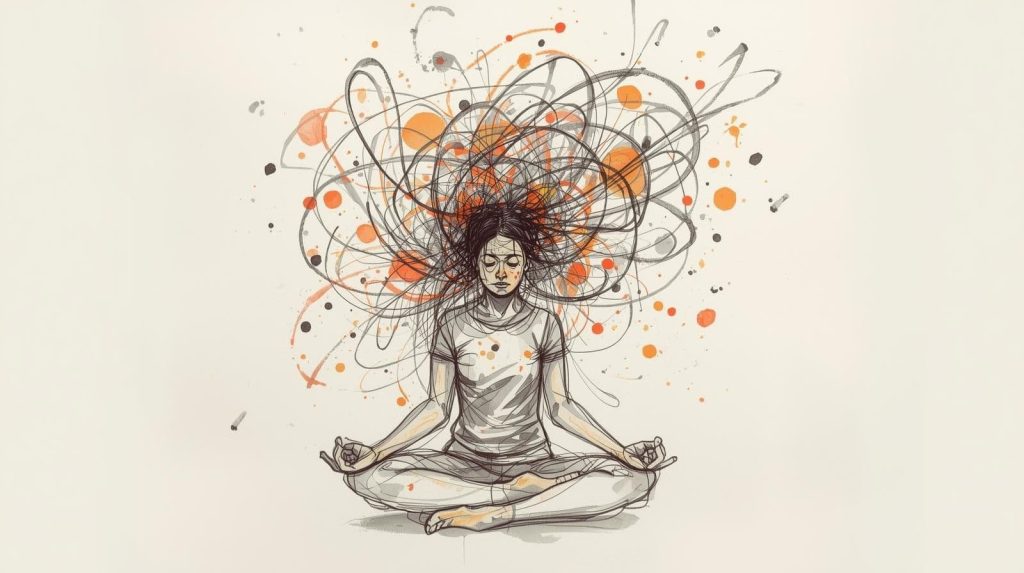
It’s easy to interpret that as failure – and believe me I did!
You came to meditation for a little peace and clarity, and suddenly the inside of your head feels busier than the M25 on a Friday afternoon. If everyone else is supposedly sitting in blissful serenity while your brain is bouncing off the walls, the natural conclusion is that you must be doing something wrong.
Except a busy mind doesn’t mean that at all.
What’s happening may be less about meditation suddenly creating a load of extra thoughts and more about a simple shift in what you’re paying attention to:
- In daily life: While working, scrolling, driving or watching TV, your attention is constantly being pulled towards things outside you. Thoughts can stream past in the background without you ever really stopping to notice them.
- In meditation: You remove much of that external noise, and suddenly the mental chatter that normally slips past unnoticed becomes much harder to ignore.
Meditation hasn’t necessarily made your mind more chaotic. It may simply have turned down the volume on the outside world enough for you to notice how noisy the inside world already was.
That distinction changed everything for me. Once I realised this, I stopped judging my sessions by how ‘calm’ my mind was. My mind still wanders all over the place when I meditate now, and that’s nothing to be ashamed of. The real shift is that I’m much more likely to notice it happening now, and that brief moment of realisation is part of the practice, not proof that I’ve failed at it.
We broke down the neuroscience behind this cycle in our guide to what mindfulness actually does in the brain, but you don’t need an fMRI scanner to recognise the basic experience.
If your first few sessions feel surprisingly noisy, don’t take it as proof that you’re ‘bad’ at meditation. Spend a little time getting familiar with what your mind actually does when there’s nothing else demanding its attention.
The goal isn’t to force your mind to go silent; it’s to change your relationship with all that noise, and that’s a far more useful skill to take into real life than a quiet mind.
2. Treating Meditation Like Something You Need to Do Properly
Key Takeaway: There’s no single ‘perfect’ posture, environment, or feeling in meditation. Constantly checking whether you’re doing it ‘correctly’ creates an internal monitor that becomes far more distracting than the thoughts you’re trying to observe.
This one also took me quite a while to get over.
When I first started meditating, I had a very specific picture in my head of what real meditation was supposed to look like. You sit cross-legged on the floor, look vaguely serene, keep your back perfectly upright, and remain completely motionless while peacefully observing the breath…

Anything else felt like a cop-out:
- Sitting in a chair felt like cheating.
- Using cushions for support felt like cheating.
- Moving because my legs went numb definitely felt like cheating.
Looking back, I have absolutely no idea who I thought was keeping score!
It’s surprisingly easy to fall into this trap. We see social media posts, read instructions about posture, learn different meditation techniques, and gradually build an imaginary version of an expert meditator that we spend every session trying to imitate.
Before long, your internal monologue turns into a performance review:
- Am I sitting correctly? Is my back straight enough? Should I be breathing deeper? Have I moved too much? Am I concentrating hard enough? Why don’t I feel calmer yet?
Half your attention is trying to focus, while the other half is standing over your shoulder with a clipboard.
Posture and structure certainly matter (if you’re in sharp physical pain, that discomfort becomes the only thing you can think about), and having basic guidelines makes learning easier, but structure isn’t the same thing as perfection.
These days, I care far more about whether a posture allows me to sit comfortably and stay alert than whether I look like someone on the cover of a wellness magazine. I’ll use a chair, or cushions, and if something genuinely hurts, I’ll adjust my position. Moving doesn’t magically invalidate the ten minutes of solid practice you just did.
In fact, obsessing over the ‘correct’ this, or ‘proper’ that, can quickly turn meditation into the exact performance exercise we’re actively trying to avoid. Instead of noticing what’s actually happening, you spend the entire session measuring reality against an imaginary ideal.
When you catch yourself doing this, the fix is refreshingly simple. You don’t need to force the self-criticism to stop – just treat it like any other distraction:
- Spot the thought: “Am I doing this properly?”
- Name it: Recognize it as just another mental pop-up.
- Let it pass: Gently return your attention back to your breath.
Ironically, catching that internal critic and letting it go is a lot closer to ‘proper’ meditation than spending twenty minutes trying to look like you’ve nailed it.
3. Expecting Meditation to Instantly Make You Calm or Relaxed
Key Takeaway: Meditation can definitely leave you feeling more grounded, but calm isn’t the entry fee or the scorecard. Some sessions feel completely peaceful, others feel like a restless mess, and plenty simply wake you up to how stressed or frazzled you were in the first place.
This obsession with calm makes total sense when you look at how meditation gets marketed to us.
Do a quick search online and you’re immediately bombarded with serene faces, flickering candles, picturesque sunsets, suspiciously spotless living rooms, and people who look like they’ve achieved a level of inner peace usually reserved for Zen masters and cats fast asleep on warm radiators.

So naturally, you sit down on your cushion expecting an instant upgrade in mood.
And sometimes, it works.
There are days when your breathing naturally slows, your thoughts quiet down, and you finish a session noticeably lighter than when you started. And don’t get me wrong, that’s awesome and I encourage you to enjoy every second of it.
But there are also days where you spend ten straight minutes realising you are deeply restless, grumpy, distracted, or carrying way more physical tension than you had any idea you were carrying.
And the truth is, those sessions count just as much.
The trap is assuming that because meditation can be relaxing, relaxation must be the mandatory product delivered every single time. Once that expectation sneaks in, you instantly start mentally grading your performance while you’re still in the middle of it:
Am I calm yet? Is this actually working? Why do I still feel so tight?
Just like that, meditation turns into another high-pressure productivity chore.
The reality is, tuning in closer often makes discomfort more obvious, simply because you’ve stopped running away from it for a few minutes. You suddenly notice your shoulders have been locked in a death-grip all afternoon, the uneasy knot in your stomach, or the fact that your mood is lingering a lot lower than you realised.
That doesn’t mean meditation caused any of those feelings, and it definitely doesn’t mean you bombed the session. You’re just finally paying attention to what was already sitting there in the background.
I think shifting the metric makes the whole practice infinitely healthier. Instead of asking, “Did meditation make me calm?” try asking something much more honest: “Did I spend a few minutes actually noticing what was going on?”
If calm showed up, lovely. If it didn’t, you still meditated.
And ironically, dropping that self-imposed pressure makes practice so much easier. You’re no longer trying to force-feed your brain into a specific emotional state before the kitchen timer goes off. You give yourself permission to let the session be whatever chaotic, messy thing it is, and work with that instead.
That’s especially crucial if you’re turning to meditation specifically for stress relief. The goal isn’t to magically evaporate every ounce of stress within a ten-minute window. It’s about learning to sit with what’s happening without instantly throwing your hands up and declaring the practice a failure just because you still feel a bit frayed at the edges afterward.
Meditation can absolutely bring peace and quiet – it just doesn’t owe you a zen makeover on demand.
4. Trying to Control Thoughts Instead of Noticing Them
Key Takeaway: You don’t need to stop, suppress or finish a thought before returning to your meditation. Notice that it’s there, recognise that your attention has been pulled away, and come back.
Once you’ve accepted that thoughts are going to turn up during meditation, there’s another temptation waiting for you, and that’s trying to do something about them.
A thought appears and instead of simply noticing it, you start negotiating with it.

Not now.
I’m meditating.
Go away.
Then, naturally, you’re still thinking about the thought you were trying not to think about, except now you’ve also added a small argument with yourself on top.
I think this is where one of the simplest parts of meditation can become unnecessarily complicated. We assume that before we can return to the breath, we somehow need to get rid of whatever distracted us first.
But you don’t.
If you suddenly realise you’ve spent the last minute planning tomorrow’s dinner, you don’t need to finish planning it, mentally delete it or wait for the thought to disappear. You can notice “Oh, I’m thinking about dinner” and return to the breath while the thought is still perfectly capable of hanging around in the background.
That sounds almost too simple, but it completely changes the job.
You’re no longer responsible for controlling what appears in your mind. You’re practicing what happens after you notice something has appeared.
And this is where mindfulness starts to make considerably more sense. The point isn’t to create a perfectly tidy internal world where only approved thoughts are allowed through the door. It’s learning to notice thoughts without automatically treating every one of them as something that needs following, fixing or getting rid of.
A little trick I find useful is to make the return almost boringly simple:
There’s a thought.
Back to the breath.
No argument. No investigation. No internal disciplinary hearing.
And if the same thought comes back ten seconds later?
Notice it again and come back again.
That doesn’t mean you should never deliberately think something through, solve a problem or make a plan. There are plenty of times when that’s exactly what you should do. Meditation just isn’t usually the moment you need to do it.
For those few minutes, the thought can remain unfinished.
That’s quite a useful thing to discover, because once you stop treating every thought as something that requires a response, the mind doesn’t have to become silent for the session to feel less crowded.
You’ve simply stopped trying to personally escort every thought out of the building.
5. Getting Frustrated When the Mind Keeps Wandering
Key Takeaway: Mind-wandering doesn’t disappear once you become ‘good’ at meditation. Progress can be much less obvious than that, showing up in how quickly you notice you’ve drifted, how easily you return, and how much less annoyed you become when it inevitably happens again.
Even once you understand that mind-wandering is completely normal, it can still be unbelievably irritating when it happens for what feels like the fiftieth time in the same meditation.
I know perfectly well that my mind is going to wander, and it still occasionally catches me out. I’ll be following the breath quite happily, then at some point realise I’ve spent the last couple of minutes thinking about something completely unrelated. Sometimes it’s something vaguely useful, like what I need to get done later. Other times I’ve somehow travelled through three different memories, an imaginary conversation that has never happened, and a completely pointless thought about what I’m having for dinner.

The frustrating part isn’t really that the mind wandered. It’s that little flash of disappointment when you notice.
For God’s sake, I was doing really well.
That reaction tells us quite a lot about the expectation hiding underneath it. Even when we accept intellectually that minds wander, there can still be this assumption that practice should eventually make it happen less and less until, presumably, we reach some glorious stage where attention stays glued to the breath for twenty minutes and nothing remotely interesting enters our head.
I certainly haven’t reached it.
My attention still drifts regularly, and I don’t think the useful change has been learning how to prevent that from happening. What has changed is that I’m much less likely to make a big deal out of it. I notice where my mind has gone, realise I’m no longer paying attention to the breath, and bring it back without immediately turning the whole thing into a judgement about whether I’m having a ‘good’ meditation.
That sounds like a small difference, but I think it matters.
If every moment of mind-wandering is followed by irritation, self-criticism and an attempt to concentrate twice as hard, you’ve taken something completely ordinary and added another layer of struggle to it. The wandering itself might have lasted thirty seconds, but now you’re spending another thirty mentally complaining about the fact that it happened.
Once you stop treating every lapse in attention as something that needs scoring, the whole cycle becomes much less frustrating. The mind wanders, eventually you notice, and you return to whatever you were focusing on. Sometimes that happens quickly and sometimes you’ll have been mentally elsewhere for quite a while before the penny drops, but the important part is that you noticed.
That’s also why I wouldn’t measure your progress by how perfectly focused your meditation sessions feel. Some of the more useful signs that meditation is working can be surprisingly ordinary, and noticing distraction without immediately beating yourself up about it is a much more realistic marker than waiting for your mind to stop wandering altogether.
If concentration itself is something you’re trying to improve, we’ve also got a separate guide to meditation for focus, but even there I wouldn’t think of success as achieving some permanently distraction-free state. For me, it’s much more about getting familiar with the fact that attention moves, noticing when it has, and becoming better at bringing it back without turning every detour into a problem.
Because after years of meditating, my mind still wanders.
I’ve just stopped expecting it to apologise every time it comes back.
6. Comparing Your Experience to What You Think Everyone Else Is Experiencing
At some point, meditation stops being judged only against your own expectations and starts being measured against other people’s experiences, or at least what you imagine those experiences to be. You read descriptions of calm, clarity, insight, or long stretches of steady attention, and it’s hard not to wonder why your own practice feels so much more chaotic by comparison.
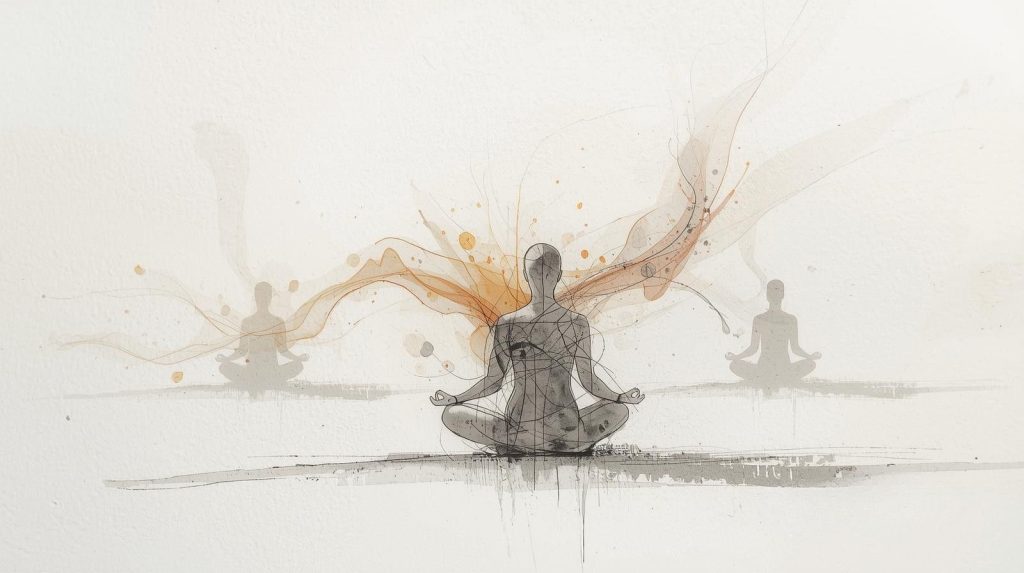
This comparison rarely comes from anything concrete. You don’t actually know what anyone else’s inner experience is like. What you’re responding to are second-hand descriptions, polished explanations, or brief snapshots that leave out most of the uncertainty, boredom, and confusion that tend to sit underneath any real practice. But once the comparison starts, it can quietly undermine confidence. You begin to interpret your own experience as lacking, as though you’re falling behind or missing some crucial understanding.
The problem is that meditation doesn’t produce a standard set of experiences. Attention, emotion, and bodily awareness show up differently for different people, and they change over time even for the same person. Some days feel settled, others don’t. Some sessions feel vivid, others flat. None of that says much about how things are actually unfolding beneath the surface.
What comparison does is pull attention away from the only place meditation really happens, your own direct experience. Instead of staying with what’s present, you’re holding it up against an imagined benchmark and finding it wanting. That habit creates distance rather than clarity, and it often brings a subtle sense of pressure that wasn’t there before.
Over time, most people discover that the most useful reference point isn’t what meditation looks like for someone else, but what it feels like to be more aware of their own patterns. Noticing when comparison arises, and how quickly it colours the experience, becomes part of the practice in itself. When that habit loosens, meditation tends to feel simpler again, less like a performance that needs to measure up, and more like a space where experience can be met on its own terms.
So if you find yourself comparing your meditation to what you think it should look like for other people, that isn’t another problem to fix. It’s just another familiar mental habit showing itself more clearly, and one that gradually loses its grip once it’s seen for what it is.
7. Believing Meditation Only Counts If You Do It Consistently or “Properly”
After a while, many people start to carry an unhealthy expectation about how meditation should fit into their lives. The most significant benefits of meditation are linked to a regular practice (ideally daily). Preferably at the same time each day, for a decent length of time, without interruption. And if it doesn’t happen that way, it’s easy to feel as though the practice has slipped, or that whatever progress you were making has been undone.
This belief can turn meditation into something slightly brittle. Sessions that fit the ideal feel worthwhile, while anything shorter, messier, or more sporadic starts to feel like it doesn’t really count. Miss a few days, or only manage a few minutes here and there, and the sense of starting again from scratch can creep in.

But meditation doesn’t work like a streak you have to protect. It isn’t building towards a fragile state that disappears the moment routine breaks. What matters far more than regularity is familiarity. Each time you sit down, however briefly, you’re reconnecting with the same basic process of noticing what’s happening and how you respond to it. That familiarity doesn’t vanish just because life gets in the way for a while.
The idea that meditation has to look a certain way can quietly discourage people from returning at all. If the perfect conditions aren’t there, if the session won’t be long enough or focused enough, it can feel easier to skip it entirely. But that all-or-nothing mindset isn’t something meditation demands, it’s something we bring with us from elsewhere.
Over time, many people find that meditation becomes more resilient when it’s allowed to be flexible. Short sessions still matter, and so do distracted sessions. Even the decision to sit down when you don’t feel particularly motivated still matters, not because it ticks a box, but because it reinforces a relationship with awareness that isn’t dependent on ideal circumstances.
So if your meditation practice feels uneven, inconsistent, or imperfect, that doesn’t mean it’s failing. It usually means it’s learning how to live alongside the rest of your life, rather than competing with it.
8. Using Meditation as a Way to Escape What You’re Feeling
At some point, meditation can quietly take on a new role. Instead of being a place where experience is noticed, it starts to feel like somewhere you go to get away from things. You sit down hoping the practice will smooth over a difficult mood, quiet an anxious edge, or create a bit of distance from something you don’t particularly want to feel.
Again, this is completely understandable. If meditation has helped you feel calmer or clearer at times, it’s natural to want to return to that state when things feel uncomfortable. But when meditation becomes a way of avoiding experience rather than meeting it, something subtle shifts.

You might notice a tendency to gravitate only toward certain kinds of sessions, the ones that feel soothing or spacious, while quietly resisting moments where strong emotions, physical discomfort, or restlessness show up. Or you might find yourself disappointed when meditation doesn’t deliver the relief you were hoping for, as though it’s failed in its job.
The difficulty here isn’t that meditation can’t support emotional balance over time, it’s that awareness doesn’t work by bypassing what’s present. When attention is used to turn away from discomfort, it often tightens rather than softens the experience. The body stays braced, the mind stays on guard, and the very thing you’re hoping to escape continues to sit just below the surface.
What meditation offers instead is a chance to stay in contact with experience without immediately trying to fix it. That doesn’t mean enjoying discomfort, or resigning yourself to it. It means allowing sensations and emotions to be felt as they are, without adding the extra layer of resistance that usually makes them harder to carry.
This can feel counterintuitive, especially in a culture that encourages constant self-regulation and emotional management. But over time, many people notice that the moments they stop trying to meditate their way out of discomfort are the moments when something genuinely begins to shift. Not because the feeling disappears, but because their relationship to it changes.
So if you notice yourself using meditation as a kind of refuge from difficult experiences, that isn’t another thing to get wrong. It’s simply another strategy the mind reaches for when things feel uncomfortable, and one that awareness gradually brings into clearer view.
9. Expecting Meditation to Eventually “Fix You”
Even after all of this has been understood, there’s often one expectation that lingers quietly in the background. The sense that if you keep meditating, something about you will eventually settle for good. That there’s a calmer, clearer, more sorted version of yourself somewhere down the line, and meditation is the thing that’s meant to get you there.

This expectation doesn’t usually show up as a conscious belief. It’s more of an atmosphere around the practice. A feeling that meditation is leading somewhere definite, and that when you arrive, the noise, the reactivity, and the familiar struggles will finally loosen their grip.
What tends to happen instead is subtler. Meditation doesn’t remove the ups and downs of being human. Thoughts still arise, emotions still move through, and old patterns still appear under pressure. The difference is that you start to recognise them more quickly, and you’re less likely to be completely carried away by them when they do.
Over time, this can be disappointing if you’re still measuring meditation by whether it’s producing a permanent change in how you feel. But it can also be freeing. The practice stops being about becoming a better version of yourself and starts being about meeting experience as it unfolds, again and again, without the demand that it resolve into something final.
There isn’t a point where meditation is finished, or where you graduate into a version of yourself that no longer struggles. What develops instead is a growing familiarity with your own mind, and a greater capacity to stay present even when things aren’t particularly neat or comfortable.
So if you notice yourself waiting for meditation to finally fix you, that doesn’t mean you’ve misunderstood the practice. It means you’ve reached one of the quieter turning points, where the aim shifts from self-improvement to self-understanding. And for many people, that shift is where meditation begins to feel most grounded, and most sustainable, over the long term.
Frequently Asked Questions
Is it normal to feel worse when you first start meditating?
Yes. This is one of the most common early experiences, and it’s often misunderstood. Meditation doesn’t add new thoughts, emotions, or tension, it makes you more aware of what was already there. When the usual distractions drop away, things can feel sharper or more exposed for a while.
If you’d like a clearer sense of what’s happening in the mind during this stage, our article The Science of Mindfulness | What Happens in the Brain explores how attention, awareness, and mental activity interact when you start paying closer attention.
How do I know if I’m meditating properly?
A lot of people look for a particular feeling as proof that meditation is “working” – a sense of calm, clarity, or a quieter mind. But meditation doesn’t offer a single success signal. A better indicator is whether you’re noticing your thoughts, reactions, and habits of attention more clearly, even if the experience itself still feels messy.
We unpack this in more detail in How to Meditate Properly (and Find the Style That Fits You), in which we look at what actually counts as meditation and why trying to do it “right” often gets in the way.
How long should I meditate for?
There’s no ideal length that works for everyone. Longer sessions can be helpful, but only if they’re sustainable. Shorter sessions still matter, especially if they make it easier to return to the practice without turning it into another obligation.
If you’re trying to find a rhythm that fits your life, How to Start a Daily Meditation Habit: 9 Simple Tips is well worth a read.
What if my mind never gets quieter?
It probably won’t, at least not in the way people often expect. Minds think, and meditation isn’t about stopping that process, it’s about recognising it sooner and being less pulled around by it. Over time, thoughts often feel lighter and less urgent, even if they don’t disappear.
Our beginner guide What Is Meditation? A Simple, Calm Guide for Beginners explains this distinction clearly, and why a busy mind isn’t a sign that meditation isn’t working.
Which type of meditation should I try?
Most of the experiences described in this article show up across different styles of meditation. The “right” type isn’t the one that avoids difficulty, it’s the one you’re most likely to stick with and engage honestly.
If you’re still exploring, 9 Types of Meditation: Which One Will Actually Work for You? walks through the main styles and how they tend to feel in practice.
Can meditation actually help with stress?
For many people, yes, but not by switching stress off on demand. Meditation often changes your relationship with stress before it changes how often stress appears. That shift can be subtle, but it’s one of the most reliable long-term benefits people notice.
For a well-researched, secular perspective on mindfulness and attention, the University of Oxford Mindfulness Centre provides evidence-based research and training grounded in psychology rather than spirituality.
A Closing Thought
If there’s a common thread running through all of these experiences, it’s that meditation tends to be misunderstood long before it’s actually difficult. Many of the meditation mistakes people worry about aren’t mistakes at all, they’re simply what happens when you start paying attention more closely.
What meditation gradually offers isn’t a cleaner version of experience, or a quieter personality, or a permanent sense of calm. It offers familiarity. Familiarity with your thoughts, your reactions, your habits of attention, and the ways you relate to what’s happening from moment to moment. And that familiarity changes things in ways that are often subtle, but meaningful.
The practice becomes less about trying to achieve a particular state and more about learning how to stay present with whatever shows up, without immediately pushing it away or turning it into a problem. Over time, that shift alone tends to soften a lot of the struggle people associate with meditation, not because life becomes easier, but because the relationship to it does.
So if meditation feels awkward, inconsistent, or nothing like you expected, that doesn’t mean you’re failing at it. It usually means you’re meeting it honestly. And for most people, that’s exactly where the practice actually begins.
