Breathwork and meditation are often bundled together as though they’re basically the same practice with slightly different branding, and to be fair, it’s easy to see why.
Both usually involve slowing down, paying attention, and spending a few minutes doing something deliberate with the breath. One app calls it meditation, another calls it breathwork, and before long you’re left wondering whether there’s any meaningful difference at all.
There is, and the simplest way to understand breathwork vs meditation is to look at what each practice is trying to do.
Breathwork and meditation are related, but they aren’t the same thing. Breathwork uses intentional breathing patterns to influence the body and nervous system, often creating a more immediate shift in stress, energy, or emotion. Meditation is a broader awareness practice that trains you to notice thoughts, sensations, emotions, and attention itself, often without trying to change them.
In other words, breathwork usually asks you to change the way you’re breathing and notice what happens. Whereas meditation often asks you to notice what’s already happening without immediately trying to change it.
That distinction matters because the breath plays a different role in each practice. During breathwork, it’s usually the tool you’re actively using to affect your state. During meditation, it may simply be the place you return to whenever attention wanders. One uses the breath as a lever, and the other often uses it as an anchor.
Of course, the line between them isn’t always perfectly distinct. A breathing exercise can become meditative, and plenty of meditation practices involve the breath. But not every meditation is breathwork, and not every breathwork session is meditation. You can meditate with movement, sound, a mantra, physical sensation, or open awareness without deliberately changing your breathing at all.
The more useful question, then, isn’t which practice is better; it’s what you’re hoping to achieve from it.
If you feel tense, restless, or physically wound up, a gentle breathing exercise may help change that state fairly quickly. But if you want to understand your thoughts more clearly, become less reactive, or build a different relationship with difficult emotions, meditation may offer something breathwork alone doesn’t quite provide. And on many days, the two work especially well together: a few minutes of breathwork to help the body settle, followed by meditation once the breath returns to normal.
In this guide, we’ll look at what breathwork and meditation actually involve, where they overlap, how their benefits differ, which one may suit you better in different situations, and how to combine them without turning a simple practice into an unnecessarily complicated wellness routine.
Contents
- What Is Breathwork?
- What Is Meditation?
- Where Breathwork and Meditation Overlap
- Which Works Faster: Breathwork or Meditation?
- Breathwork or Meditation: Which Should You Choose?
- Can Breathwork Replace Meditation?
- How to Combine Breathwork and Meditation
- When Breathwork May Not Be the Right Choice
- Frequently Asked Questions
- A Gentle Closing Thought
What Is Breathwork?
In a nutshell, breathwork is a broad term for any practice that deliberately changes the way you breathe in order to influence how you feel.
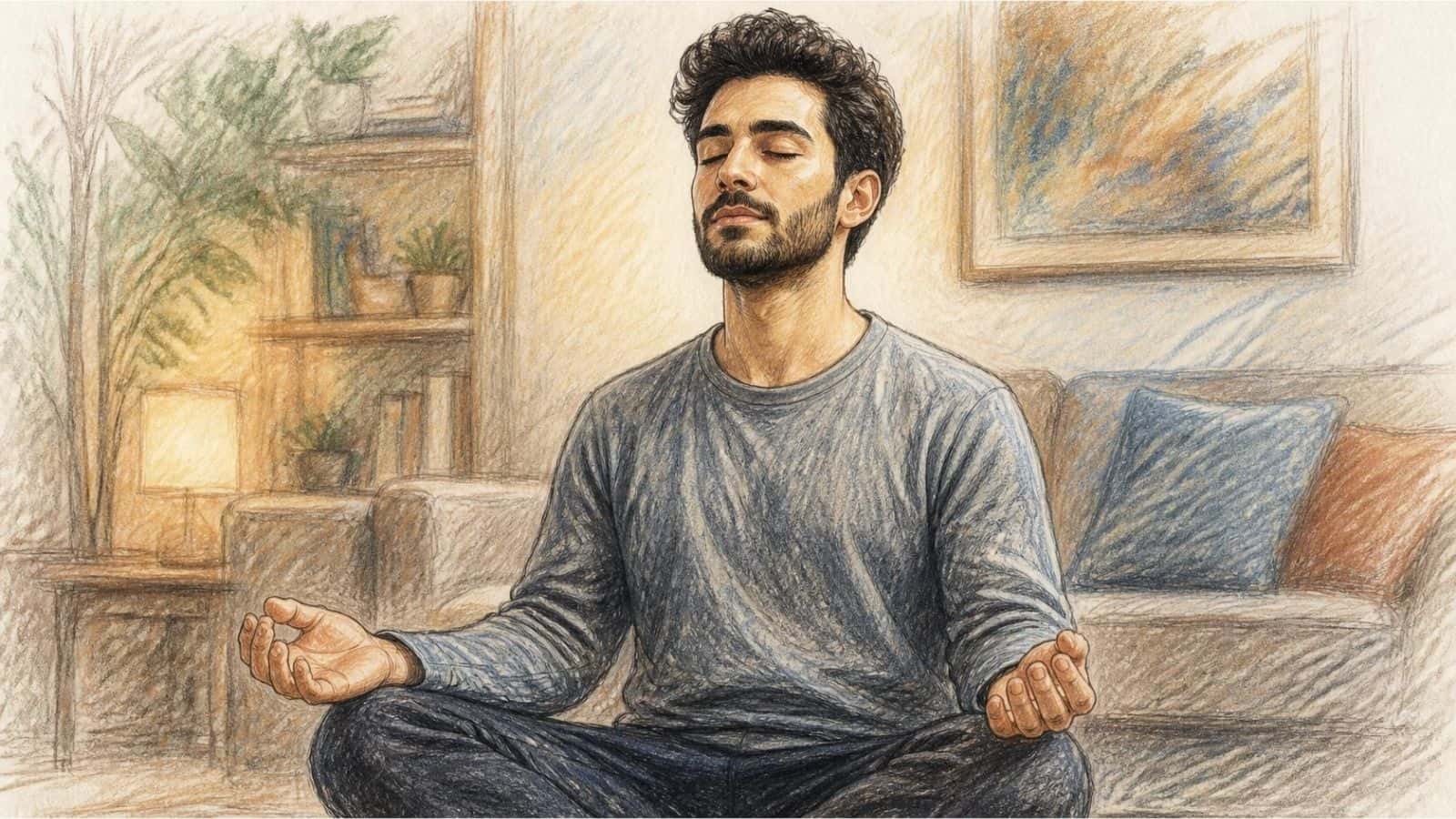
That might mean slowing the breath down, breathing more deeply into the diaphragm, making the exhale longer than the inhale, pausing between breaths, or following a set pattern such as box breathing. The common thread is that you’re not simply noticing the breath as it already is. You’re adjusting it on purpose and paying attention to the effect that change has on the body and mind.
At the gentler end, breathwork can be very simple. You might inhale naturally, then let the exhale last slightly longer. You might breathe at a steady pace for a few minutes or place a hand on the abdomen and encourage the breath to move lower into the body. These practices are usually intended to reduce physical tension, slow things down, or give the mind something concrete to follow when it feels scattered.
That directness is part of breathwork’s appeal.
In contrast, meditation can sometimes feel quite open-ended when you’re first learning how to practice. You sit down, notice the breath, and then discover that the mind has apparently prepared a full programme of unrelated thoughts for the occasion. Breathwork gives you a somewhat clearer task – breathe in this way, for this long, and see what changes.
But the word breathwork covers far more than gentle calming exercises.
Some methods use rapid breathing, repeated deep breaths, long breath holds, or deliberately intense patterns designed to produce strong physical or emotional effects. Those practices can feel energising, dizzying, cathartic, or unsettling, depending on the person and the method. A two-minute breathing exercise before a stressful meeting and an hour-long facilitated breathwork session may share the same label, but they’re not even remotely the same experience.
It’s important to be clear about this because breathwork is often discussed as though it’s one simple practice, and in reality, it isn’t. The effect depends on how fast you breathe, how deeply, how long the exercise lasts, whether there are holds, and how your body responds to the technique.
The Cleveland Clinic’s overview of breathwork makes the same basic point: breathwork involves intentional breathing techniques used to influence mental, emotional, or physical state. That can be helpful, but it also means the method should suit the person rather than being treated as automatically harmless because it involves something as ordinary as breathing.
The most familiar forms are usually the gentler ones. Box breathing follows a steady pattern of inhale, hold, exhale, hold. Diaphragmatic breathing encourages the breath to move lower into the body. Coherent breathing uses an even rhythm, while longer-exhale breathing places slightly more emphasis on breathing out. These approaches are often used for stress, focus, preparation, or winding down.
What they all have in common is that the breath is being used deliberately.
You’re not waiting to see what the body does on its own; you’re giving it a pattern and observing the response. Sometimes that response is obvious, such as feeling calmer or more alert. Sometimes very little happens, which is also perfectly normal. Breathwork isn’t a switch that produces the same result every time, and the idea that one breathing pattern will instantly regulate everyone is another example of unrealistic wellness advice.
So at its simplest, breathwork is intentional breathing with a purpose. That purpose might be calming down, waking up, focusing attention, releasing tension, or preparing the body for meditation. The technique changes depending on the goal, which is why it helps to know exactly what kind of breathwork someone means before deciding whether it’s right for you.
What Is Meditation?
Meditation is a broader practice than breathwork, because it isn’t built around simply changing the breath.
You may use breathing as the point of focus, but you’re usually not trying to control its depth, speed, or rhythm. You notice the breath as it happens, recognise when attention has wandered, and return without needing to make the breathing itself any different.
That sounds simple, and technically it is, but the difficulty is that the mind rarely stays where you put it for very long.
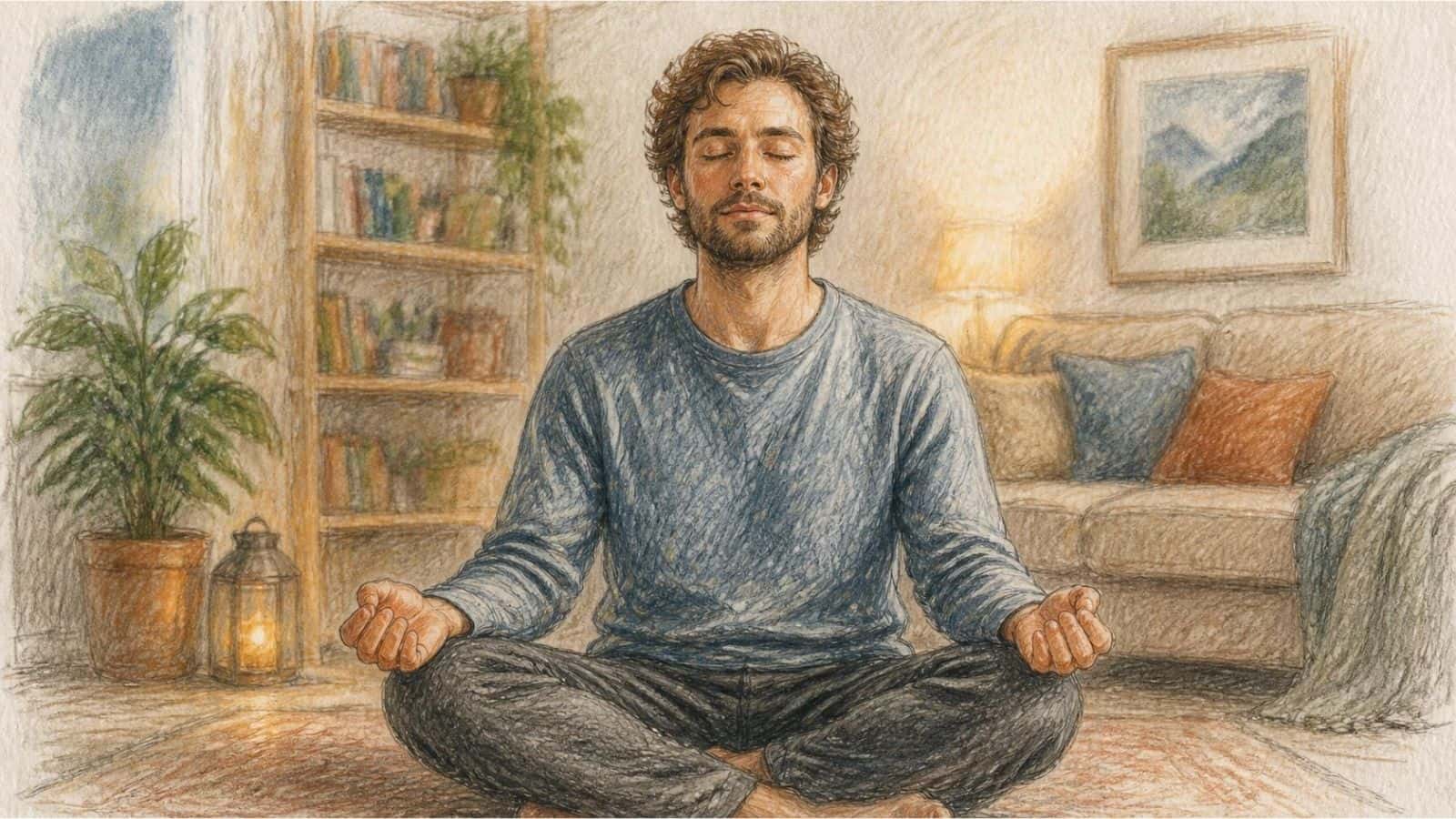
You might begin by noticing the feeling of air moving through the nose, then find yourself thinking about work, replaying a conversation, planning dinner, or wondering how long you’ve been sitting there. But at some point, you notice what’s happened and come back, and that repeated movement from distraction to awareness is a large part of the practice.
The aim isn’t necessarily to produce a particular state. You may feel calmer afterwards, but you may also feel restless, emotional, tired, or even no different at all. The point is, meditation asks you to notice what’s happening rather than treating every session as an attempt to manufacture peace on demand, and the breath is only one way of doing that.
You can meditate with sound, physical sensation, movement, a repeated phrase, visual awareness, compassion, or the changing flow of thoughts and emotions. A mantra meditation gives attention a word or sound to return to, while walking meditation uses movement and contact with the ground. Other practices involve scanning through the body, listening to the environment, or resting in a more open awareness of whatever appears.
That variety is why it helps to think of meditation as a family of practices, with many different techniques, rather than one fixed technique. The posture, anchor, and instructions may change, but the underlying skill is usually similar: notice where attention has gone, become aware of your response, and return without turning the whole thing into a fight.
Meditation can also involve learning not to react quite so automatically. A thought appears, but you don’t immediately have to follow it. An emotion becomes noticeable, but you don’t have to suppress it or obey it. An uncomfortable sensation is present, and you begin to recognise the difference between feeling it and building an entire story around it.
That’s where meditation starts to become useful beyond the session itself. You’re not only practicing how to sit still for ten minutes. You’re becoming more familiar with the way your mind moves, what repeatedly catches your attention, and how quickly experience turns into judgement, resistance, or reaction.
So while breathwork uses breathing as an active tool, meditation uses attention as the main training ground. The breath may be involved, but it doesn’t have to be changed, and it doesn’t even have to be the focus. What matters is the quality of awareness you bring to whatever is happening.
Where Breathwork and Meditation Overlap
The difference between the two is useful, but in practice they don’t always remain in separate boxes. A meditation may begin with a few deliberate breaths before the breathing is allowed to return to normal, while a breathwork exercise may gradually become more meditative as the effort falls away and attention shifts towards the sensations left behind. From the outside, very little appears to have changed, but the intention has moved from directing the breath to observing the experience it creates.

This kind of transition happens naturally because both practices bring attention towards processes that usually continue without much conscious involvement. Breathing is happening throughout the day, the body is constantly responding to stress and emotion, and thoughts are arriving whether or not we notice them. Breathwork enters that process by introducing a pattern, while meditation stays with what unfolds once there is something to notice.
You might spend a minute breathing more slowly because the body feels tense, then gradually stop counting and allow the breath to find its own rhythm. At first, attention is occupied with following the technique, but once the structure is removed, you may notice that the shoulders have softened, the chest feels less restricted, or the mind is still busy despite the body settling. The breathing exercise creates the conditions, and meditation begins as you become interested in what those conditions reveal.
Meditation can also make breathwork less mechanical. Rather than completing a set number of breaths and immediately deciding whether the technique worked, you become more aware of how the body is responding as you go. One pattern may feel settling, while another creates strain or makes you overly conscious of breathing. The exercise becomes less about performing the instructions correctly and more about recognising what’s genuinely happening.
Both practices also involve losing track and returning. During breathwork, attention may drift and the rhythm may become uneven. During meditation, the breath or another point of focus may disappear behind several minutes of thought. In either case, the useful moment arrives when you recognise that attention has wandered and bring it back without turning the distraction into a reason to become frustrated.
That repeated return is part of what connects both practices to the science behind mindfulness. The benefit doesn’t come simply from paying attention to breathing, but from becoming more aware of what the mind and body are doing while the experience unfolds. Breathwork gives you something deliberate to do with that awareness, while meditation allows the awareness itself to become the practice.
The overlap therefore lies less in whether the breath is involved and more in how a session develops. One may lead naturally into the other, and the point at which the transition happens isn’t always obvious. The difference is whether you’re still shaping the breath to create a change or have begun allowing the experience to unfold without directing it.
Which Works Faster: Breathwork or Meditation?
Breathwork often feels faster because it gives the body something immediate to respond to. When you slow the breathing, soften the effort, or allow the exhale to last a little longer, you may notice a change within a few minutes. The shoulders begin to drop, the chest feels less tight, or the rush of thought loses some of its momentum because attention has been drawn into a simple physical rhythm.
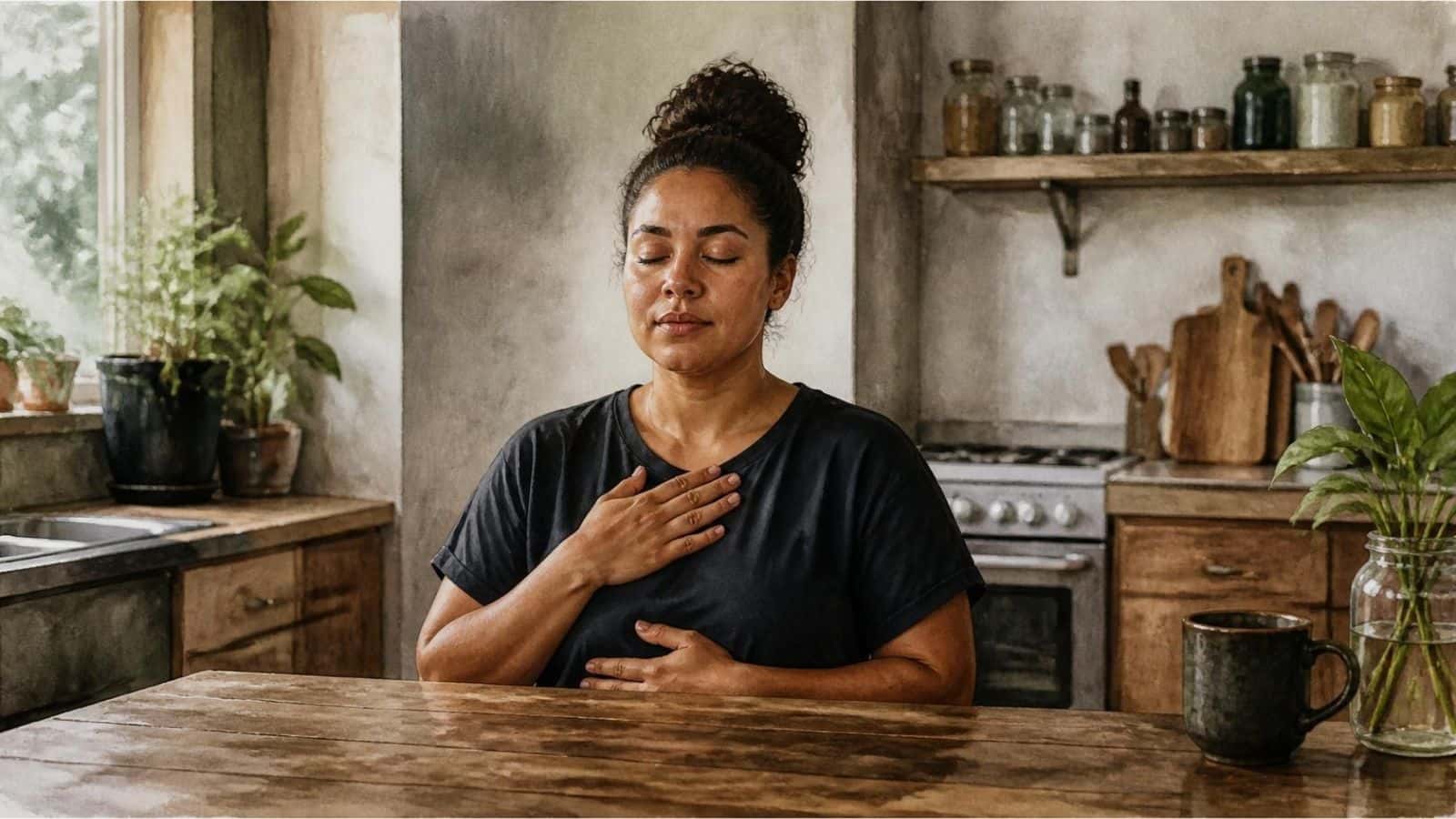
That immediacy can make breathwork especially appealing when stress feels physical. If you’re tense before a meeting, unsettled after an argument, or lying in bed with the body still behaving as though the day isn’t over, following a breathing pattern may feel easier than trying to sit and observe everything at once. The NHS offers a similarly gentle breathing exercise for stress and anxiety built around slow, comfortable breathing rather than pushing for a pronounced result.
Even then, the response isn’t guaranteed. Some people feel calmer fairly quickly, while others become more aware of the tension they were already carrying. A technique may help on one day and feel irritating on another, particularly if you’re tired, anxious about your breathing, or trying too hard to perform the pattern correctly. Breathwork can create a quick change, but it isn’t a button that produces the same state every time you press it.
Meditation tends to be less predictable in the moment because the practice isn’t always trying to make you feel different by the end of the session. You may spend ten minutes noticing distraction, returning to the breath, and becoming increasingly aware that the mind has no intention of settling simply because you’ve opened a meditation app. From the inside, that can feel as though very little has happened.
The effects often become easier to recognise elsewhere. You notice irritation sooner during a conversation, catch yourself halfway into an anxious train of thought, or create a little more space before reacting to something difficult. None of those changes may arrive with the immediate physical relief of a breathing exercise, but they can become increasingly important as the practice is repeated. Our guide to the signs that meditation is working looks at these quieter changes in more detail, because they’re easy to overlook when you’re waiting for every session to end in calm.
Meditation can still help quickly. A short guided practice, body scan, or few minutes of focused attention may interrupt a stressful spell and leave you feeling noticeably different. In the same way, breathwork isn’t limited to immediate relief; repeated practice may help you recognise tension earlier and become more familiar with how breathing changes alongside mood and stress.
The main difference is what tends to become noticeable first. Breathwork often produces feedback through the body, which makes the result easier to feel in the moment. Meditation may work more gradually by changing what you notice, how quickly you notice it, and what you do next.
If you need something practical during a stressful moment, gentle breathwork may be the more direct place to begin. If you’re trying to become less reactive over time, understand your patterns more clearly, or build a daily practice that extends beyond immediate relief, the broader benefits of regular meditation may matter more than whether today’s session produced an instant change.
Breathwork or Meditation: Which Should You Choose?
The most helpful way to choose between breathwork and meditation is to pay attention to what feels most dominant in the moment. Some difficulties are experienced mainly through the body, while others are being sustained by thought, reaction, or a pattern you keep falling into. The practice that helps most is often the one that meets the problem where it is rather than the one you’ve decided you ought to prefer.

When stress feels physical, breathwork may be the easier place to begin. A tight chest, shallow breathing, clenched jaw, or restless body can make open-ended meditation feel like one more thing you’re expected to sit through while every part of you wants to move. Following a gentle rhythm gives the body a clearer instruction and gives attention something specific to do when you’re too wound up to simply observe what’s happening.
Breathwork isn’t the complete answer to stress, though. It may soften the physical edge of the experience without changing the workload, uncertainty, or habits that keep producing it. Once the immediate tension has eased, meditation can help you notice how quickly the mind returns to rehearsing problems, anticipating what comes next, or treating every unfinished task as an emergency. Our guide to meditation for stress looks more closely at that wider pattern, because calming the body and understanding what repeatedly unsettles it are related but not identical jobs.
The same approach can help with anxiety. If the experience arrives as a rush of physical activation, a comfortable breathing exercise may give you something manageable to follow while the intensity begins to pass. When anxiety is being driven by prediction, mental checking, or the repeated need to solve situations that haven’t happened, meditation for anxiety may offer more room to recognise the pattern without becoming completely absorbed in it.
Breathwork may also suit moments when you need a concrete task. Before a presentation, difficult conversation, or period of concentrated work, counting the breath or following a simple rhythm can gather attention more easily than being told to sit and observe. Meditation becomes more relevant when attention is repeatedly pulled away throughout the day, because the practice gives you repeated experience of noticing distraction and returning. That connects more directly with the skills explored in meditation for focus.
Difficult emotions create another reason to think beyond which practice is supposed to be more calming. Breathwork may help when anger, sadness, or overwhelm has taken over the body and you need enough space to stop the experience escalating. Once that space exists, meditation can help you stay with the emotion long enough to recognise what is actually there, including the thoughts and impulses that appear around it. Our guide to meditation for difficult emotions explores this in more detail, because emotional awareness is not the same as using a technique to make an uncomfortable feeling disappear.
Sleep is another situation where the choice depends on what is keeping you awake. If the body still feels active after a long day, gentle breathing may help create a smoother transition towards rest. If the body is tired but the mind has begun replaying conversations, planning tomorrow, or revisiting material it ignored all afternoon, a short meditation for better sleep may be a better fit.
There are also times when focusing on breathing makes things worse rather than better. People who become anxious about breathlessness, heart rate, dizziness, or other bodily sensations may find that close attention to breathing increases the discomfort they were hoping to reduce. In that situation, there is no reason to force breathwork or breath meditation simply because they are commonly recommended for anxiety. Sound, movement, a mantra, or contact with the body may offer a less intrusive place to focus.
You don’t need to decide whether you’re a breathwork person or a meditation person. What helps before a stressful meeting may be completely different from what you need after an argument, during a sleepless night, or when the same pattern has been repeating for months. Breathwork can help when the body needs immediate support, while meditation may be better suited to understanding what keeps happening and responding differently. The choice can change from one day to the next, and that flexibility is part of what makes both practices useful.
Can Breathwork Replace Meditation?
In practical terms, breathwork can sometimes take the place of a meditation session. If you have five minutes before a difficult meeting, feel too restless to sit with an open-ended practice, or simply need something more structured, a gentle breathing exercise may be exactly what the moment calls for. There’s no requirement to follow it with meditation simply to make the time count.
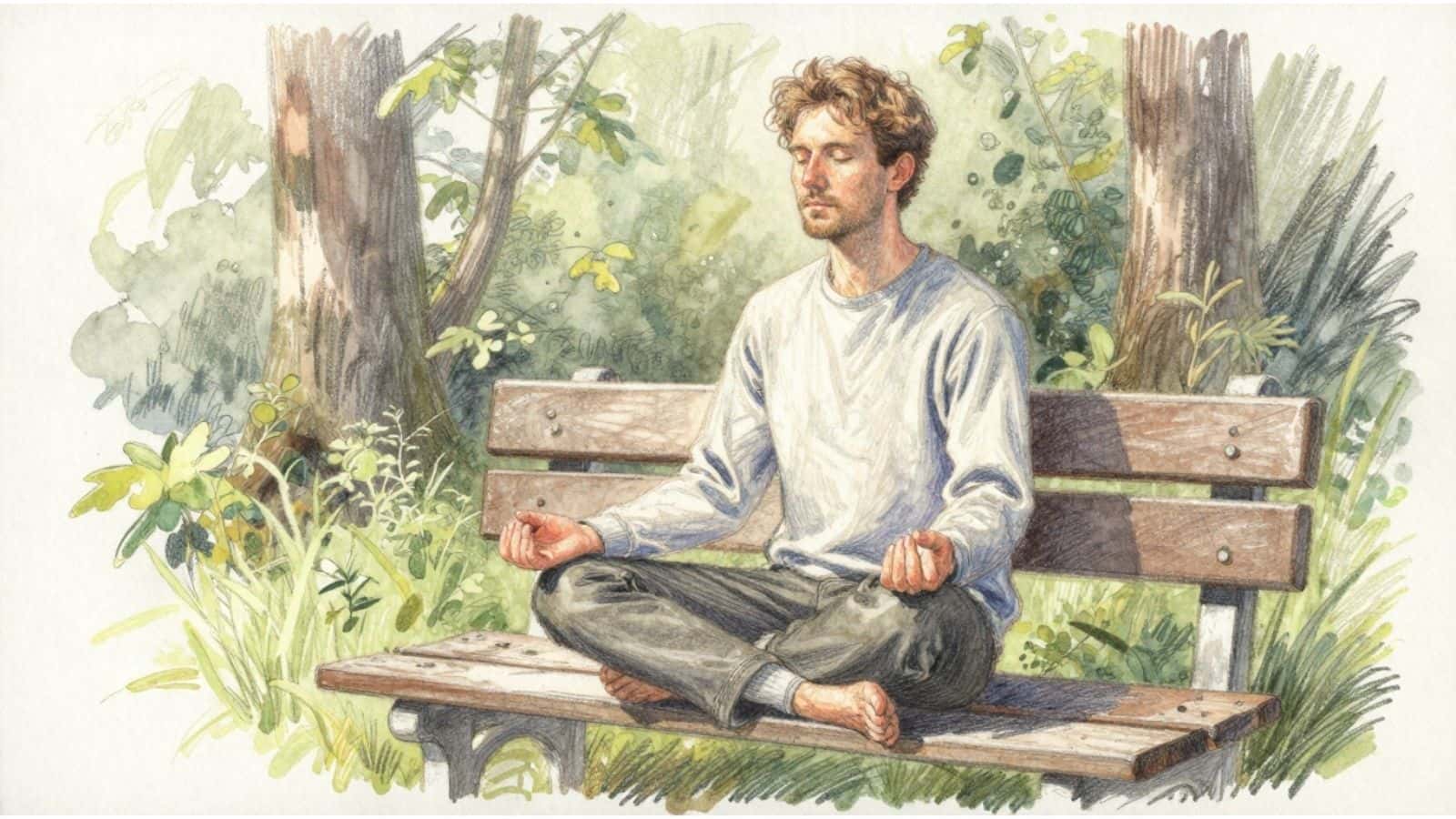
What breathwork cannot necessarily replace is the particular kind of training meditation develops over time. A breathing pattern may help you feel calmer or more focused, but it does not automatically show you how quickly the mind turns uncertainty into worry, how irritation gathers momentum, or how often you become absorbed in a thought without realising it. Those patterns tend to become visible when there is less to perform and more room to observe.
Relief and awareness are not always the same thing. You can use the breath to soften an uncomfortable state without learning much about what repeatedly brings that state back, just as you can understand a recurring mental habit without immediately feeling calmer. Both outcomes have value, but they are doing different work.
There may also be periods when breathwork is the only practice you genuinely want or need. Perhaps meditation currently feels too unstructured, or you find it easier to build consistency around a brief breathing exercise. That is still a worthwhile practice, and it may eventually make a more regular meditation habit easier to establish.
Breathwork can therefore replace meditation on a particular day, and for some people it may remain the preferred practice for much longer than that. It only becomes a poor substitute when you expect it to provide every benefit associated with meditation simply because both involve attention and breathing.
The question is whether the practice you are using is meeting the reason you turned to it. If breathwork gives you the physical support you need, there is no need to add anything else. If you keep calming the immediate feeling but find the same thoughts, reactions, or emotional patterns returning, meditation may offer the part that breathwork has not been designed to provide.
How to Combine Breathwork and Meditation
The simplest way to combine breathwork and meditation is to let the breathing exercise act as a short introduction rather than the whole session. Begin with one or two minutes of comfortable, deliberate breathing. You might slow the pace slightly, allow the exhale to run a little longer, or follow an easy rhythm that doesn’t require strain or intense concentration. The aim is not to produce a pronounced change, but to give the body and mind something clear enough to follow while you settle.

Once the rhythm feels established, stop counting and allow the breath to return to its natural pace. Rather than trying to preserve the calmer state you may have created, notice what happens when the structure is removed. The breath may remain slower for a while, or it may become uneven again almost immediately. Either response gives you something real to work with.
From there, continue into meditation using whichever anchor feels most natural. You can remain with the breath, widen attention towards the body, listen to the sounds around you, or follow a guided meditation if the transition into a less structured practice feels too abrupt. At this point, you’re no longer trying to control the experience; you’re noticing how it unfolds.
A simple session might involve two minutes of gentle breathing followed by five or ten minutes of meditation. It can be shorter if time is limited, and there is no particular benefit in stretching it out simply to make the practice feel more substantial. Our guide to how long you should meditate looks at this in more detail, but consistency usually matters more than duration.
The sequence should remain uncomplicated. Use the breath to help you arrive, then let the technique fall away and continue with whatever is present. Some days the transition will feel smooth, while on others the mind will remain busy and the body will feel much the same. Each practice has a clear role, and neither needs to do everything.
When Breathwork May Not Be the Right Choice
Most gentle breathing exercises are straightforward, but the word breathwork covers a much wider range of practices than slow, comfortable breathing. Techniques involving rapid breaths, repeated forceful inhalations, long holds, or a deliberate feeling of air hunger place very different demands on the body, so they shouldn’t be treated as harmless simply because breathing is something we do all day.

As we touched on earlier, the breath can also be an uncomfortable place to focus when anxiety is already centred on bodily sensations. Someone who is closely monitoring their heart rate, worried about breathlessness, or frightened by dizziness may become more unsettled when asked to control every inhale and exhale. Trying harder is unlikely to improve the experience. Moving attention towards sound, contact with the floor, or the rhythm of walking may give the mind somewhere less charged to rest.
The way your body responds matters more than completing the exercise exactly as instructed. Feeling slightly unfamiliar sensations while changing the breath is one thing, but pain, pronounced breathlessness, dizziness, or feeling faint are reasons to stop and allow the breathing to return to normal. The British Heart Foundation’s guidance on breathing exercises similarly advises stopping if deep breathing brings on concerning symptoms and checking with a healthcare professional first if you have a heart condition, another serious medical condition, or are pregnant.
It is also worth being cautious about the promise that a more intense method must produce a deeper result. Tingling, light-headedness, or a strong emotional reaction may be presented as evidence that something important is being released, when they can also occur because the breathing has become too rapid or forceful. A powerful sensation does not automatically make a technique better, and there is no prize for pushing through an exercise that is making you feel worse.
If breathing itself has become the problem, meditation does not need to be abandoned along with breathwork. You could use a mantra, follow sounds in the room, notice the weight of the body against the chair, or move gradually through a body scan. These are not lesser alternatives; they simply give attention a different route into the practice.
This follows the same principle explored in our guide to whether meditation is safe for everyone: a useful practice should leave room for judgement. Instructions are not rules that must be followed regardless of how you respond, and stopping, changing technique, or seeking professional advice is sometimes the most sensible form of awareness available.
Frequently Asked Questions
Is box breathing a form of meditation?
Not usually. Box breathing is generally classed as breathwork because you’re deliberately controlling the length of the inhale, hold, exhale, and pause.
It can still feel meditative, particularly if you’re paying close attention to the rhythm and the sensations it creates, but the structured breathing pattern is what makes it breathwork rather than meditation in the stricter sense.
Is pranayama the same as breathwork?
Pranayama is a traditional yogic system of working with the breath, while breathwork is a broader modern term that can include everything from simple calming exercises to more intense methods.
There is plenty of overlap, but they are not exact synonyms. Pranayama comes from a particular spiritual and philosophical tradition, whereas modern breathwork may be taught in a completely secular setting with no connection to yoga at all.
How long should a beginner practise breathwork?
A few minutes is often enough to begin with. Longer is not automatically better, particularly when you’re still learning how your body responds to a technique.
Starting with two to five minutes gives you enough time to notice whether the practice feels helpful without turning it into an endurance test. You can extend it gradually if the breathing remains comfortable and the method suits you.
Do you have to breathe through your nose during breathwork?
It depends on the technique. Many gentle practices use nasal breathing because it tends to feel controlled and comfortable, but some forms of breathwork deliberately use the mouth.
The instructions should make the route of breathing clear. If they don’t, there’s no need to force an unfamiliar pattern. Comfortable, unstrained breathing is more important than trying to imitate a technique perfectly.
Do you need a teacher to practise breathwork?
You probably don’t need one for simple exercises such as slow breathing, longer exhales, or basic box breathing, provided the practice feels comfortable and you stop if it doesn’t.
More intense methods are different. If a technique involves rapid breathing, prolonged holds, strong emotional release, or altered states, guidance from someone properly trained becomes much more important than following a dramatic video online and hoping for the best.
What time of day is best for breathwork or meditation?
There is no universally best time. Morning practice may help you feel more settled before the day gathers pace, while evening practice may be more useful for letting go of tension or preparing for sleep.
The better question is when you’re most likely to practise consistently and what you want the session to do. Our guide to the best time to meditate looks at how energy, routine, and intention can shape that choice.
Can you practise breathwork and meditation every day?
You can build either into a daily routine, but the intensity should match the frequency. Gentle breathing and ordinary meditation are very different from doing forceful or prolonged breathwork every day.
A daily practice should feel sustainable rather than something you repeatedly recover from. If you’re trying to build consistency, the principles in our guide to making meditation stick apply just as well to breathwork: begin with something small enough to repeat and let the routine grow from there.
Is it fine to prefer one practice and ignore the other?
Completely. You don’t need to use both simply because they work well together.
Some people prefer the structure of breathwork, while others find any attempt to control breathing distracting and would rather meditate with sound, movement, or a mantra. The practice that suits you is the one you can return to without feeling as though you’re constantly forcing yourself through someone else’s idea of what should work.
A Gentle Closing Thought
Breathwork and meditation don’t need to compete for the same space in your routine. One may help when the body feels unsettled and needs something direct, while the other may become more useful when you want to understand what keeps pulling the mind into the same thoughts, reactions, or habits.
Some days, a few minutes of deliberate breathing will be enough. On others, the breath may simply help you arrive before the practice opens into something quieter and less controlled. There will also be times when meditation feels right from the beginning, with no need to change anything first.
The value lies in knowing that you have more than one way into the present moment. You can work with the breath, observe what follows, or choose a different anchor entirely when breathing doesn’t feel helpful.
Neither practice has to do everything. Used with a little flexibility, each can offer something the other doesn’t, and together they give you more room to respond to the day you’re actually having.
