Meditation retreats have a slightly mysterious reputation.
Depending on who you ask, they’re either deeply transformative experiences that reset your entire perspective on life, or they’re long, silent stretches of sitting still and wondering why your knees hurt and what you’re having for dinner three hours from now.
Usually, the truth sits somewhere in the middle.
Most people are drawn to the idea of a retreat for fairly simple reasons. Life feels busy, attention feels scattered, and there’s a lingering sense that stepping away from it all, even for a few days, might do something useful. Not necessarily fix everything, but at least create a bit of space to think clearly again.
At the same time, there’s often a bit of hesitation.
You’re not entirely sure what actually happens on a retreat, how intense it’s going to be, whether you’re supposed to already know how to meditate properly, or whether you’ll end up trapped in silence with your own thoughts wondering why you signed up in the first place.
All of which are reasonable concerns.
Because meditation retreats are often talked about in quite vague terms. Words like “transformational” and “powerful” get used a lot, but very little gets said about what they’re actually like day to day, how to choose one that fits, or whether you even need to go on one at all.
That’s what this guide is for.
We’re going to break down what meditation retreats really are, what tends to happen when you’re there, the different types you’ll come across, and how to decide whether it’s something worth doing. We’ll also look at something that’s often overlooked, which is how to create your own version of a retreat at home, without needing to disappear into the mountains for a week.
And before getting into any of that, it helps to be clear on one thing…
A meditation retreat isn’t about escaping your life.
It’s about changing the conditions around your attention long enough to see what’s actually going on underneath all the usual noise. If you’ve ever explored the basics of meditation, you’ll already have a sense of what that means in theory, but a retreat takes that same idea and stretches it out over hours or days instead of minutes.
And that changes things more than you might expect.
Contents
- What a Meditation Retreat Actually Is (And What It Isn’t)
- Why People Go on Meditation Retreats (What They’re Really Looking For)
- What It’s Really Like (and What to Expect)
- Types of Meditation Retreats (And Which One Is Right for You)
- What a Typical Day on a Meditation Retreat Looks Like
- How to Actually Choose the Right Meditation Retreat
- How Much Do Meditation Retreats Cost? (And What You Actually Get)
- How to Find Meditation Retreats (UK & Worldwide)
- Avoiding Common Mistakes When Booking Your First Retreat
- How to Create Your Own Meditation Retreat at Home
- Frequently Asked Questions
- Closing Thought
What a Meditation Retreat Actually Is (And What It Isn’t)
In a nutshell, a meditation retreat is basically just a period of time during which you remove as many distractions as possible and give your attention something consistent to settle on.
That’s it.
No mystical requirement, no special personality type, and no need to already be “good” at meditation, whatever that’s supposed to mean.
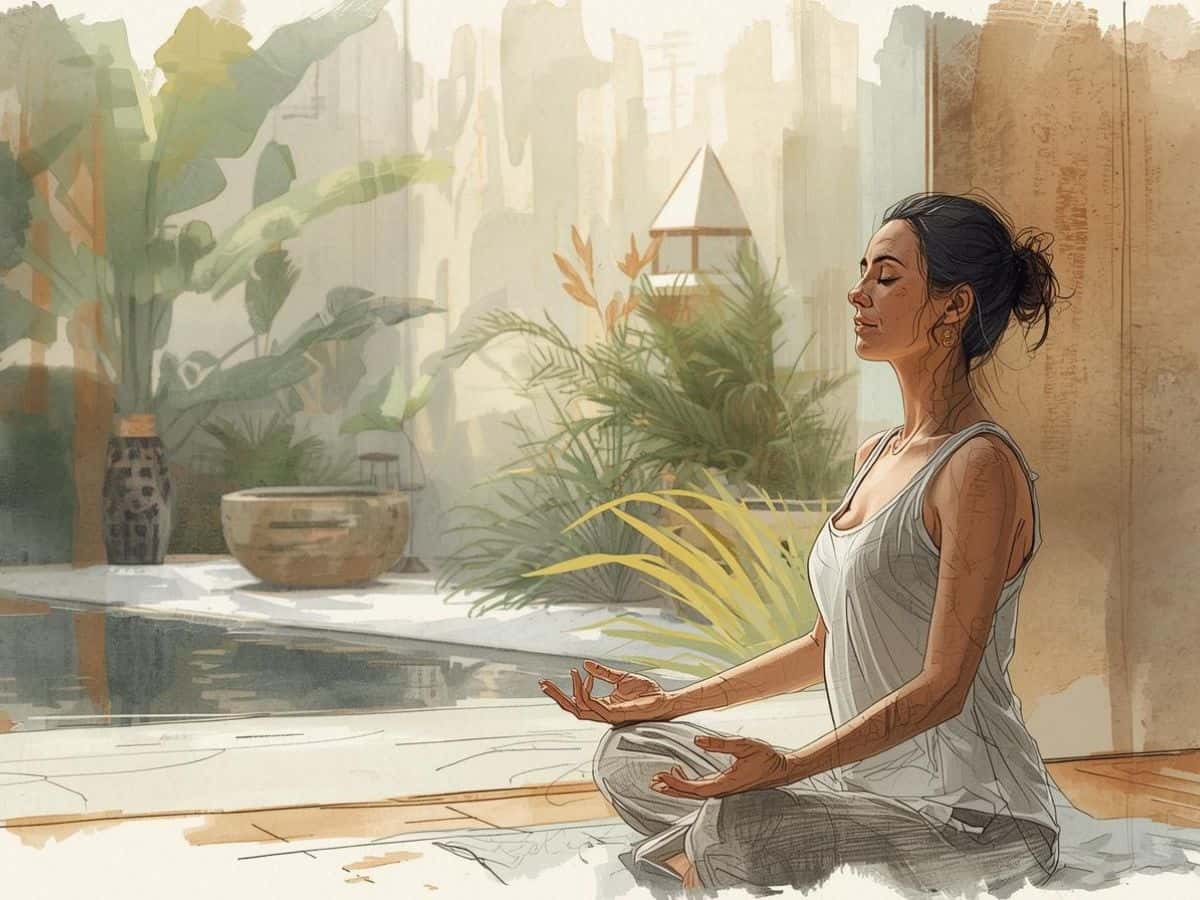
Most retreats are built around a fairly straightforward structure. You’ll spend a large portion of the day meditating, usually in a mix of sitting, walking meditation, or guided sessions, with breaks in between for meals and rest. The exact schedule varies, but the core idea stays the same – you reduce external distractions so you can see more clearly what your mind is doing.
And that’s where things start to feel a bit different from normal life.
Because in everyday situations, your attention is constantly being pulled in different directions. There’s always something to check, respond to, or think about next. On a retreat, most of that is deliberately removed. You’re not filling gaps with your phone, you’re not jumping between tasks and losing focus, and you’re not constantly reacting to whatever happens to appear in front of you.
Which means there’s less to hide behind, and that’s actually the part of the process that often gets glossed over.
A retreat isn’t just a calm, peaceful break from everything. Sometimes it is, but just as often it’s a clearer view of what’s already going on underneath the surface. The restlessness, the overthinking, the constant movement of attention that usually gets masked by day-to-day activity – all of that becomes much more noticeable when there’s nothing else competing with it.
That doesn’t make it a bad experience, but it does make it a more honest one.
It’s also worth clearing up a couple of common misconceptions early on.
A meditation retreat isn’t a spa break…
You’re not there to be entertained, and you’re not there to be constantly comfortable. Some retreats are based in beautiful places, and that can definitely help, but the environment isn’t the main point. The point is what happens to your attention when things become simpler.
It’s also not something reserved for people who already have a well-established meditation practice.
In fact, a lot of people arrive with only a basic understanding of how meditation works, or even just curiosity about whether it might help with things like stress or anxiety. If that’s where you’re starting from, it can be useful to get a rough sense of how to meditate properly beforehand, just so the structure feels familiar rather than completely new.
And finally, it’s not a guaranteed transformation, which is probably the biggest misconception of all.
A retreat can be helpful, sometimes very helpful, but it’s not a switch you flip that suddenly changes everything. What it tends to do instead is give you a clearer view of your habits, your attention, and how your mind behaves when it’s not constantly occupied.
What you do with that afterwards is where the real value comes from.
Why People Go on Meditation Retreats (What They’re Really Looking For)
Once you get past the surface-level reasons, most people aren’t going on a retreat just because they like the idea of sitting quietly for long periods of time.
They’re usually trying to change something.
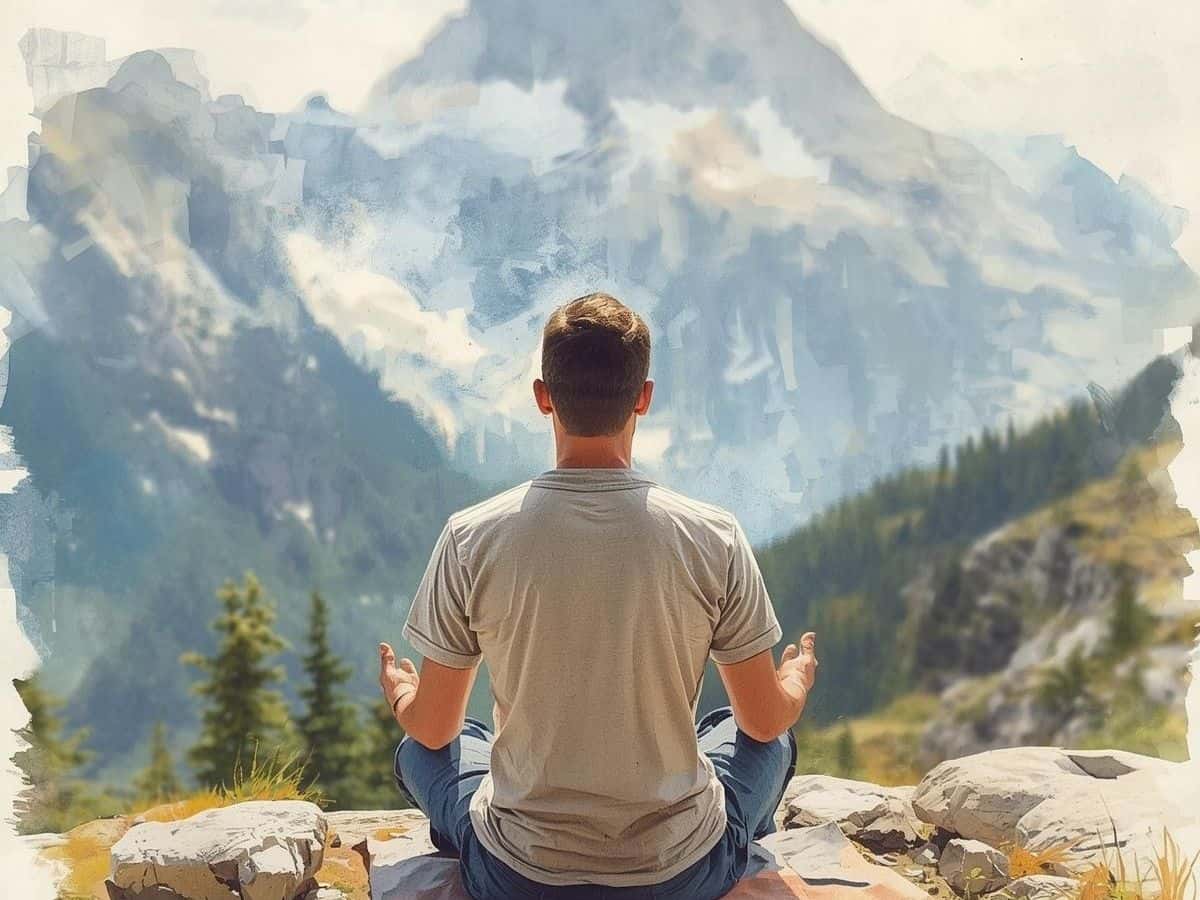
Not always in a dramatic, life-altering way, but enough that whatever they’re doing at the moment doesn’t quite feel like it’s working as well as it could.
For some people, it’s the sense that their attention is constantly scattered.
They can sit down to do something, but it doesn’t take much for their mind to wander, and before long they’re somewhere else entirely without really meaning to be. They’re not looking for perfect focus, just a bit more control over where their attention goes and how easily it drifts.
For others, it’s more about how they feel day to day.
There’s a background level of stress, or anxiety, or just mental noise that never quite settles. It’s not always overwhelming, but it’s there often enough that it starts to feel like the default. In those cases, the draw of a retreat isn’t silence for its own sake, it’s the possibility that stepping out of that constant input might quiet things down a bit.
But interestingly, most people want to use a retreat to develop their existing meditation practice.
They’re already meditating in a casual way, maybe using short sessions during the day or following something like a micro meditation approach, and they’re curious about what happens if they take that same process and extend it over a longer period of time.
Not because they’re expecting anything dramatic, but because they’ve noticed small shifts already, and want to see how far they can take it when there’s more time and fewer interruptions.
And then there’s the group who don’t have a clear reason at all.
They’ve heard about retreats, something about the idea sticks, and they decide to try it without fully knowing what they’re looking for. That might sound vague, but it’s actually quite common, and often just as valid as having a specific goal in mind.
The interesting thing is that all of these starting points tend to lead to the same place.
Once you’re there, what matters isn’t the reason you arrived, but what happens when your usual distractions are removed and your attention doesn’t have as many places to hide.
That’s the part that people are really signing up for, whether they realise it or not.
What It’s Really Like (and What to Expect)
The way meditation retreats are usually described, you’d be forgiven for thinking they’re a kind of peaceful reset. Quiet surroundings, calm mind, maybe a few meaningful insights along the way.
And sometimes they are like that, but not always in the way people expect.

The first thing most people notice is how quickly the novelty wears off. At the beginning, everything feels a bit different. You’re somewhere new, the schedule is structured, and there’s a sense that you’ve stepped out of your normal routine. But once that settles, you’re left with something much simpler. You’re just sitting there, again and again, and it turns out that sitting still with your own mind for long periods of time isn’t always particularly relaxing.
In fact, it can be surprisingly uncomfortable at first.
Not physically (although that can definitely be part of it), but mentally. Your mind doesn’t suddenly become calm just because you’ve arrived at a retreat. If anything, it often feels more active at first, because there’s less to distract you from it. Thoughts that would normally pass unnoticed start to stand out. Small worries feel slightly louder, random memories appear for no obvious reason, and you might find yourself replaying conversations, planning things that have nothing to do with where you are, or wondering why the hell you signed up in the first place.
Because there’s nothing else competing for your attention, those patterns become much harder to ignore, and that’s usually the point at which people start to question what’s happening. It doesn’t feel particularly peaceful, and it doesn’t feel especially “transformational”. It just feels like your mind is doing what it always does, only now you can’t step away from it quite so easily. But that’s actually the shift. What’s changed isn’t your mind, it’s the environment around it.
In everyday life, your attention is constantly moving between things, which means you rarely see any one pattern clearly for very long. On a retreat, those movements are reduced, so the patterns become more obvious, and once they’re obvious, they’re harder to overlook. That’s where most of the value of a retreat comes from, even if it doesn’t feel like it at the time.
There’s also a fair amount of boredom, which doesn’t get mentioned nearly as often as it should. Long stretches of doing the same thing, over and over again, without the usual background stimulation, can feel repetitive in a way that most people aren’t used to anymore. That doesn’t mean something’s gone wrong, it just means you’re not filling every gap with distraction. Some people find that part surprisingly difficult, while others find it oddly settling after a while, but it tends to catch most people off guard either way.
And then there’s the emotional side of things, which can go in either direction. Sometimes people feel calmer, clearer, or more settled as the days go on. Other times, things that have been sitting in the background for a while start to come forward a bit more. That can be uncomfortable, especially if you weren’t expecting it, but it’s also a fairly natural result of paying closer attention to what’s already there. If you’ve ever noticed something similar in shorter sessions, especially when working with something like meditation for difficult emotions, it tends to follow the same pattern, just stretched out over a longer period of time.
None of this is a problem, but it does mean that a retreat isn’t always the peaceful escape it’s made out to be. It’s more like turning the volume down on everything external and realising that what’s left is your mind, exactly as it is, without much interference. And for most people, that’s a very different experience from what they expected going in.
Types of Meditation Retreats (And Which One Is Right for You)
Once you have a rough idea of what a retreat is actually like, the next question tends to be which kind you’re supposed to choose, because “meditation retreat” covers a fairly wide range of experiences.
Some are almost completely silent, while others involve regular guidance, group discussions, or a mix of meditation and other activities. Some are held in quiet rural settings where there’s very little to do outside of the schedule, while others take place in the middle of a city and run more like structured workshops than full retreats.

Underneath, they’re all trying to do roughly the same thing, which is simplify your environment enough that your attention has fewer places to go. The difference is how they get you there, and how much support they give you along the way. If you’ve ever looked at the different types of meditation, it’s a similar idea – different approaches, same underlying goal.
Silent retreats are probably the most well-known, and also the ones people tend to feel most unsure about. These usually involve extended periods without speaking, sometimes for several days, with a fairly consistent schedule of sitting and walking meditation. The idea is to remove not just external distractions, but also the habit of processing everything through conversation. That can feel intense at first, but it’s also where a lot of the clarity tends to come from, because you’re no longer constantly reinforcing your thoughts by talking about them.
Guided retreats sit at the other end of the spectrum.
There’s still plenty of quiet time, but you’ll usually have a teacher or facilitator offering instructions, reflections, or short talks throughout the day. For a lot of people, especially if you’re relatively new to meditation, this can make the whole experience feel more accessible. You’re not left entirely on your own trying to figure out what you’re supposed to be doing, which can take some of the pressure off. If you’ve ever followed something like a guided vs unguided meditation approach before, it’s a similar distinction, just stretched out over a longer period of time.
Then there are retreats that lean more into the setting.
Nature-based retreats tend to take place in quieter, more remote environments, where the surroundings themselves become part of the experience. There’s often more emphasis on walking, being outdoors, and letting your attention settle into something a bit wider than just your thoughts. In contrast, urban retreats are usually shorter and more structured, designed to fit into a busy schedule without requiring you to disappear completely from your normal life.
And finally, there’s the question of comfort.
Some retreats are very simple, with shared rooms, basic meals, and minimal (if any) distractions. Others are closer to what you might expect from a wellness break, with private accommodation and a bit more flexibility in how the day is structured. Neither is inherently better, but they do create slightly different experiences. Simpler environments tend to strip things back more quickly, while more comfortable ones can make the transition a bit easier.
So how do you decide?
In most cases, it comes down to how much structure you want, how comfortable you are being left with your own thoughts, and how far you’re willing to step away from your usual routine. If you’re completely new to this, something guided and relatively short is usually a good place to start. If you already have some experience and you’re curious what happens when you remove more of the usual support, a silent retreat might make more sense.
There isn’t a perfect option – just a starting point that feels manageable enough to try without overthinking it.
What a Typical Day on a Meditation Retreat Looks Like
One of the things people are often most unsure about is what you actually do all day.
It’s easy to picture the broad idea – lots of meditation, quiet surroundings, not much talking, but the day-to-day reality is usually much more structured than people expect.
Most retreats follow a fairly consistent rhythm.
You’ll wake up early, often earlier than you would at home, and the day tends to begin with a meditation session before breakfast. From there, it moves into a pattern of sitting meditation, walking meditation, short breaks, and meals, all spaced out across the day in a way that keeps things simple but steady.

At first, the structure can feel quite rigid. You’re used to deciding what to do next, even if it’s only small things, and suddenly that’s been replaced with a schedule you just follow. There’s a set time to sit, a set time to walk, a set time to eat, and not much in between.
But after a while, something slightly unexpected happens…
It becomes easier. Not because the meditation itself suddenly feels effortless, but because you’re no longer constantly deciding what to do with your time. That background layer of decision-making drops away, and your attention has fewer directions to go in.
In many retreats (especially silent ones) you’ll eat without conversation, which can feel a bit unusual at first. But it also changes the experience in a way that’s quite noticeable. You’re more aware of what you’re eating, how quickly you’re eating, and how your attention moves even in something as ordinary as a meal. If you’ve ever experimented with something like mindful eating, it’s essentially a more extended version of that.
The meditation itself is usually split between sitting and walking.
Sitting meditation is what most people expect – staying still, focusing on the breath or another point of attention, noticing when the mind drifts and bringing it back again. Walking meditation is slower and more deliberate, often done back and forth over a short distance, and it gives your attention something slightly different to settle on.
That alternation is important, because it stops the day from becoming one long stretch of discomfort and gives your body a chance to move while still keeping the same underlying focus.
There may also be short talks or guidance, depending on the retreat.
These aren’t usually long or overly complicated, just enough to give you something to work with, or to explain what you might be experiencing as the days go on. In more structured retreats, this can be a helpful anchor, especially if you’re not entirely sure whether what you’re experiencing is “normal”.
And then, gradually, the days repeat and you naturally settle into the rhythm of it.
Wake up, sit, walk, eat, sit again, and so on, with very little variation. At first that repetition can feel monotonous, but it also creates the conditions where your attention starts to settle in a way that’s difficult (not impossible) to recreate in everyday life.
Not perfectly, and not all the time, but enough that you begin to notice the difference.
And that’s really the point of the structure. Not to keep you busy, but to remove just enough complexity that you can see what your mind does when there’s nothing much else to focus on.
How to Actually Choose the Right Meditation Retreat
At some point, you move from reading about retreats to actually looking at them, and that’s usually where things get a bit confusing.
You open a few tabs, scroll through a handful of options, and before long everything starts to blur together. Silent retreats, guided retreats, weekend retreats, week-long retreats, countryside, city, basic, comfortable… and suddenly you’re not choosing, you’re comparing.

That’s the point where most people get stuck – not because there aren’t good options, but because there are too many variables, and it starts to feel like you need to get it exactly right before committing to anything.
You don’t.
Most of the difference between retreats comes down to a few simple things, even if they’re presented in slightly different ways.
Like we talked about briefly earlier, the first is how much structure you want. Some retreats are very hands-off, where you’re given a schedule and a basic set of instructions and then left to get on with it, while others are more guided, with regular input from a teacher, short talks, and a bit more explanation along the way. Neither is better, but if you’re new to this, having some guidance tends to make the whole experience feel less uncertain.
The second is how intense you want it to be, and it’s worth being honest about this one. A fully silent retreat for several days can be a very different experience from a shorter, more relaxed one where there’s still some interaction. It doesn’t mean one is better than the other, but if you go straight into something intense without really knowing what to expect, it can be overwhelming at first. Starting slightly below your threshold is usually a safer bet than going all in too early.
The third is how far you want to step away from your normal environment. Some people like the idea of going somewhere completely different, where there’s very little connection to their usual routine, while others prefer something closer to home, or even something urban, where the shift isn’t as extreme. Both approaches work, it just depends on whether you’re looking for a clean break or a gentle, subtle change.
And then there’s the practical side of things… How long is it, how much does it cost, what’s included, and what’s the accommodation like? These aren’t the most exciting questions, but they do shape the experience significantly, and a retreat that fits comfortably into your schedule and budget is far more useful than one that feels like a stretch before you’ve even arrived.
Once you’ve got a rough sense of those four things, structure, intensity, location, and practicality, the choice usually becomes much clearer.
And that’s really all you need.
There isn’t a single “right” retreat that everything hinges on. What matters far more is that you pick something that feels manageable, show up, and see what the experience is actually like for you.
How Much Do Meditation Retreats Cost? (And What You Actually Get)
We touched on this briefly in the last section, but it’s worth slowing down on it for a moment, because cost is usually the stumbling block for most people.
It’s the difference between something that sounds interesting in theory and something you can actually see yourself doing, which is why it helps to have a clearer picture of what you’re paying for, and how much variation there really is.
And the slightly frustrating answer is that it varies quite a lot.

Some retreats are completely free to attend, while others can cost as much as a short holiday, and everything in between exists somewhere on that spectrum. The difference usually comes down to how the retreat is run, what’s included, and the kind of environment it’s set in.
At one end, there are donation-based retreats, which are surprisingly common, especially in traditions like Vipassana. These are often run on a not-for-profit basis, where the teaching is offered freely, and you’re invited to contribute afterwards if you feel it was valuable. Accommodation and food are usually covered, but kept very simple – shared rooms, basic meals, minimal extras. The focus is entirely on the practice itself, not the experience around it.
In the middle, you’ve got what most people would recognise as standard retreats.
These might run over a weekend or several days, with structured guidance, accommodation, and meals included. Prices here tend to vary depending on the location and level of comfort, but you’re generally paying for the space, the organisation, and the time of the people running it. It’s not luxury, but it’s also not as stripped back as the donation-based options.
And then at the higher end, there are retreats that lean more towards the wellness side of things.
These often take place in more scenic locations, with private rooms, higher-quality food, and a bit more flexibility in how the day is structured. There may be additional elements like yoga, workshops, or other activities alongside the meditation. The experience is still centred around mindfulness, but it’s wrapped in a more comfortable setting, which is reflected in the price.
None of these options are inherently better than the others; they just create slightly different environments, and that changes how the experience feels.
A simpler, lower-cost retreat tends to remove more distractions straight away, because there’s less built around the practice. A more expensive retreat might make the transition easier, especially if you’re unsure about what to expect, but it also introduces a few more variables that can soften the intensity of the experience.
The more useful question isn’t “what’s the best option”, but “what feels realistic for you”.
Not just financially, but in terms of how comfortable you are stepping into something unfamiliar. A retreat that fits comfortably within your budget and expectations is far more useful than one that feels like a stretch before you’ve even arrived.
Because at the end of the day, the core of the experience doesn’t change all that much. You’re still sitting, noticing, getting distracted, coming back, and seeing what your mind does when things are simplified. Everything else is just the environment around that.
How to Find Meditation Retreats (UK & Worldwide)
Once you’ve got a sense of what you’re looking for, the next step is figuring out where to actually find a retreat that fits.
There isn’t one central place where everything is listed, and depending on the type of retreat you’re interested in, you can end up jumping between different websites, directories, and individual retreat centres trying to piece it all together.
That said, there are a few reliable places that make the process much easier.

If you’re starting from scratch, retreat directories are usually the simplest option. Websites like BookRetreats, or Retreat Guru, and YogaTrail list a wide range of retreats across different countries, styles, and price points. They’re not perfect, but they’re useful for getting a feel for what’s out there and narrowing things down based on location, duration, or budget.
If you’re in the UK, there are also a number of well-established centres that run retreats regularly, often without relying on those larger platforms.
Places like Gaia House in Devon and Amaravati Buddhist Monastery in Hertfordshire offer structured retreats with a strong focus on traditional practice. These tend to be quieter, more stripped back, and in some cases donation-based, which makes them a good option if you’re more interested in the practice itself than the overall experience.
If you’re open to travelling, the range expands quite a bit.
Countries like Spain, Portugal, and Thailand have a large number of retreat centres, often combining meditation with a warmer climate and a more immersive setting. Some are simple and practice-focused, others lean more towards the wellness side of things, so it’s worth paying attention to how they describe the experience rather than just the location.
One thing that helps here is to avoid searching too broadly.
Typing something like “meditation retreat” into Google will give you a mix of everything, from luxury retreats to very traditional ones, which can make it harder to filter. Being slightly more specific tends to work better, even something like “silent meditation retreat UK” or “guided meditation retreat weekend” can narrow things down enough that the options start to feel manageable.
It’s also worth taking a few minutes to look beyond the photos.
Most retreat websites are designed to make the place look appealing, which is fair enough, but the more useful information is usually in the details. How is the day structured? Is it silent? How much guidance is there? What’s expected of you while you’re there? Those are the things that will actually shape your experience.
And if something isn’t clear, don’t be afraid to pop them an email and ask.
Most retreat centres are used to people reaching out with questions, especially if it’s your first time, and a quick email can often give you a much better sense of whether it’s the right fit than scrolling through another page of descriptions.
The goal here isn’t to find the perfect retreat; it’s just to find one that makes sense for where you are right now.
Avoiding Common Mistakes When Booking Your First Retreat
By the time you’ve got this far, it’s easy to feel like you’ve got a solid handle on what to expect and how to choose something that fits.
And in most cases, that’s true.
But there are a few mistakes that tend to catch people out, especially the first time they book a retreat, and they’re not always obvious until you’re already there.
One of the most common is choosing something that’s more intense than you’re actually ready for.
On paper, a longer silent retreat can sound appealing. It feels like the “proper” version of the experience, the one that’s more likely to lead to something meaningful. But in practice, jumping straight into something very structured, very quiet, and very repetitive for several days can isn’t always the best idea if you haven’t experienced anything similar before.

It’s not that it’s a bad choice, it’s just that it can turn something that would have been useful into something that feels unnecessarily difficult. Starting slightly smaller, even if it doesn’t seem as impressive, usually leads to a much better experience.
Another one is expecting it to feel calm the whole time.
We’ve already touched on this, but it’s worth being clear about it in a slightly different way.
A lot of people arrive with the idea that a retreat will feel peaceful from the start, and when it doesn’t, they assume they’ve picked the wrong retreat or the experience just isn’t for them. In reality, the opposite is often true. The more noticeable your thoughts and restlessness become, the more clearly you’re seeing what was already there.
That shift can feel uncomfortable, but it’s not a sign that the retreat isn’t working – it’s usually a sign that it is.
There’s also a tendency to over-optimise the choice beforehand.
Spending hours comparing locations, reading reviews, trying to work out which option is “best” in some objective sense. It feels like you’re being thorough, but it often just delays the decision. Most of the difference between retreats only really becomes clear once you’re there, and the experience itself tends to matter far more than the specific setting you chose.
A simple, well-matched option you actually commit to is far more useful than a perfect one you never book.
Another thing that catches people off guard is how physical it can be.
Even though the focus is mental, you’re still spending long periods sitting or walking in a fairly structured way, and that can take some getting used to. It’s not something you need to prepare for in a major way, but going in expecting it to be completely effortless physically can make the first day or two feel harder than it needs to.
And finally, there’s the expectation that something life-changing needs to happen.
A big insight, a clear shift, a noticeable change that makes the whole experience feel worthwhile. Sometimes that does happen, but more often the changes are more subtle than that. You notice small differences in how your attention behaves, or how quickly you catch yourself getting pulled into something, or how you respond to thoughts that would normally carry you away.
Those changes don’t always feel impressive in the moment, but they tend to matter more over time than a single, dramatic experience.
None of these are deal-breakers. They’re just things that tend to shape how the retreat feels once you’re there, and being aware of them in advance makes it much easier to take the experience as it comes, rather than constantly measuring it against an expectation.
How to Create Your Own Meditation Retreat at Home
Not everyone has the time, money, or flexibility to disappear for a few days and attend a structured retreat somewhere else, and the interesting thing is, you don’t actually need to. You can recreate a lot of the same conditions at home, or at least enough of them to get a very similar effect, without needing to travel anywhere or commit to a full retreat schedule.

The key is understanding what a retreat is really doing. It’s not the location, and it’s not the schedule on its own. It’s the reduction in distraction, the consistency of attention, and the space that creates for you to actually see what your mind is doing without constantly being pulled somewhere else. Once you understand that, the whole thing becomes much easier to recreate, because you’re not trying to copy the experience perfectly – you’re just trying to remove enough noise that your attention has a chance to settle.
The first step is to decide how long you want to do it for. That might be a full day, a half day, or even just a few hours if that’s what fits. It doesn’t need to be drastic to be useful, and in most cases something shorter that you actually follow through on is far more valuable than an ambitious plan that never quite happens.
Once you’ve decided on the time, the next step is to reduce as many distractions as you realistically can. That usually means putting your phone away (not just on silent) somewhere you’re not going to keep checking it out of habit. It can also help to let people know you’re unavailable, and to keep your environment as simple as possible. You don’t need a perfect setup, just fewer things competing for your attention than usual.
From there, it helps to give your time a bit of structure. Not a rigid, minute-by-minute schedule, but something that stops the day from drifting. You might alternate between sitting quietly, doing a short walking meditation, taking a break, and then repeating that pattern a few times. The exact format doesn’t matter too much, what matters is that you’re returning to the same basic activity often enough that your attention has something consistent to come back to.
If you’re not sure what to focus on during those periods, it’s usually best to keep it simple. The breath is enough, not in a mystical sense, but as something neutral that you can come back to whenever you notice your mind has wandered. That same “notice and return” process you’d use in a normal meditation session is exactly what you’re practicing here, just over a longer period of time.
One thing that’s worth including, if you can, is a break from input. No music, no podcasts, no background noise filling the space. That’s often the part people find most uncomfortable at first, but it’s also where a lot of the value comes from, because it removes one of the main ways we avoid sitting with our own thoughts for any length of time. You don’t need to force it, but even an hour or two without that background input can feel noticeably different.
It’s also worth going into it with fairly simple expectations. It’s probably not going to feel like a perfectly calm or peaceful experience (although it certainly can!) and there will almost certainly be moments where your mind feels busy, restless, or slightly uncomfortable. That’s fine, and it’s exactly the same pattern you’d see on a retreat, just in a more familiar environment. The difference is that you’re choosing to stay with it, rather than immediately filling the space with something else.
And that’s really the whole point. Not to recreate a perfect retreat at home, but to give yourself enough space to notice what’s happening when your attention isn’t constantly being pulled in different directions.
Frequently Asked Questions
Do I need to be experienced to go on a meditation retreat?
Not at all.
A lot of people assume you need to have a solid meditation practice before you go, but in reality, many retreats are designed with beginners in mind. As long as you have a rough sense of what you’re doing, even something as simple as sitting and noticing your breath, you’ll be able to follow along.
If anything, having a bit of familiarity beforehand just makes the experience feel less uncertain. Something like learning how to build consistency first, even in a very simple way, can help here. Our guide on how to make meditation stick explains that process in a very practical way, and it tends to carry over nicely into longer sessions.
What if I can’t sit still for long periods?
That’s more common than you might think.
Most retreats don’t expect you to sit perfectly still for hours on end, and they usually include walking meditation or breaks between sessions for exactly that reason. The goal isn’t physical stillness, it’s awareness, and there are different ways to work with that.
If sitting feels difficult, you can always shift your attention to something else within the experience, like the sensation of movement during walking meditation, or even something structured like mantra meditation, which gives your attention something a bit more active to return to.
When is the best time to go on a retreat?
There isn’t really a perfect time, and waiting for one can often delay things unnecessarily.
In most cases, it’s less about timing it perfectly and more about choosing a moment where you can step away without too much friction. That might be a quieter period at work, a gap between commitments, or simply a point where you feel ready to try something different.
If you’ve ever wondered about timing in a more general sense, the same idea applies here as it does with daily practice. The best time to meditate is usually the time that fits realistically into your life, and retreats tend to follow that same pattern on a larger scale.
Will a retreat actually help with stress, anxiety, or chronic pain?
It can, but not always in the way people expect.
A retreat isn’t a quick fix, but it does create the kind of conditions where you can start to see how those experiences are being maintained, which is often the first step in changing your relationship with them. For some people, that leads to a noticeable reduction in stress or anxiety, and for others it’s more about understanding what’s happening rather than immediately changing it.
The same applies to physical discomfort. If you’re dealing with something ongoing, like back pain or general tension, the experience of paying attention to it in a different way can be surprisingly useful over time. This is something we’ve explored in more detail in our post on meditation for chronic pain, where the focus is less on eliminating the sensation and more on changing how you respond to it.
How do I know if it’s actually working?
This is probably one of the most common questions, and also one of the easiest to miss while you’re in the middle of it.
Most of the changes people notice aren’t dramatic. They’re small shifts in how your attention behaves, how quickly you catch yourself getting pulled into something, or how you respond to thoughts and feelings that would normally carry you away.
Those changes don’t always feel impressive in the moment, but they tend to be the ones that matter. If you’re unsure what to look for, it helps to have a clearer idea of what progress actually looks like in practice, because it’s usually much subtler than people expect. We’ve broken that down properly in our post regarding the signs meditation is working, which tends to make those shifts easier to recognise.
Are the benefits of a retreat long-lasting?
They can be, but it depends on what happens afterwards.
A retreat gives you a different view of your habits and attention, but it doesn’t automatically carry that into your daily life. What tends to make the difference is whether you continue, even in a small way, once you’re back in your normal environment.
The good news is that it doesn’t need to be complicated. Even short, consistent sessions can reinforce what you’ve seen on a retreat and make the benefits more noticeable over time. If you’re curious about how that builds up, this breakdown of the benefits of regular meditation gives a good sense of what tends to change when the practice becomes part of your routine.
Closing Thought
By now, meditation retreats probably feel a bit less mysterious than they did at the start. Not necessarily less intimidating, just clearer. You can see what they are, what they aren’t, and what you’d actually be walking into if you decided to book one, which for most people is the part that matters, because the unknown is usually worse than the reality.
And the reality, most of the time, is surprisingly simple. You go somewhere quieter than usual, remove a lot of the things that normally pull your attention around, and then you spend time with your own mind for longer than you’re used to. Sometimes that feels calm, sometimes it feels restless, sometimes it feels a bit uncomfortable, and occasionally it feels like you’ve just signed up to spend several hours thinking about lunch. All of which is fairly normal, and none of it means you’re doing anything wrong.
Because the point isn’t to create a perfectly peaceful experience, it’s to give yourself enough space to notice what’s going on underneath the usual noise, without immediately covering it up with something else. And when you do that, even briefly, things tend to look a bit different. Not in a dramatic, life-changing way necessarily, but in small shifts that are easy to miss if you’re not paying attention. You notice when your attention drifts a bit sooner, you catch yourself getting pulled into things you would have followed automatically before, and you start to see patterns that were always there, just not quite as obvious.
That’s usually where the value is. Not in a single moment or a big insight, but in that slightly clearer view of how your own mind works, which tends to stick around longer than you expect.
And if you decide to go on a retreat, great. If you don’t, that’s also fine, because a retreat is really just one way of creating those conditions. You can build smaller versions of the same thing into your day, your week, or even just a few quiet moments where you remember to stop and notice what’s happening instead of immediately reacting to it. It’s the same process, just on a different scale, which means there’s no real pressure to get it exactly right.
If you’re more interested in that everyday version, something simple and repeatable that fits into normal life without needing to carve out huge chunks of time, Mindfulness in a Minute: Quick Practical Mindfulness Tools for Everyday Life was written with exactly that in mind. It’s built around short, practical ways to bring your attention back during the day, without turning it into something complicated or time-consuming.
Whether you go on a retreat or not, that’s really the thread that runs through all of this. It’s not about doing it perfectly, or doing it in a particular setting, it’s about noticing what your attention is doing, and gently bringing it back when it drifts.
