
If you’re trying to work out how to meditate without falling asleep, the first thing to know is that you’re definitely not the only person who sits down hoping for calm awareness and wakes up twenty minutes later wondering whether you’ve had a spiritual breakthrough or just a very peaceful nap.
It’s surprisingly common, especially if you meditate in the evening, lie down, close your eyes for a little too long, or arrive at the session already tired. Meditation lowers stimulation, softens mental activity, and gives the body a rare chance to stop bracing itself against the day, which is lovely in theory, but also exactly the sort of thing that can make your nervous system think, “Brilliant, we’re sleeping now.”
To meditate without falling asleep, sit upright rather than lying down, practice away from the bed, choose a time when you’re naturally more alert, keep your eyes slightly open if needed, and use a meditation style that keeps your attention active, such as walking meditation, mantra meditation, or a guided session.
The trick is not to become tense or aggressively alert, because that defeats the point completely. You’re not trying to meditate like a meerkat on guard duty. What you’re aiming for is that slightly elusive but useful middle ground: relaxed enough that the mind can settle, but awake enough that you’re still actually there for it.
So in this guide, we’ll look at why falling asleep during meditation happens, how to adjust your posture, timing, environment, and practice style, and what to do if the real issue is not your meditation technique at all, but the simple fact that you’re exhausted.
Contents
- Why Do You Fall Asleep During Meditation?
- Fix Your Posture First
- Change the Time You Meditate
- Try Keeping Your Eyes Slightly Open
- Use a More Active Meditation Style
- Adjust the Environment Around You
- What If You’re Just Tired?
- Frequently Asked Questions
- Closing Thought
Why Do You Fall Asleep During Meditation?
Falling asleep during meditation usually happens because the conditions around the practice are a bit too close to the conditions your body already associates with sleep.
You sit down, close your eyes, reduce stimulation, slow your breathing, and stop giving your attention the usual stream of things to deal with. If you’re already tired, that’s often enough for the body to start drifting. It isn’t making a careful distinction between “mindfulness practice” and “rest”. It just recognises stillness, low stimulation, and closed eyes, and begins moving in the direction it knows.
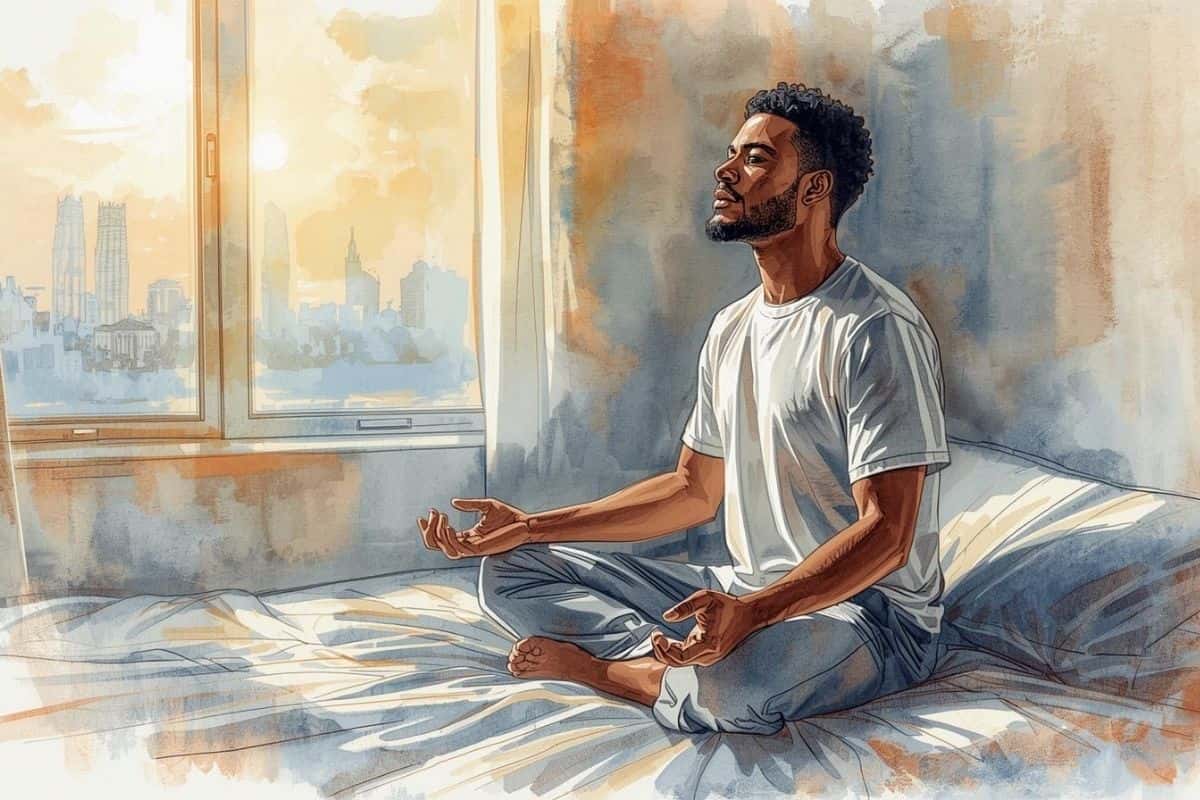
That doesn’t mean you’re bad at meditation, and it doesn’t mean you’re doing something wrong. In most cases, it means one of two things: either your setup is making sleep too easy, or your body is genuinely tired enough that the moment things become quiet, it takes the opportunity.
This is especially common if you meditate late in the evening, lie down, sit somewhere too warm, or practice in bed. Those are all perfectly reasonable conditions if your goal is sleep, but they’re not ideal if your aim is to stay aware. The body learns associations very quickly, and if a place, posture, or time of day already means “switch off”, meditation can slide into sleep before you’ve really had a chance to notice it happening.
The tricky thing is that meditation does involve a certain amount of relaxation, so you don’t want to solve this by making the practice tense. You’re not trying to sit there rigidly, jaw clenched, fighting sleep like it’s an enemy. That just turns meditation into another form of effort. What you’re looking for is a middle ground where the body can settle, but the mind still has enough clarity to know what’s going on.
That’s the difference between relaxing and drifting off. Relaxing still has awareness in it. You can feel the breath, notice the body, hear sounds, and recognise when your attention has wandered. Drifting off feels heavier and more blurred. The thread of attention starts to fade, thoughts become less distinct, and before long the session has disappeared completely.
A lot of this comes down to timing. Many people meditate at the only quiet point in the day, which is often when they’re already exhausted. By then, you’ve likely spent the day working, dealt with people, made decisions, answered messages, sorted chores, looked at screens, and pushed through all the ordinary demands that drain you. If you finally sit down at that point and fall asleep within five minutes, meditation may not be the problem. It may just be the first moment your body has had to stop.
So before you blame your technique, it’s worth asking what the sleepiness is actually telling you. Are you lying down when you’d be better sitting upright? Are you meditating too late? Is the room too warm or dark? Are you using a practice that’s designed more for sleep than alertness? Or are you simply running on less rest than you need?
Once you know which of those is true, the fix becomes much more practical. You’re not trying to force yourself awake through willpower. You’re adjusting the conditions so meditation feels relaxed but not sleep-like, comfortable but not too cosy, and calm without becoming so passive that you lose the thread completely.
Fix Your Posture First
Posture is usually the first thing to look at, because the way you sit sends a pretty strong signal to the body about what you’re about to do. If you lie down, curl up, get too warm, or sink into a position you normally associate with rest, the body is probably going to treat the whole thing as an invitation to sleep. That doesn’t mean you need to sit like a statue, but it does mean your position needs to support alertness rather than gently tipping you into nap territory.

For most people, sitting upright is the easiest fix. A chair is completely fine, and in many cases it’s better than trying to sit cross-legged on the floor just because that looks more like ‘proper’ meditation. Put your feet on the floor, let your hands rest naturally, and sit in a way that allows your back to stay reasonably upright without forcing it. You’re not aiming for perfect posture, you’re aiming for a position that lets you stay awake without creating any of tension in the body.
Sleep easily creeps over us if we’re in the wrong position. The back rounds, the chest drops, the chin lowers, and before long the whole posture has started to look less like meditation and more like the beginning of a very slow fold into sleep. You don’t have to overcorrect this by sitting rigidly, because that just creates a different problem. Usually, a small adjustment is enough: lift the chest slightly, keep the head level, and let the spine feel supported rather than forced.
The key is finding the middle ground between comfort and alertness. If you’re too comfortable, especially late in the day, you may drift off. If you’re too tense, you’ll spend the session thinking about your back, shoulders, knees, or whatever part of you has decided to complain first. A good posture should feel stable enough that you’re not constantly adjusting yourself, but alert enough that the body doesn’t assume you’re preparing for sleep.
This is why meditating in bed is usually a bad idea unless you’re actually meditating for better sleep. The bed already has a very strong association, and it’s not “focused awareness.” It’s rest, sleep, scrolling, collapsing at the end of the day, or whatever else your body has learned to connect with that space. If you want to meditate without falling asleep, it’s usually better to sit somewhere else, even if that just means a chair beside the bed rather than the bed itself.
Lying down can still be useful in some situations. If you’re doing a sleep meditation, a body scan before bed, or you’re dealing with pain and sitting upright isn’t realistic, then lying down may be the right choice. But if your aim is to stay awake, it makes sense to choose a posture that gives the body a bit more structure. That might mean sitting in a supportive chair, placing a cushion behind your lower back, or sitting against a wall if you need some support without fully reclining.
The posture doesn’t need to look impressive; it just needs to do its job. You want to be comfortable enough to stay with the practice, but not so comfortable that your body decides the session is over and sleep has begun. For most beginners, that one adjustment alone can make a noticeable difference: sit upright, keep the body supported, and avoid turning meditation into something that looks almost exactly like bedtime.
Change the Time You Meditate
Timing makes a bigger difference than people expect, because your body is not equally alert at every point in the day.
A meditation session at 10am can feel completely different from the same practice at 10pm, even if you’re sitting in the same place, using the same technique, and listening to the same voice. By the evening, most people have already spent the day dealing with all the small demands that leave the mind and body worn down. When you finally stop, the body may not think, “Great, time for mindful awareness.” It may think, “Finally, permission to shut down.”
That doesn’t mean evening meditation is wrong. It just depends what you want it to do.

If your aim is to relax before bed, then meditating at night can be perfect. A slower practice, a body scan, or a gentle guided session can help the mind settle and make sleep easier. But if your aim is to stay awake and practice mindfulness clearly, late evening may not be your best starting point, especially if you already know you tend to nod off once the house goes quiet.
For alert meditation, try choosing a time when you still have a bit of energy in the system. That might be first thing in the morning, although not if you’re the kind of person who wakes up feeling like your soul is still buffering. It might be late morning, before lunch, or early evening before you’ve fully collapsed into the sofa. The exact time matters less than whether your body is awake enough to take part.
This is why finding the best time to meditate is less about following someone else’s perfect routine and more about noticing when your own mind is most likely to cooperate. Some people genuinely do well with morning meditation because it gives the day a cleaner start. Others are much better later on, once the first wave of responsibilities has passed. The only real test is whether you can sit down and stay reasonably aware without fighting sleep the whole time.
It can also help to avoid meditating immediately after a heavy meal. If your body is busy digesting, you’re warm, comfortable, and sitting still, sleepiness has a pretty open invitation. You may be better off waiting a little while, or choosing a practice with more movement if that’s the only time you have.
The same applies to those end-of-day “I should probably meditate now” sessions, where you’re already half asleep before you begin. There’s nothing wrong with using meditation to wind down, but it helps to be honest about what the session is for. If you’re using it as part of a better sleep routine, then drifting towards sleep might be exactly the point. If you’re meditating for anything else, or trying to build a daily mindfulness practice, you may need to move it earlier or make the practice a bit more active.
A useful experiment is to try the same meditation at two or three different times of day and notice what happens. Not in a complicated way, just enough to see the pattern. If you keep falling asleep at night but stay awake easily in the morning, that tells you something. If mornings feel foggy but late afternoon feels steady, that tells you something too.
The goal is not to find a perfect time that works forever. It’s to stop forcing meditation into the part of the day where your body is least able to stay awake, then wondering why it keeps choosing sleep.
Try Keeping Your Eyes Slightly Open
If you usually meditate with your eyes closed and keep falling asleep, it might be worth changing that before you change anything more complicated.
Closing your eyes can be helpful, especially if you’re trying to reduce distraction, but it also removes a lot of the visual information that helps the brain stay oriented. For some people, that’s fine. But for others, especially if they’re tired, warm, comfortable, or meditating later in the day, it can tip the session a little too far towards sleep.
That doesn’t mean you need to sit there staring intensely at the wall like you’re trying to win an argument with it. The idea is much softer than that. Let the eyes stay slightly open, lower your gaze, and rest your attention somewhere neutral in front of you. The floor, a wall, a candle, a plant, or a patch of light on the carpet can all work perfectly well. You’re not looking at the object in a hard, focused way. You’re just allowing the visual field to stay open enough that the brain doesn’t fully switch into sleep mode.

This can feel a bit odd at first if you’ve always assumed meditation has to happen with your eyes closed (a lot of people do) but eyes-open meditation is completely normal in several traditions, and practically speaking, it makes sense. You’re giving the mind fewer chances to disappear into that hazy, half-dreaming state where thoughts start blurring together and the next thing you know, the timer has gone off and you’ve lost the last eight minutes.
The trick is to keep the gaze relaxed. If the eyes start darting around the room, looking at every object and mentally tidying the place, then you’ve just swapped sleepiness for distraction. If the gaze becomes too fixed, the practice can start feeling tense. Somewhere between those two is usually about right: eyes gently open, gaze lowered, face relaxed, attention still resting mainly on the breath, body, sound, or whatever anchor you’re using.
This works especially well when you’re trying to meditate at a time when you’re slightly prone to drowsiness, but not completely exhausted. If you’re genuinely running on empty, keeping your eyes open probably won’t perform miracles. But if you’re only drifting because closed eyes are making the practice feel too much like bedtime, this small change can make the session feel noticeably easier and more focused.
You can also treat it as something flexible rather than a rule. Start with the eyes open for a minute or two, then close them if you feel alert enough. Or keep them closed at the beginning and open them slightly if you notice yourself becoming sleepy. Meditation doesn’t have to be one fixed position from start to finish. You’re allowed to adjust the conditions so you can actually stay present for the practice.
Use a More Active Meditation Style
If you’ve adjusted your posture, changed the time of day, kept your eyes slightly open, and you’re still drifting off, the next thing to look at is the style of meditation itself.
Some practices are naturally more sleep-friendly than others. A slow body scan in a warm room at the end of the day can be brilliant if your goal is to unwind, but it may not be the best choice if you’re trying to stay clearly aware. The same goes for very soft guided sessions, long pauses, low voices, and anything that feels closer to a sleep meditation than an attention practice.
That doesn’t mean those practices are bad, but they often serve a slightly different purpose.
If the problem is sleepiness, it often helps to choose a form of meditation that gives your attention a bit more to work with. Not more noise, or effort necessarily, but just a clearer structure so the mind has something steady to return to before it starts sliding into that sleepy, blurred state where the session disappears.
Walking meditation is one of the best options for this because the body stays lightly engaged. You’re not trying to sit perfectly still, and you’re not giving the body quite so many sleep signals. Instead, you bring attention to the feeling of walking, the pressure of the feet, the movement of the legs, the rhythm of each step, and the sense of the body moving through space. It’s still meditation, but with enough physical activity to make falling asleep (hopefully!) far less likely.

Mantra meditation can also work well, especially if silent breath meditation leaves too much empty space for drowsiness to creep in. Repeating a word, phrase, or sound gives the mind a simple rhythm to follow. The point is not to force concentration or chant dramatically like you’ve wandered into a Buddhist temple. It’s just to give attention something clear and repeatable, so when the mind drifts, you have an obvious place to come back to.
Guided meditation is another useful option, particularly if you tend to lose the thread when practicing alone. A good guide gives you reminders at the right moments, which can stop the mind from slipping away quite as easily. That said, not every guided meditation will help with sleepiness. Some are deliberately designed to relax you deeply, which may be exactly the issue. If you’re trying to stay awake, choose a guided session with a clear, steady pace rather than something soft enough to make your eyelids feel personally targeted.
This is where it helps to understand the difference between guided and unguided meditation, because one isn’t automatically better than the other. Unguided meditation can feel flexible, but it can also leave you with less support if you’re already tired. Guided meditation can keep you on track, but if the tone is too sleepy, it may gently escort you straight into a nap.
You can also make a normal breath practice slightly more active without changing it completely. Sit upright, keep the eyes slightly open as we talked about above, and give a little more attention to the inhale. Not in a strained way, and not by breathing unnaturally, but by letting the inhale feel a bit clearer and brighter in your awareness. For some people, that small shift is enough to stop the practice becoming too heavy.
The main thing is to stop assuming that falling asleep means meditation isn’t working for you. It may just mean the style you’re using is too passive for the state you’re in. If your body is already tired, a very soft practice might tip you straight into sleep, while something with a bit more structure can help you stay present.
So if sitting still keeps turning into dozing off, don’t just keep repeating the same session and hoping it magically changes. Try walking. Try a mantra. Try a more alert guided practice. Give your attention something slightly more active to hold onto, and see whether that helps you stay with the meditation rather than disappearing halfway through it.
Adjust the Environment Around You
Sometimes the issue isn’t the meditation itself, it’s the little collection of signals around you that are quietly nudging the body towards sleep.
A warm room, low light, still air, a soft chair, a heavy meal, and no real sensory input can all add up. None of those things are a problem on their own, but put them together and the body can very reasonably decide that meditation has become bedtime with better intentions.
This doesn’t mean turning your room into a meditation retreat with soft linen, Himalayan salt lamps, and a plant that somehow looks more emotionally stable than you. It just means paying attention to the handful of ordinary details that make your body more likely to stay awake rather than drift off.

Temperature is a big one.
As we’ve already touched on, a warm, dim room can make meditation feel much closer to sleep than awareness, especially if you’re already tired. You don’t need to sit there freezing in the name of mindfulness, but a slightly cooler room often helps. Open a window for a few minutes, take the blanket off, or avoid sitting right next to a radiator. Small changes like that can make the session feel clearer without turning it into an endurance test.
Light matters too.
If you meditate in a dark room with your eyes closed, especially later in the day, you’re giving the body a very familiar set of instructions. Softer lighting is fine, but pitch-dark, warm, silent, and still is basically bedtime wearing a meditation badge. If you want to stay awake, try practicing with some natural light in the room, or use a lamp rather than complete darkness. It doesn’t need to be bright or harsh, just enough that the body doesn’t immediately assume the day is over.
Fresh air can also help more than you might expect.
A stuffy room tends to make everything feel heavier. Your body feels slower, the mind feels foggier, and the whole practice can start drifting in the wrong direction before you’ve really begun. Opening a window, sitting near a bit of airflow, or even stepping outside for a few minutes before you meditate can change the tone of the session. Again, it’s not magic. It’s just removing one more condition that makes sleep more likely.
It’s also worth looking at what you associate with the space itself.
As we’ve already said when talking about the bed, your body learns places very quickly. If you always sit in the same armchair where you usually watch television half-asleep at night, that chair may already have a strong “switch off” association. If you always meditate in a corner that feels calm but not sleepy, your body may respond differently. This is where creating a small meditation space can help – not because the space needs to look impressive, but because it gives your brain a clearer sense of what you’re there to do.
Noise is a little more personal.
Some people find silence helps them stay present. Others find silence makes them sleepy, especially if the rest of the room is warm and still. If complete quiet sends you drifting, you might do better with a little background sound: rain, gentle music, distant traffic, or a guided voice. The point isn’t to fill the room with stimulation, just to keep the practice from becoming so blank that your attention slips away completely.
The aim with environment is not perfection – it’s not about controlling every sound, temperature, shadow, and passing car before you can meditate properly. That would just create a new problem. The aim is to remove the most obvious sleep cues so the practice has a better chance of staying alert.
A cooler room, a little daylight, some airflow, and a place that isn’t strongly associated with sleep can make a surprisingly big difference. Not because any one of those things is essential, but because together they help shift the session away from “we’re going to sleep now” and back towards “we’re staying here and paying attention.”
What If You’re Just Tired?
At a certain point, it’s worth being honest about the possibility that meditation isn’t making you sleepy, it’s simply giving you the first quiet moment in the day where you can actually feel how tired you are.
That sounds obvious, but it’s easy to miss. Most people are very good at pushing through tiredness while there’s something demanding their attention. Work, messages, errands, noise, screens, difficult conversations, and the general admin of being alive can keep the system moving long after it would probably prefer to stop. Then you sit down to meditate, everything becomes still, and suddenly the tiredness that was already there has nothing covering it up.

As we’ve already talked about, posture, timing, environment, and meditation style all matter. If you’re lying down in a warm room at the end of the day, there are clear things you can adjust. But if you’ve changed those things and you still fall asleep every time, the issue may be less about technique and more about recovery. You may simply need more sleep, more rest, better breaks during the day, or a time to meditate when your body isn’t already running on fumes.
This is where meditation can be annoyingly useful, because it sometimes tells the truth before you’re ready to hear it. You might sit down expecting calm focus and discover that your body is exhausted. You might notice heaviness behind the eyes, a slow fogginess in the mind, or that immediate sinking feeling that appears the moment there’s no task to keep you upright. That isn’t failure. It’s information.
The mistake is trying to treat genuine tiredness as something you can out-meditate. You can make the room cooler, sit upright, keep your eyes open, and choose a more active practice, and all of that can help if the problem is the setup. But if the deeper issue is that you’re sleep-deprived, meditation probably isn’t going to override that for long. Nor should it. The body is not being awkward, it’s asking for something fairly basic.
In that situation, it may be better to change the purpose of the session. If you’re exhausted at night and keep drifting off, use that as a sleep practice and stop fighting it. If you want to build a clearer mindfulness practice, move it to a part of the day when you have a bit more energy. That way you’re not asking one session to do two opposite jobs at once.
It also helps to notice whether this is occasional or constant. Falling asleep now and then during meditation is normal, especially after a long day. Falling asleep every single time, even when you’re sitting upright, meditating earlier, and using a more alert practice, may be a sign that your general energy levels need attention. That doesn’t automatically mean anything serious, but it is worth taking seriously rather than blaming yourself for not being “focused enough”.
The practical answer is not complicated, but it does require a bit of honesty. If you’re tired, sleep. If you’re mildly drowsy, adjust the practice. If you’re consistently exhausted, look at the bigger pattern of your day rather than treating meditation as the problem.
Meditation works best when it supports the body you actually have, not the imaginary version of you that is perfectly rested, endlessly patient, and ready to become mindful on command. Sometimes staying awake means changing the technique. Sometimes it means changing the timing. And sometimes it means accepting that the most mindful thing you can do is go to bed.
Frequently Asked Questions
Is it normal to fall asleep during meditation?
Yes, it’s completely normal to fall asleep during meditation, especially if you’re tired, lying down, meditating late in the day, or using a very relaxing practice. Meditation reduces stimulation, and for a tired body, that can be enough to tip the session into sleep.
It doesn’t mean you’re bad at meditation. It usually just means something about the setup, timing, or your general energy level needs adjusting. If it happens occasionally, it’s not worth worrying about. If it happens every single time, that’s when it’s useful to look at the pattern more closely.
Does falling asleep during meditation still count?
It depends what you mean by “count”.
If your intention was to relax before bed, then falling asleep may be perfectly fine. You gave the body a chance to settle, and it took it. But if your aim was mindfulness practice, falling asleep isn’t quite the same thing, because meditation depends on some level of awareness being present.
That doesn’t make the session wasted, and in fact it still tells you something useful. Maybe you were more tired than you realised. Maybe the practice was too soft. Maybe the timing was wrong. But in terms of training attention, the useful part is the time before sleep, when you were still aware enough to notice the breath, the body, sounds, thoughts, or the first signs of drifting.
Why do I fall asleep every time I meditate?
If you fall asleep every time you meditate, it’s worth looking beyond meditation itself. As we’ve already covered, posture, timing, environment, and practice style all matter, but repeated sleepiness can also be a sign that you’re simply not getting enough recovery during the rest of the day.
A useful first step is to change one thing at a time. Sit upright instead of lying down. Meditate earlier. Keep your eyes slightly open. Use a more active practice. If none of that changes anything, the issue may not be your technique. It may be tiredness, sleep debt, stress, or the fact that your body finally has a quiet moment and is using it to shut down.
Can short meditations help if I keep falling asleep?
Yes, and they may actually be better at first.
If ten or twenty minutes keeps turning into a nap, try two or three minutes while sitting upright and alert. A short session gives you less time to drift, and it can help rebuild the habit without making meditation feel like a constant battle against sleep. Even a few breaths can be useful if you’re genuinely paying attention.
This is where very short mindfulness practices can help, because they stop meditation becoming something you only attempt when you have a quiet window, which often ends up being the exact moment you’re exhausted.
What if I can only meditate when I’m tired?
Then it’s worth being realistic rather than trying to force an ideal routine that doesn’t fit your life.
If the only quiet moment you have is at night, you can still meditate, but you may need to change what you expect from that session. A short, seated practice with your eyes slightly open might help you stay aware. A lying-down body scan may be better if your real aim is sleep. The problem usually starts when you want one session to do everything at once: relax you, make you more mindful, keep you alert, and help you drift off.
If consistency is the bigger challenge, building meditation into your life in a way that actually feels repeatable is usually more useful than chasing the perfect time. That’s where learning how to make your meditation practice stick becomes more practical than simply telling yourself to “try harder”.
Does meditation still work if I don’t feel calm?
Yes. Feeling calm can be a nice side effect, but it isn’t the whole point of meditation.
A lot of people assume meditation is only working when they feel peaceful, relaxed, or noticeably different afterwards. But mindfulness is more about awareness than mood. Sometimes you sit down and feel calm. Sometimes you notice that you’re restless, tired, irritated, distracted, or thinking too much. That still counts, because noticing what’s happening is the practice.
If you want the deeper version of this, it helps to understand what mindfulness actually is, because it’s not just relaxation with better branding. It’s the ability to notice experience more clearly while it’s happening, even when that experience isn’t especially calm.
Why does meditation make me feel more aware of being tired?
Because meditation removes a lot of the usual noise that keeps tiredness in the background.
During the day, you might be running on tasks, caffeine, screens, conversation, stress, and the next thing that needs doing. When you sit down and stop feeding attention into all of that, the body can finally register how it actually feels. Sometimes that feels peaceful, and sometimes it feels heavy and exhausted.
That doesn’t mean meditation caused the tiredness, it may just have made it visible. And in a strange way, that’s part of the value. The practice can show you what’s already going on underneath the usual movement of the day.
Can regular meditation help me feel less tired over time?
It can help, but not by replacing sleep.
Regular meditation may help you become less tangled in stress, overthinking, and emotional reactivity, which can make daily life feel less mentally draining over time. It may also help you notice when you’re pushing past tiredness instead of ignoring it until your body takes over.
But meditation is not a substitute for proper rest. The benefits of regular meditation come from practicing awareness consistently, not from using meditation to override basic physical needs. If you’re exhausted, sleep still matters.
What does the science say about meditation and sleepiness?
Meditation changes the way attention, arousal, and awareness behave, so it makes sense that it can sometimes bring you close to sleep. You’re reducing stimulation and shifting the nervous system away from constant activity, but ideally you’re keeping enough awareness present to notice what’s happening.
That balance is why meditation can feel both calming and alert when it’s working well. It’s not meant to be high-energy focus, but it’s not meant to become unconscious either. If you’re interested in the wider research side of this, the science behind mindfulness is worth exploring because it gives a clearer picture of why these changes are happening in the first place.
The National Center for Complementary and Integrative Health has a useful overview of the current research in the field of meditation and mindfulness if you’re interested.
Should I stop meditating if I keep falling asleep?
No, not necessarily. You probably just need to change the conditions.
Try sitting upright, practicing earlier, keeping your eyes slightly open, using a more active style, or shortening the session. If you keep falling asleep despite all of that, take the hint seriously. You may need more rest before you need more meditation.
The aim is not to turn meditation into another thing you can fail at. It’s to find a version of the practice that works with your actual body, your actual energy, and your actual life. If that means shorter sessions, a different time of day, or using meditation for sleep when you’re genuinely exhausted, that’s not failure. It’s just paying attention.
Closing Thought
Falling asleep during meditation can feel frustrating, especially when you’re genuinely trying to stay present, but most of the time it isn’t a sign that you’re doing anything wrong.
It usually just means something needs adjusting.
Maybe you need to sit upright instead of lying down. Maybe night-time meditation is better used for sleep, and a clearer practice needs to happen earlier in the day. Maybe your room is too warm, the practice is too soft, or your body is simply more tired than you’ve been admitting.
None of that makes meditation a failure.
The point is to pay attention to what’s actually happening, then respond in a way that makes sense. If you want to stay awake, create conditions that support alertness. If you’re exhausted, let yourself rest. And if you drift off now and then, don’t turn it into a big story about being bad at meditation.
The aim isn’t to be perfectly focused every time you sit down.
It’s to keep finding your way back to awareness, gently and practically, in a way that works with your actual life rather than some ideal version of it. That’s usually where meditation becomes much more useful, and much less of a battle.
