
Meditation is genuinely one of the best things you can do for your overall mental health, and the benefits of meditation are surprisingly wide-ranging, from lowering stress and improving focus to helping you feel a little less dragged around by every thought that appears, but if you’re new to the practice, how long should you meditate for exactly?
Are we talking two minutes? Ten minutes? Half an hour? Long enough for your legs to go numb and your brain to start replaying conversations from 2009 for no obvious reason? It’s one of those questions that feels almost too basic to ask, but it matters, because if you start too ambitiously, meditation can quickly become another thing you avoid.
For most beginners, 5 minutes of meditation per day is enough to start. Once that feels manageable, 10 minutes is a strong daily target, and 15–20 minutes can be useful later if you feel comfortable. The important thing is consistency, because a short session you repeat regularly will usually do far more for you than a long session you only manage once in a while.
The aim isn’t to prove how long you can sit still. It’s to give yourself enough time to notice your attention wandering, gently bring it back, and repeat that process without turning the whole thing into a bizarre endurance test. So in this guide, we’ll look at how long beginners should meditate, whether 5 or 10 minutes is enough, when to increase your sessions, how often to practice, and how to build a routine that actually lasts.
Contents
- Is 5 Minutes of Meditation Enough?
- Is 10 Minutes Better Than 20 Minutes?
- How Often Should You Meditate?
- When Should You Increase Your Meditation Time?
- Does the Type of Meditation Change How Long You Should Practice?
- How Long Until Meditation Starts Working?
- Frequently Asked Questions
- Closing Thought
Is 5 Minutes of Meditation Enough?
Yes, 5 minutes of meditation is absolutely enough to start with, especially if you’re new to the practice and still getting used to the frankly odd experience of sitting still while your mind behaves as though it’s been left alone in a supermarket with no adult supervision.
The mistake people often make is assuming that a short meditation session somehow doesn’t count, as though anything under twenty minutes is just mindfulness cosplay. But that isn’t really how meditation works. The useful bit isn’t the total number of minutes you spend sitting there, it’s what happens during those minutes, and even a short session gives you plenty of opportunities to notice your attention wandering and gently bring it back again.

That’s the basic concept of meditation.
You focus on something simple, usually the breath, the body, or a sound. Your mind wanders off, because of course it does. You notice it’s wandered, and you return. Then it happens again. And again. And possibly again before you’ve even finished the first breath, because the mind is nothing if not enthusiastic about ignoring instructions.
Five minutes is enough time for that process to happen several times, which means it’s enough time to practice the actual skill.
It’s also short enough that it doesn’t feel like a huge commitment, and that matters more than beginners often realise. If you tell yourself you need to meditate for half an hour every day, there’s a good chance you’ll manage it once, possibly twice, and then start avoiding it because it feels like too much effort. But five minutes feels manageable, and it fits into the day without needing a dramatic lifestyle redesign, and because it feels achievable, you’re far more likely to repeat it.
A five-minute session might not feel profound, and it may not leave you floating around the kitchen radiating wisdom and emotional balance, but it keeps the habit alive. It gives your attention a familiar route back to the present moment. It makes meditation something you actually do, rather than something you vaguely plan to begin properly once life becomes less chaotic, which, as we all know, is a famously reliable strategy.
This is why shorter practices can be so useful. Even something as simple as a micro-meditation session can interrupt the momentum of a busy mind and help you practice the act of returning your attention without needing a full session. And if the bigger challenge is not starting meditation, but finding a way to keep coming back to it without relying on motivation, then building a meditation habit that actually lasts usually begins with making the practice small enough that you don’t immediately rebel against it.
So yes, five minutes is enough to get started. Not because it’s the ideal length, but because it’s long enough to practice the core skill, and short enough to repeat, which is exactly the balance most beginners need.
Is 10 Minutes Better Than 20 Minutes?
When you’re comfortable meditating for 5 minutes, the next logical step is to increase the time you spend sitting. But again, how long should you meditate for? If you’ve become comfortable with how to meditate properly, what’s the ideal length of time to spend in meditation?
The honest answer is, it depends how often you intend to meditate…

Ten minutes of meditation every day is usually more useful than twenty minutes once or twice a week, especially when you’re still building the habit. Not because ten minutes contains some hidden mystical advantage, but because meditation works through repetition. You’re training the mind to notice when attention has wandered and return without making a huge drama out of it, and that skill develops much more reliably when you practice it regularly.
Twenty minutes can absolutely be useful, but only if it doesn’t make the whole thing feel like a chore.
Longer sessions give you more time to settle, and they often take you past the first layer of restlessness, which can be useful once you’re comfortable with the practice. But if twenty minutes feels so long that you start avoiding meditation altogether, then it’s not really helping. At that point, the impressive-looking session length has become a barrier.
Ten minutes actually tends to be the sweet spot when you’re comfortable with what you’re supposed to do when you meditate, because it’s long enough to feel like a proper session, but short enough that you don’t need to rearrange your day around it. It gives the mind time to wander, return, wander again, complain a bit, remember something irrelevant, return again, and still finish before the whole thing starts feeling like you’ve accidentally enrolled in a silent retreat.
Five minutes is the easiest entry point, and as we’ve already covered, it absolutely counts, but ten minutes is where the practice starts to feel a little more settled for many people, because there’s enough time for the initial mental fidgeting to calm down slightly. Fifteen minutes can be a useful next step if you’re curious and the habit already feels fairly stable, and twenty minutes is often valuable too, but only if you can do it without creating resistance.
That’s really the key.
The best meditation length is not always the longest one. It’s the length you can return to regularly without turning the practice into something inconvenient, irritating, or vaguely punishing. If ten minutes feels realistic and twenty minutes makes you think, “I’ll do it later,” then ten minutes is better. If twenty minutes feels natural and you’re genuinely happy to sit for that long, then twenty minutes is fine.
There’s no need to treat it like a competition with yourself.
Meditation is not improved by silently proving you can endure more of it than yesterday. The useful question is whether the session length gives you enough time to practice, while still being short enough that you’re willing to come back tomorrow. For most beginners, that means five minutes to start, ten minutes as a strong daily target, and fifteen to twenty minutes later if it feels helpful rather than forced.
When Should You Increase Your Meditation Time?
Increasing your meditation time isn’t something you need to rush, and it definitely isn’t something you need to do just because some article somewhere has made twenty minutes sound like the respectable “adult” version of meditation.
A better way to look at it is this: increase the length when the session starts to feel naturally expandable.

That doesn’t mean every meditation needs to feel profound, because it won’t. But if five minutes no longer feels like a mountain, and you’re not spending the entire session silently bargaining with the clock, then adding a little more time can be useful. You might notice that the first few minutes are mostly mental fidgeting, and then just as things start to settle, the timer goes off. That’s usually a good sign that you could experiment with going slightly longer.
The word experiment is important here.
You’re not signing a contract with the meditation authorities. You’re just seeing what happens if you add a few more minutes and pay attention to the result. If five minutes feels comfortable, try ten. If ten minutes feels comfortable, try twelve or fifteen. If twenty minutes feels helpful, brilliant. If it makes you start avoiding the practice, just simply step back down again without turning it into a personal crisis.
However, if you’re after some sort of definitive answer, there are a few signs to look out for.
The most obvious one is that your current session starts to feel slightly too short. Not because you’re bored of it, but because you feel like you’ve only just settled when it ends. Another sign is that you’re no longer dreading the session beforehand, which sounds like a low bar, but is actually quite important. If meditation still feels like something you’re forcing yourself through, adding more time usually just gives your resistance a larger room to wander around in.
You might also find yourself becoming curious about what happens after the first restless phase.
In the beginning, a lot of meditation is simply meeting the surface layer of the mind, which is usually busy, impatient, and convinced it has several better things to be doing. But after a few minutes, you should experience a slight shift. Not always, and not dramatically, but enough that you start to wonder what might happen if you stayed a little longer. That kind of curiosity is usually a much better reason to increase your session than guilt, ambition, or the vague belief that longer meditation must automatically mean better meditation.
A simple progression might look like this: spend the first week doing three to five minutes, then move towards five to ten minutes in the second week if that feels manageable. For the next couple of weeks, ten minutes is a perfectly sensible target, because it gives the practice a bit more room without making it feel like an event. Later, if the habit feels stable and you’re genuinely getting something from it, you can experiment with fifteen or twenty minutes.
But just keep in mind – that timeline is different for everyone, and there’s no shame in sticking with 5 minutes. Some people stay at five minutes for months and get plenty from it. Others will naturally move to ten or fifteen quite quickly because it suits them better. The important thing is that the increase should support the habit, not threaten it. If adding time makes meditation feel more spacious, useful, or interesting, keep it. If it makes the whole thing feel heavier and harder to start, reduce it again.
That’s the advantage of treating session length as adjustable rather than fixed. You can let the practice grow without turning it into a test, and you can increase the time when it genuinely helps rather than because you feel like you’re supposed to.
How Often Should You Meditate?
Once you’ve got a rough sense of how long to sit for, the next thing to think about is how often you’re actually going to do it. And this is where people tend to make life harder than it needs to be.
The ideal answer is daily, but that doesn’t mean you need to turn into one of those people who wakes up at 5am, drinks something green, and sits cross-legged in perfect silence while the rest of humanity is still trying to remember where it left its socks. Daily meditation is useful because it gives the mind regular practice at the same basic skill, noticing where attention has gone and bringing it back, but the important word there is regular, not obsessive.
If daily feels realistic, brilliant. Five or ten minutes a day is a strong place to start, and over time those short sessions tend to build much more reliably than occasional longer ones. That’s why the benefits of regular meditation usually come from steady repetition rather than dramatic bursts of effort, because the mind learns through being brought back again and again, not through one intense session followed by six days of forgetting the whole thing exists.
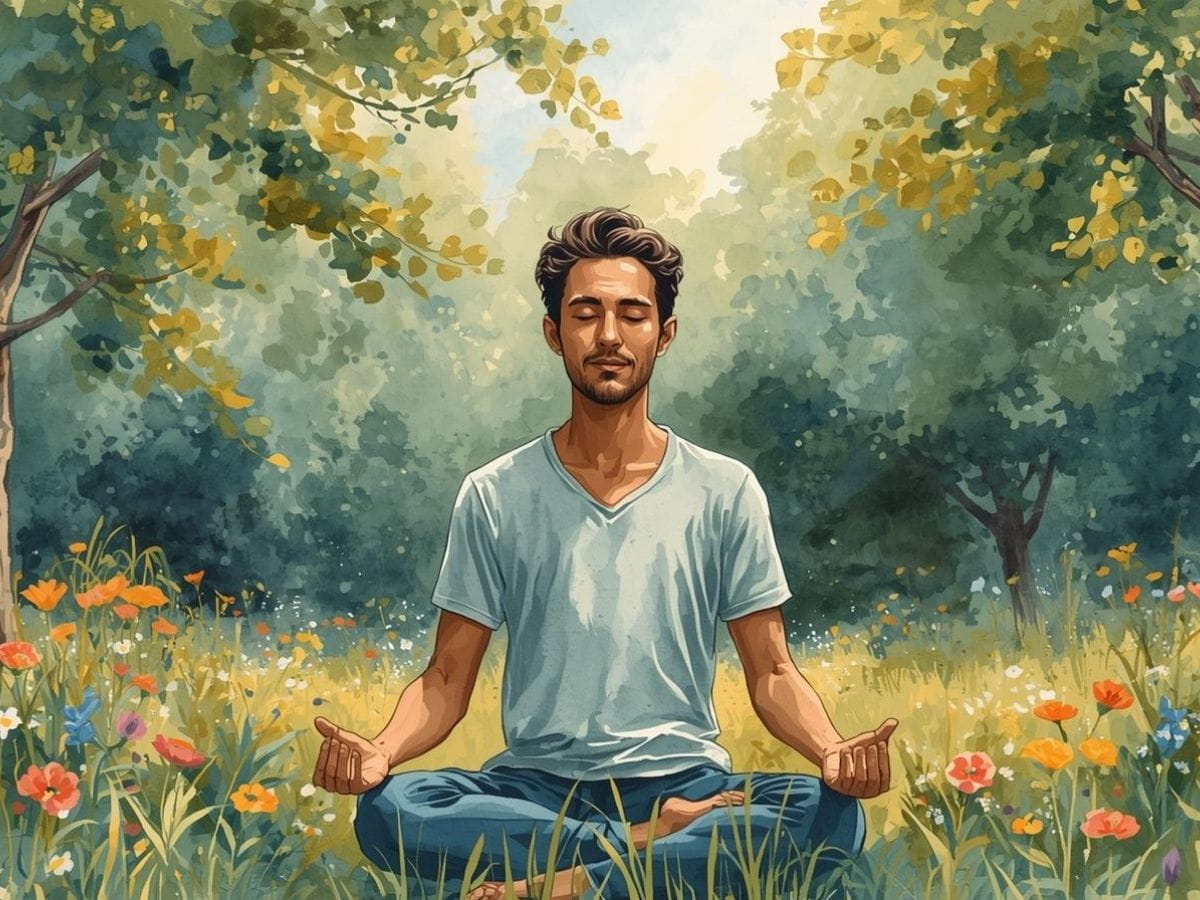
But if daily meditation immediately makes you feel trapped, guilty, or faintly annoyed before you’ve even begun, then three or four times a week is a perfectly reasonable starting point. It’s much better to meditate a few times a week and actually keep doing it than to set a daily target, miss two days, declare the whole thing ruined, and abandon it like a gym membership in February.
The trick is to choose a rhythm that feels repeatable.
That might mean five minutes every morning before the day properly starts, or ten minutes in the evening when everything slows down a bit. Some people naturally settle into a morning routine because it gives the day a calmer starting point, while others find evening meditation works better because their mind is too busy in the morning and they need something that helps them switch off before sleep. There’s no universal winner here, and the best time to meditate is usually the time you’re most likely to protect without turning it into a daily negotiation with yourself.
It also helps to attach meditation to something that already happens.
After brushing your teeth, before your first coffee, when you get home from work, before bed – the exact cue doesn’t matter as much as the fact that your brain starts linking meditation to an existing part of the day, because that removes some of the effort involved in remembering to do it. You’re not relying on a sudden burst of spiritual enthusiasm at 10:00pm, you’re just following a small pattern you’ve already made easier to repeat.
And if you miss a day (which you will) don’t analyse it, or turn it into evidence that you’re bad at meditation. Don’t start planning a dramatic comeback where tomorrow you do forty minutes to compensate. Just continue with the next session as normal. Missing one day doesn’t break the habit, but turning one missed day into a story about failure absolutely can.
That’s why learning how to start a daily meditation habit is really less about forcing yourself into a perfect routine, and more about building something that you can return to it without too much fuss. The less dramatic the habit feels, the easier it usually becomes to maintain.
So yes, daily meditation is ideal if you can manage it, but it isn’t the only version that counts. Start with a frequency you can honestly repeat, make it easy enough that you don’t immediately resist it, and let consistency grow from there.
Does the Type of Meditation Change How Long You Should Practice?
The type of meditation you choose can definitely change how long a session feels, which is worth knowing before you decide that you’re either “good” or “bad” at meditating based entirely on how restless you feel after six minutes of watching your breath.

Some practices are naturally easier to stay with for longer because they give your attention more structure. Others are deliberately simple (which can obviously be useful) but can also feel a bit more exposed. Sitting quietly with the breath for five minutes can sometimes feel longer than a twenty-minute guided session, because in one case you’re left alone with the full theatre production of your own mind, while in the other you’ve got a voice gently keeping you on track.
That’s why guided meditation is often easier for beginners to do for ten, fifteen, or even twenty minutes. You’re not having to hold the whole practice together by yourself, and the structure gives your attention something to follow when it starts wandering. If you’ve ever wondered about the difference between practicing with guidance and sitting in silence, it’s worth understanding how guided and unguided meditation affect the experience differently, because the “right” length can feel very different depending on how much support the practice gives you.
Unguided breath meditation, on the other hand, is usually better kept fairly short at first. Five to ten minutes is plenty for most beginners, because the breath is simple, direct, and very easy to lose interest in once the mind decides it would rather think about work, dinner, an embarrassing thing you said eight years ago, or whether the washing machine is making a suspicious noise. That doesn’t mean breath meditation is weaker, it just means it gives you very little to hide behind, which is partly why it can feel so demanding despite being so simple.
In contrast, a body scan meditation often works better with a little more time.
Because you’re moving attention gradually through the body, noticing sensations in different areas, and letting the mind settle into that slower rhythm, ten to twenty minutes usually gives the practice more room to unfold. If you try to rush it into three minutes, it can start to feel like you’re mentally sprinting through your own body, ticking a box on a clipboard for each body part. A slower body scan meditation gives you enough time to notice tension, contact, warmth, pressure, and all the small physical details that tend to get ignored during the day.
Walking meditation can usually be longer again, simply because the body is moving.
For some people, especially those who find sitting still uncomfortable or difficult, walking meditation is much easier to stay with for fifteen, twenty, or even thirty minutes. The movement gives the mind something steady and physical to return to, and because you’re not trying to remain completely still, the practice can feel less like a confrontation with your own restlessness and more like a quiet way of bringing attention back into the body.
Mantra meditation sits somewhere slightly different.
Because you’re repeating a word, phrase, or sound, there’s a clear rhythm for the mind to settle into, which can make ten to fifteen minutes feel more manageable than silent breath practice. The mantra acts like a handrail for attention – the mind still wanders, obviously, because it remains deeply committed to its lifelong hobby of wandering, but the repeated phrase gives you something simple to come back to.
This is why it’s useful to experiment with a few different types of meditation rather than assuming one awkward session tells you everything you need to know.
If breath meditation feels difficult after five minutes, that doesn’t mean you can’t meditate. It might just mean that a guided session, a body scan, walking practice, or mantra gives your attention a more suitable style of meditation to work with, at least while you’re building confidence. Different approaches suit different nervous systems, different schedules, and different levels of restlessness, which is exactly why comparing types of meditation can be more useful than forcing yourself into the one version you think “proper” meditation is supposed to look like.
So yes, the type of meditation does change how long you might want to practice.
A simple rule of thumb is that breath meditation often works well at five to ten minutes, guided meditation and mantra meditation often sit nicely around ten to fifteen minutes, body scans usually benefit from ten to twenty minutes, and walking meditation can often go longer because the movement makes it easier to stay engaged. None of this is fixed, but it gives you a more realistic starting point than pretending every meditation style should fit neatly into the same timeframe.
How Long Until Meditation Starts Working?
This is another question beginners understandably ask quite quickly, because once you’ve sat there for five or ten minutes listening to your own mind behave like a poorly behaved puppy, it’s natural to wonder when any of this is supposed to start doing something.
The slightly frustrating answer is that meditation can feel useful almost immediately, but it usually takes longer to change anything in a deeper, more noticeable way.

After a single session, you might feel a little calmer, clearer, or less caught up in whatever was bothering you beforehand. Sometimes there’s a noticeable shift, especially if you were stressed or mentally busy before you started. Other times you finish the session and feel basically the same, except now you’re slightly more aware of how much your mind wanders, which can feel less like progress and more like discovering a leak in the ceiling.
That’s why it’s worth being careful about judging meditation too quickly.
One session can show you what the practice feels like, but it can’t really tell you what meditation is doing over time. The deeper changes usually come from repetition, because you’re gradually training attention to behave differently in ordinary moments, not just while you’re sitting with your eyes closed. You begin to notice thoughts a little earlier, catch emotional reactions before they fully take over, and return to what you’re doing with slightly less effort than before.
You probably won’t wake up one morning feeling like a completely transformed person who now floats calmly through traffic and responds to every inconvenience with serene wisdom. More likely, you’ll notice something small. A stressful thought appears, and you don’t follow it quite as far. You get irritated, but you see it happening a bit sooner. Your attention wanders, but coming back feels a little more familiar.
That’s usually what “working” looks like at first. Not immediate calm, but slightly less automatic reactivity.
A lot of mindfulness programmes are built around several weeks of practice for this reason. You’re not just trying to feel better during one session, you’re giving the mind repeated chances to learn the same movement: noticing, returning, noticing again, returning again. And over time, that repeated pattern can start to affect how attention and emotional reactivity behave in the rest of your life.
So if you’re wondering how long meditation takes to work, the most honest answer is that you may feel small benefits straight away, but the more meaningful changes usually become clearer after a few weeks of regular practice.
And even then, it helps to know what you’re looking for.
The signs are often subtle, and if you’re expecting fireworks, you’ll probably miss them. Meditation working might look like pausing before reacting, noticing a thought without immediately believing it, feeling stress build and recognising it earlier, or finding it slightly easier to return to the breath after getting distracted. Those shifts don’t always feel impressive, but they’re usually far more important than one unusually peaceful session.
That’s why it’s useful to think less in terms of “did this session work?” and more in terms of “am I relating to my thoughts slightly differently over time?”
Frequently Asked Questions
Should beginners meditate every day?
Daily meditation is ideal if it feels realistic, but it’s not the only version that counts. If you can sit for 5 or 10 minutes most days without resenting the whole thing, that’s brilliant. If daily practice immediately makes meditation feel like homework, three or four times a week is a perfectly sensible starting point.
What matters is building something repeatable. The more often you return to the practice, the more familiar the process becomes, and that’s where a lot of the longer-term benefits start to build.
Is it better to meditate in the morning or at night?
There isn’t one best time for everyone. Morning meditation can help you start the day with a bit more awareness, while evening meditation can be useful if your mind tends to stay busy when you’re trying to wind down.
The better question is not just what time is best, or how long should you meditate, but when are you most likely to actually do it. If mornings are chaotic, forcing yourself to meditate before the day starts may just create another thing to fail at before breakfast, which nobody needs. If evenings are quieter, that might be the better option, especially if you’re using meditation to settle the mind before sleep.
What happens if I miss a day?
Nothing dramatic happens if you miss a day. You don’t lose all progress, you don’t have to start again from scratch, and you definitely don’t need to punish yourself with a heroic 40-minute session the next day to “make up for it”.
Just continue with the next session as normal. One missed day is not the problem. The problem is turning one missed day into a story about how you’re bad at meditation, because that’s usually how people end up stopping completely.
Should I use guided meditation as a beginner?
Guided meditation is often a very good idea for beginners, because it gives your attention something to follow while you’re still learning the basic movement of the practice. Instead of sitting there wondering what you’re supposed to be doing, you have a voice gently bringing you back whenever the mind wanders off to do whatever nonsense it considers urgent that day.
It can also make longer sessions feel easier. If five minutes of silent breath meditation feels oddly difficult, a 10 or 15-minute guided session may actually feel more manageable because there’s more structure holding the practice together. Mindful.org has a useful beginner explanation of using the breath as an anchor and returning when the mind wanders, which is basically the core movement underneath most beginner practices.
How long should I meditate for if I’m struggling with anxiety?
If you’re meditating for anxiety, start with 5 minutes and build from there. Anxiety can make longer sessions feel uncomfortable at first, especially if sitting still makes you more aware of physical sensations, racing thoughts, or that lovely little internal alarm system that seems convinced everything is urgent.
For anxiety, the aim is not to force calm. It’s to practice noticing anxious thoughts and sensations without immediately being dragged into them. Once 5 minutes feels manageable, 10 minutes can be useful, but there’s no need to rush. The same applies if you’re dealing with stress, difficult emotions, or grief, because in all of those cases, meditation is less about making the feeling vanish and more about changing how quickly you get pulled into it.
Can I meditate more than once a day?
Yes, you can absolutely meditate for than once a day! Some people like a short morning session and another brief practice later on, especially during stressful periods or when they’re working with anxiety, chronic pain, or difficult emotions.
That said, more is not automatically better. Two short sessions that help you feel more grounded are useful. Several sessions done because you feel like you’re chasing a perfect mental state can become another form of control. Keep it simple, and let the practice support your day rather than take over it.
Closing Thought
So after all that… how long should you meditate for?
If you begin with a session that feels manageable, meditation is much more likely to become something repeatable, rather than another self-improvement project that starts on Monday and disappears by Thursday. Five minutes done regularly will usually teach you more than thirty minutes you only do once, mostly because it keeps bringing you back to the same basic skill: noticing where your attention has gone, and gently returning.
And that really is the heart of it.
You sit down, your mind wanders, you notice, and you come back. Then it wanders again, because apparently it has places to be, and you come back again. Whether that happens for five minutes, ten minutes, or twenty minutes matters less than whether you’re willing to keep practicing that small return.
So if you’re new to meditation, don’t worry too much about finding the perfect session length. Start with something short enough that you’ll actually do it, build slowly if it feels useful, and let the practice become familiar before you try to make it impressive.
That’s usually where meditation starts to work its way into the rest of your life, not because you sat for exactly the right number of minutes, but because you kept coming back often enough for the habit to take root.
